Archer intercepted by US Navy Super Hornets near Iran
Ferry flight approached carrier group conducting strikes
It was not Sam Rutherford's first time being intercepted by fighters while flying a general aviation aircraft, but it was not lost on him that, from the perspective of U.S. Navy warships that were actively striking targets in Iran on March 1, a Piper Archer DX approaching an aircraft carrier at 11,500 feet over the Arabian Sea could easily be mistaken for a drone laden with explosives.
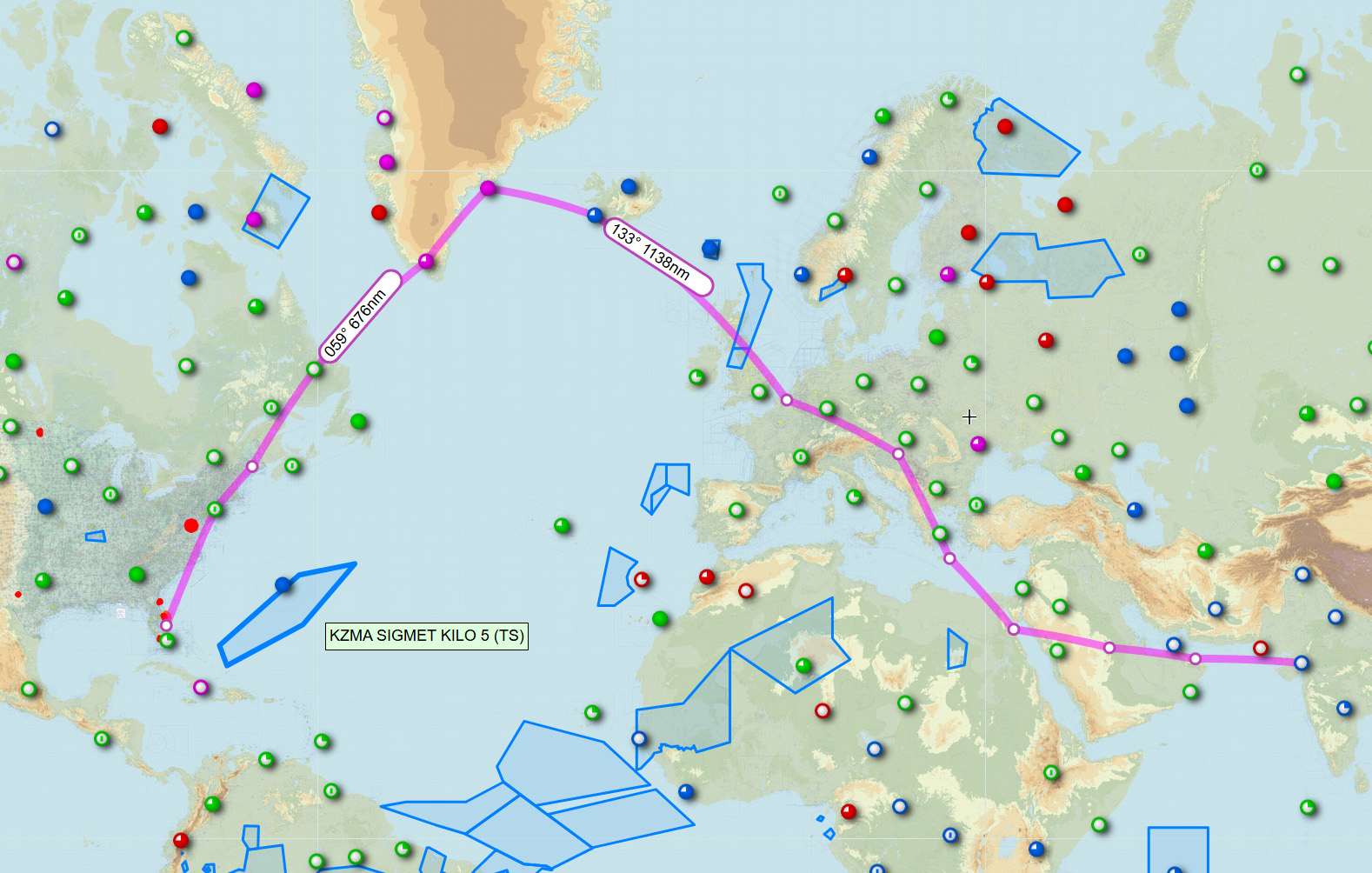
Rutherford was ferrying the Archer from the Piper Aircraft factory in Vero Beach, Florida, to a flight school in India. Not long after dawn broke over the Arabian Sea, en route from Muscat, Oman, he unwittingly was making a beeline for the USS Abraham Lincoln, a Nimitz-class aircraft carrier protected by a phalanx of guided missile destroyers.
"You are approaching a coalition warship operating in international waters," the sailor advised. "Request you establish communications, identify yourself, say squawk, over."
Aboard the Archer, Rutherford responded on Guard, but drew no reply. He knew there was another fighter nearby, probably behind him and in position to shoot him down. His concern grew when the young sailor repeated the same request for identification after about two minutes of radio silence.
The post, which drew more than 63,000 "likes" and 1,200 comments—many of them questioning the pilot's decisions and sanity—raised a few questions that Rutherford was happy to address in a video conversation, eager to relate lessons that might benefit fellow pilots should they be met by armed escorts, or hesitate to assert command authority at gunpoint.
To put the dramatic and abbreviated account posted on social media in context, the flight was not a joyride, but a job, one that Rutherford was well qualified to conduct. It was not the first Piper he had picked up at the Piper Aircraft factory in Florida and delivered to India. And it was not his first time flying in or near a military conflict.
"My principal occupation is the movement of people and equipment through complicated environments," said Rutherford, a former British military helicopter pilot who now serves as the managing director of Prepare2go. Rutherford is also the father of two pilots who circumnavigated the Earth as teenagers: Zara Rutherford in 2022, followed months later by her brother, Mack. Their father has mentored and otherwise assisted many other pilots making long-distance flights, including Wong, who is preparing for an attempt to become the first woman to fly solo to all seven continents, and the South Pole, in a single-engine piston airplane .
While Rutherford was as aware as anyone about the talk of war that preceded the onset of military action on February 28, he said that had not deterred him from accepting the assignment to deliver the Archer to a flight school in India, by way of Saudi Arabia and Oman: "If we, you know, took strong or hard decisions on the rhetoric, frankly, from most politicians, nothing would ever get done anywhere," Rutherford said.
When hostilities commenced around 11 a.m. local time on February 28, Rutherford and Wong were en route from Riyadh, Saudi Arabia, to Muscat, monitoring 121.5 MHz on the aircraft's second radio, a habit Rutherford strongly encourages. The pair heard many conversations between airline crews and operations staff, trying to sort out what airspace was hazardous, and where they could land safely. Muscat, normally a little-used airport built to handle many more airliners than it typically does, suddenly became a popular destination.
"This all seems quite interesting to us," Rutherford recalled. The two pilots landed in Muscat without incident, and with time to make a crucial decision: Continue east over the Gulf of Oman and the Arabian Sea and deliver the aircraft as promised, or retrace their steps west, not far south of the Persian Gulf.
"At that stage, Oman was not involved," Rutherford recalled. "The airspace on our direct line to India was clear. And indeed, you know, looking at FlightAware, you could see all the aircraft much bigger than us were all flying along very much the route that we were planning on taking."
While departing Muscat in darkness in a single-engine piston airplane carried its own risks, Rutherford concluded that leaving the conflict as far behind as possible as quickly as possible was the safest option available.
"We usually leave around dawn. We actually left about three hours before dawn. Which isn't ideal in a single-engine piston over the water. But nonetheless, you know, we decided that was a better bet than sitting around to see what might happen."
'One-twenty-one-point-five is your friend'
Rutherford planned for 87 knots true airspeed, and was operating under visual flight rules at 11,500 feet as he unknowingly approached the U.S. warships operating in the Arabian Sea, east of the Persian Gulf and Iran, the target of the attacks. He had enough Jet A on board to fly up to 12 hours, sipping 4 gallons per hour, though the planned flight duration was around 7.5 hours.
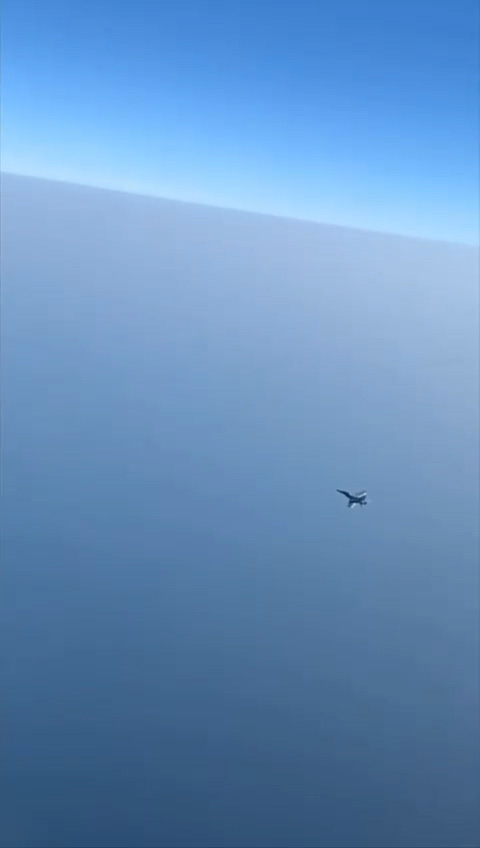
The Navy does not make a habit of advertising the location of its warships, and guidance from the European Union Aviation Safety Agency issued prior to departure indicated that while the airspace over Iran and surrounding countries was by then closed, that did not apply to the United Arab Emirates or Oman, on the eastern end of the Arabian Peninsula—another reason to leave on the early side.
The audio and video Rutherford provided from the roughly 30-minute encounter with the Navy documents a negotiation that ensued after a fraught two minutes prior to establishing radio contact with the jets, or the nearby warships. He recalled, a week after the event, that he was surprised that the Navy did not appear to know, based on his filed flight plan and transponder transmissions, exactly who he was and where he was going. Then, he answered his own question: "That being said, if I was going to try and make some sort of attack on an aircraft carrier, I would also try to emulate or mimic something that actually existed."
AOPA Air Safety Institute Senior Vice President Mike Ginter, a U.S. Navy veteran pilot who served as a senior officer on the USS John F. Kennedy (CV-67) during the Iraq War in the early 2000s, said Rutherford's account brought back memories of his service 22 years prior, overseeing combat operations aboard the aircraft carrier that conducted numerous strikes from the Persian Gulf. While decades removed from that role, Ginter made a few educated guesses about aspects of how the situation unfolded from the Navy's perspective, as Rutherford's Piper flew directly toward the formation of warships engaged in combat operations. The top priority for the air warfare commander (likely aboard one of the guided missile destroyers escorting the carrier) was to rule out a threat, and that required more than transponder signals. The Navy would have been well aware of the Piper's approach long before dispatching fighters to investigate.
"Their big decision is, is this target friendly or unfriendly, and if it's unfriendly does it have hostile intent?" Ginter explained, praising the Navy's handling of the March 1 intercept: "The professionalism of whoever [Rutherford and Wong] were talking to has to be pointed out. This is a hot combat zone."
Ginter said the young man's voice on the radio making the initial challenges to the Piper most likely belonged to an enlisted sailor aboard one of the escort destroyers, one of these in particular colloquially known as the "shotgun destroyer" in Ginter's day, the ship with Aegis radar monitoring all directions at once, and scores of surface-to-air missiles ready to respond to a determination of "hostile intent" and protect the carrier.
During the tense two minutes Rutherford spent waiting for a response to the radio calls he made after spotting the F/A–18, the air warfare commander (possibly the captain of the destroyer on "shotgun" duty) was likely communicating with the Hornets, which were most likely under his or her direct command. Not all Navy ships in Ginter's day were equipped to receive on the VHF band, so the ship may have been listening, at least initially, on 243.0 MHz, the UHF emergency frequency. Navy fighters have long been equipped to use both bands; it's not clear from the recorded audio which portions of the Navy's side of the conversation came from the fighters, from the Arleigh Burke-class destroyer conducting the threat assessment, or some combination of these. Ginter said establishing two-way radio communication with Rutherford, visual observations by the fighter pilots who intercepted the Archer, and Rutherford's eventual compliance with instructions (after negotiating a somewhat shorter diversion around the ships than the Navy initially requested), would have satisfied the officers in charge that the PA–28 approaching the warships was not a hostile actor.
One key takeaway, Ginter said: "One-twenty-one-point-five is your friend, especially in that part of the world. Monitoring Guard is important; it was critical in this case."
Another fact that helped put the Navy at ease, Ginter noted, was that the Piper maintained altitude throughout the encounter, and did not descend toward the ships, which could have quickly changed the calculus.
Rutherford recalled that, outside of those two minutes of radio silence, he was confident the Navy would not lose patience as he negotiated course changes, his priority being to limit the duration of the diversion that was eating into his fuel reserve.
"Okay, well, let's find a way that you feel safe, and I feel safe," Rutherford said of his approach once the conversation with the Navy began. "And that's entirely what we ended up with, in fact."
Safely past the warships, the Navy advised Rutherford he could resume a course of 90 degrees, and he responded that 95 degrees would actually take him directly where he was going. "And he went, 'yeah, I can work with that,'" Rutherford recalled. "And … that very last interaction probably summed up the entire, the entire, experience, the moment they identified who we were, and … they decided that we were 90 percent not a threat."
A few hours later, Rutherford and Wong landed in India without incident, and soon completed a delivery more memorable than most.
Related Articles


