Preheat your engine to keep it happy
Twin Hornet preheater performs
The brisk air signals the arrival of fall and winter temperatures as pilots don jackets and gloves for preflights while leaves flutter to the ground.

That means it’s also time to think about keeping your aircraft engine warm and happy before startup to help prevent abnormal wear to internal engine parts or hard-starting issues.
Being a frugal pilot, I tried ski-boot heaters, a stick-on oil sump pad engine preheater, and incandescent lightbulbs, all to no avail.
During a Maryland mid-winter test, I had high hopes for these remedies, but sadly, none worked as well as the Twin Hornet 22 electric engine preheater available from Aircraft Spruce & Specialty Co.
The ski boot heaters were inexpensive but only raised temperatures for my Piper Tri-Pacer’s front cylinders a few degrees. Since the PA–22’s O-290-D2 engine exhales oil vapor from the breather tube like an old Harley, it coats everything with a thin (protective?) film. I didn’t want to mar the little Lycoming’s sump paint with coarse sanding and gobs of glue, so the pad soon slipped off. And power-sipping LED lights have long since replaced 150-watt lightbulbs and their radiant energy.
Cessna 170 owner and AOPA Senior Vice President of Media and Communications Kollin Stagnito heard of my plight and suggested the Twin Hornet electric preheater device.
The slim, metal-covered, preheater has a thermostatically controlled heating sensor, a pair of tiny fans, and a long 120V AC electric cord. It’s designed to sit inside an aircraft cowling, cuddling up to a cylinder or engine block and dispensing gently blown heat at about 75 degrees Fahrenheit. When ambient temperature drops below 70 degrees Fahrenheit, a low hum from the shrouded fans powering two independent heating modules, plus an illuminated electric plug-end to signal the device is working.
The Twin Hornet eliminates flames common with portable gas heaters, external ducting from other electric heaters, and complicated cylinder barrel heater wiring that must be installed by an A&P.
Instead, it operates on the concept of conduction: As gentle heat is directed toward an engine’s metal surfaces, they heat up. The metal conducts warmth through cylinder fins, internal oil passages, and the engine block to transfer portions to additional cylinders and critical engine parts. The concept is elegantly simple if you’re a good preflight planner, have access to electricity, and are patient. A blanket swaddling your cowl helps hold the heat inside the engine bay.
In practice, Stagnito and I have both left the preheaters nestled in cowling openings and turned on during most of the winter. Our engines, bathed in warm oil, have remained toasty enough to turn over with ease on frigid mornings. In my non-scientific tests, a digital thermometer confirmed a 25- to 35-degree Fahrenheit warming trend above the chilly 39-degree ambient temperatures. My Lycoming’s front cylinders registered 76 degrees Fahrenheit and the rear accessory case was 64.5 degrees. Continental suggests preheating in ambient temperatures below 20 degrees Fahrenheit and Lycoming recommends engines generally be preheated below 10 degrees Fahrenheit.
There are no switches or knobs, which the manufacturer says eliminates the single point of failure found in other engine preheaters because they can be inadvertently switched off.
The heater’s high airflow, low temperature, and self-regulating design means the unit can’t overheat nor can it burn an unsuspecting pilot when it’s moved or removed—a big plus compared to gas-powered engine preheaters or ductwork, which can melt a plastic waste bucket in seconds.
The company says the Twin Hornet 22, manufactured in Texas with “high-quality parts, attention to detail, and great pride,” allows for “unprecedented” safety and peace of mind for “heating high value assets” including our airplane engines.
Price: $329
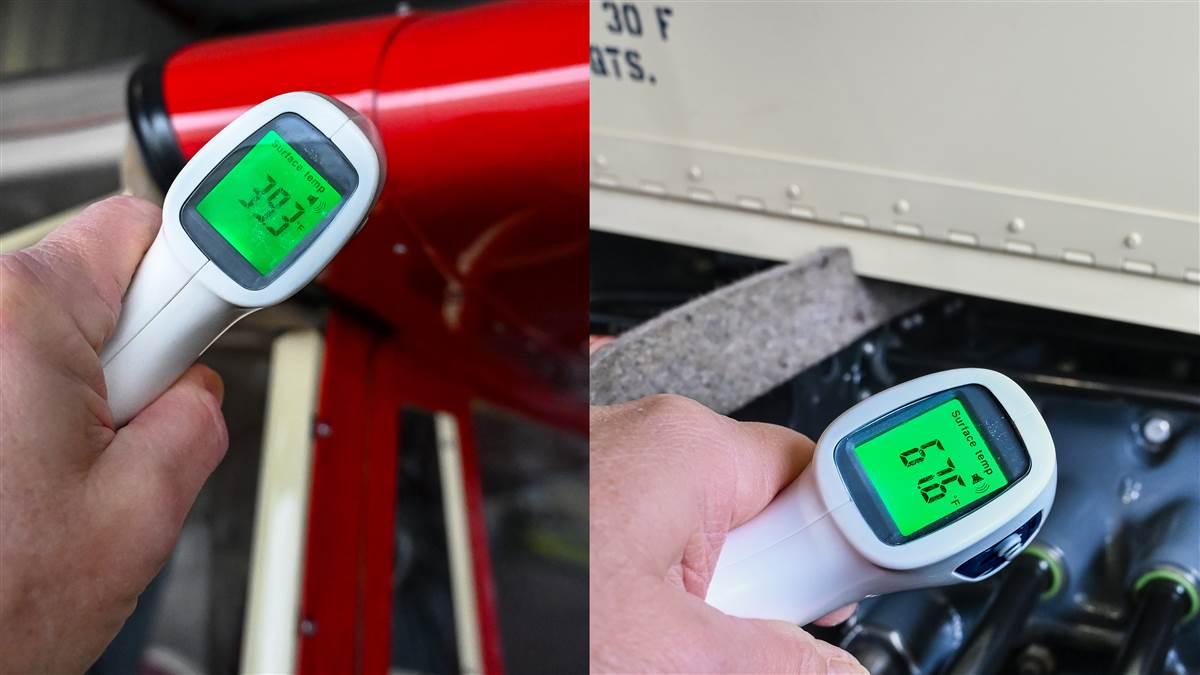
The device relies on metal-to-metal heat conduction and is effective.

Related Articles


