Opinion: Diesel dreams and avgas nightmares
Why most of the piston fleet still burns lead—and whether Jet A engines will ever change that
It was a beautiful Saturday morning when my friend Bob taxied his freshly converted Cessna 172 up to the self-serve pump at a quiet Midwestern airport.
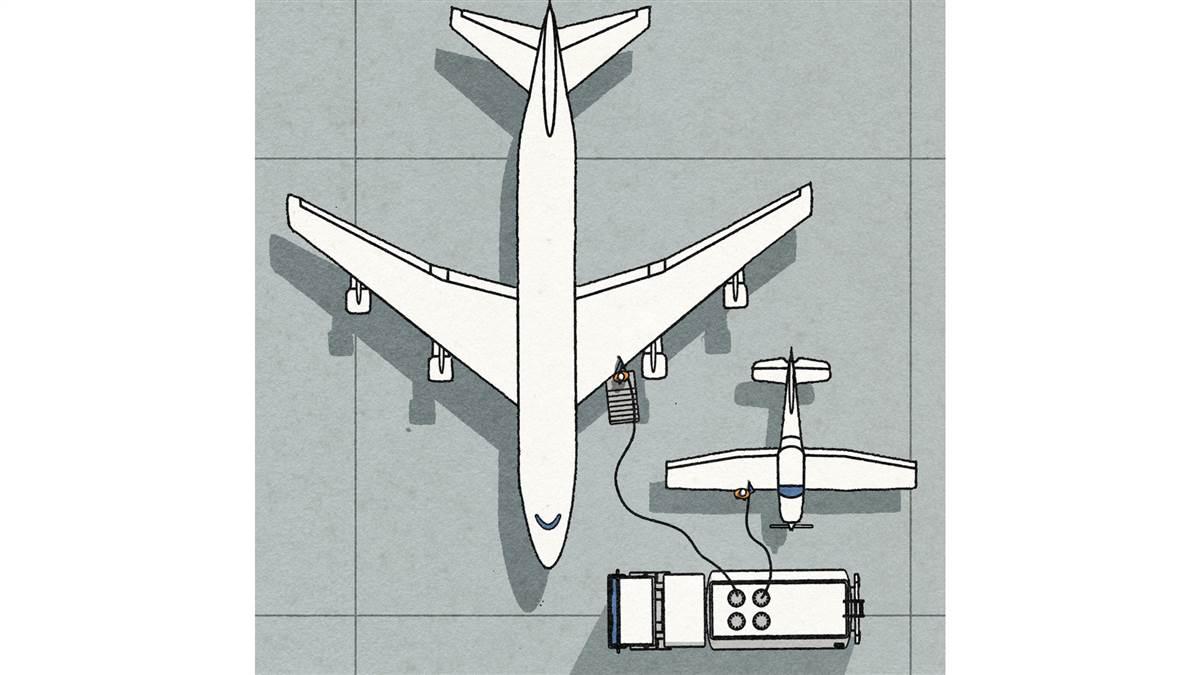
The big green Jet A hose was right there; the price was a full $1.80 cheaper than the avgas pump sitting next to it, and Bob was already calculating how many extra $100 hamburgers this was going to buy him. Then the lineman wandered over, scratched his head, and asked, “You sure that thing burns kerosene?” Bob pointed to the decals on the Skyhawk’s engine cowling, and the lineman walked off with a now-I’ve-seen-everything look on his face.
That was the easy part. The hard part came three months later when Bob realized that with his wife, two teenagers, and a weekend’s worth of camping gear the airplane would not leave the ground with legal fuel reserves. The diesel had solved the lead problem. It had also created the problem of never carrying a whole family and bags at the same time.
Welcome to the curious world of diesel power in general aviation—a technology that looks like the perfect answer to the unleaded-avgas mess until you start weighing the actual airplane.
The unleaded quagmire
By now everyone knows the backstory. The EPA, the courts, and a growing list of local governments have decided that tetraethyl lead in 100LL—the additive that keeps our engines from detonating—is no longer acceptable. The FAA’s EAGLE initiative (industry and government working together on a replacement) has been aiming for a full transition away from leaded avgas by the end of 2030.
GAMI’s G100UL has an STC covering virtually all piston airplanes and is trickling into a handful of airports. Swift Fuels’ 100R has an STC for some engines and is working to expand the approved model list. Lyondell/VP Racing’s 100E remains in testing. Meanwhile, 100LL prices spike, availability is spotty in many parts of the world, and owners of high-compression engines keep asking the same question: Why are we killing ourselves trying to invent a drop-in unleaded 100-octane gasoline when Jet A is cheaper and universally available?
EAA AirVenture in Oshkosh made that question feel more urgent. Former FAA Deputy Administrator Chris Rocheleau told the crowd at the “Meet the FAA” forum that a new transition “roadmap” would come within weeks—and that it now looks likely the industry will miss the 2030 deadline. The unleaded fix everyone’s counting on still isn’t a sure thing.
Diesel—or, more precisely, compression-ignition engines that burn Jet A—sidesteps the whole mess. No lead, less fuel burned, and a fuel that’s already sitting in a truck at every airport that serves turbines. So why hasn’t the piston fleet stampeded toward it?
The contenders
Three manufacturers dominate the conversation.

Continental’s CD-series—the CD-155, CD-170, and the larger CD-265/CD-300—has seen the most retrofit activity so far. These engines are managed by full authority digital engine control (FADEC), aviation’s version of the computer that manages your car’s engine, instead of leaving mixture and prop control in your hands. Continental quotes fuel consumption of about 0.35 pounds per horsepower per hour versus 0.42 to 0.48 for a well-tuned gas engine in cruise. Continental is also flight-testing a CD-300 conversion for the Cessna 206, with supplemental type certificate approval targeted for 2027. Continental diesels are available as retrofits and factory-new in aircraft such as the Piper Archer DX and Tecnam P2010 TDI.
Austro Engine’s AE300/AE330 family is Diamond Aircraft’s in-house solution—Mercedes-derived diesels that power the current production DA40 NG, DA42-VI, and DA62. When the airframe is designed around the engine instead of bolted on after the fact, the marriage works a lot better.
DeltaHawk’s DHK180 is the newest clean-sheet design, type-certified in 2023 and built around mechanical simplicity rather than a computer brain. The big news of AirVenture week: Piper brought the first flying Seminole DX prototype—a diesel PA–44 twin-engine trainer using two DHK180s—to Oshkosh, just three weeks after its first flight. Preliminary numbers show a 1,700-fpm climb rate and fuel burn roughly 35 percent below the standard avgas Seminole—numbers that make flight school owners sit up and take notice. Piper is also planning a retrofit path for existing Seminoles.
The Seminole DX joins the CD-155-powered Archer DX in Piper's product line, making it the first mainstream American manufacturer to bet on Jet A power for both a single- and twin-engine trainer.
Cessna’s diesel detour
This is the part that still makes me grind my teeth. Cessna actually got a diesel Skyhawk into production—the Turbo 172 JT-A, powered by the Continental CD-155, certified in 2017. A handful were built and sold, mostly overseas, before Cessna quietly discontinued it in 2018, citing weak demand. Its sibling, a diesel 182 using a French SMA engine, never even got that far: certification delays dragged on until Cessna canceled the whole JT-A Skylane program in 2015 without ever delivering one.
It was a classic GA moment: the biggest manufacturer in the business dips a toe in the water, decides the water is complicated and the demand isn’t there, and goes back to selling the same basic engine architecture that was designed when Harry Truman was president. Continental still sells the CD-155 as a 172 retrofit STC if you want to finish what Cessna started. Piper’s move with the Seminole DX looks like a more serious, better-timed commitment.
The weight tax
Diesels pay a structural price for their high compression ratios, and it shows up where it hurts: useful load.
Continental’s CD-170 weighs 306 to 344 pounds dry, against roughly 290 to 310 pounds for a comparable Lycoming IO-360—a 20- to 50-pound penalty. The Austro AE300 weighs 410 pounds dry for 168 horsepower—a 100-plus-pound penalty versus a similarly powered Lycoming. DeltaHawk’s DHK180 comes in around 357 pounds dry, including starter, alternator, turbo, and exhaust—still a 35- to 60-pound hit against a bare Lycoming IO-360.
In a light single, an extra 40 to 80 pounds comes straight out of what you can carry in seats and baggage. That’s the gift that keeps on taking—just ask Bob. In a light twin, that weight penalty can significantly affect engine-out climb and service ceiling.
Efficiency, with an asterisk
Diesels win on fuel efficiency, no asterisk needed there. Piper claims roughly 35 percent lower fuel burn for the Seminole DX versus the avgas version.
Here’s the asterisk. Jet A is denser than avgas—about 6.7 pounds per gallon versus 6 for 100LL—and it contains less energy per pound. You still come out ahead on both cost and range for most missions, especially where Jet A is cheaper per gallon but the advantage isn't quite as dramatic as the raw numbers suggest.
Who can actually convert?
Retrofit options remain limited. Continental offers STC kits for certain Cessna 172 models, selected Piper PA–28s, the Diamond DA40, and a handful of other types, Tecnam among them. Piper is adding a DeltaHawk retrofit path for the Seminole. Plenty of popular airplanes—especially older ones or those with less common engine mounts—simply aren’t covered.
Getting a new STC is expensive and slow, which is why most owners who want diesel power end up buying a factory-installed diesel rather than converting. Conversions typically run $65,000 to $100,000-plus. That math only pencils out for high-utilization operators—flight schools, commercial operators, or private owners flying more than 200 hours a year. If you fly 50 hours a year, you probably won’t live long enough to recover the investment.
Maintenance looks different, too. Continental’s diesels run on a time between replacement schedule instead of a traditional overhaul—1,800 hours on the CD-170, up to 2,100 on the smaller CD-135/CD-155. Hit the number, or 12 years, and you write a large check for a new engine rather than an overhaul. The FADEC computer brain has its own failure modes and requires specific training. Liquid cooling adds radiators, hoses, and coolant that can leak or clog—something a Lycoming owner never has to worry about. The Thielert ancestors of today’s Continental CD-series engines had well-publicized gearbox and clutch failures that pushed the company into bankruptcy in 2008 and still taint the reputation of Jet A pistons, even though today’s engines are far more mature.
Resale values can be quirky: half the buyers love the diesel story; the other half immediately ask what it would cost to put a “real” engine back on the airplane.
Diesels make excellent sense for high-time operators, flight schools, international flying where Jet A is the only available fuel, and anyone buying a new Diamond or the forthcoming Piper Seminole DX—airplanes designed around the engine. They make far less sense for low-time private owners who regularly fill every seat and the baggage compartment, or for airplanes without a clean STC path.
Bob still loves the cheap Jet A and the single-lever simplicity. He still mutters under his breath every time the family wants to go somewhere with full seats and bags. The diesel didn’t solve every problem. It just traded the lead problem for a different set of compromises.
The bottom line
In general aviation there are no free lunches—only differently priced ones that sometimes weigh more and come with a new set of maintenance manuals. Diesels are a genuine technological step forward. With Piper joining European manufacturers like Diamond and Tecnam in offering factory Jet A piston airplanes, and with the FAA’s deputy administrator telling the crowds in Oshkosh that the 2030 deadline looks soft, the case for diesel keeps getting stronger for the right operators.
But, until the economics and support network catch up more broadly, most of us will keep burning a fuel that contains a heavy metal the rest of the world abandoned decades ago, in engines whose basic design would be recognizable to a mechanic from World War II. Progress, GA-style.