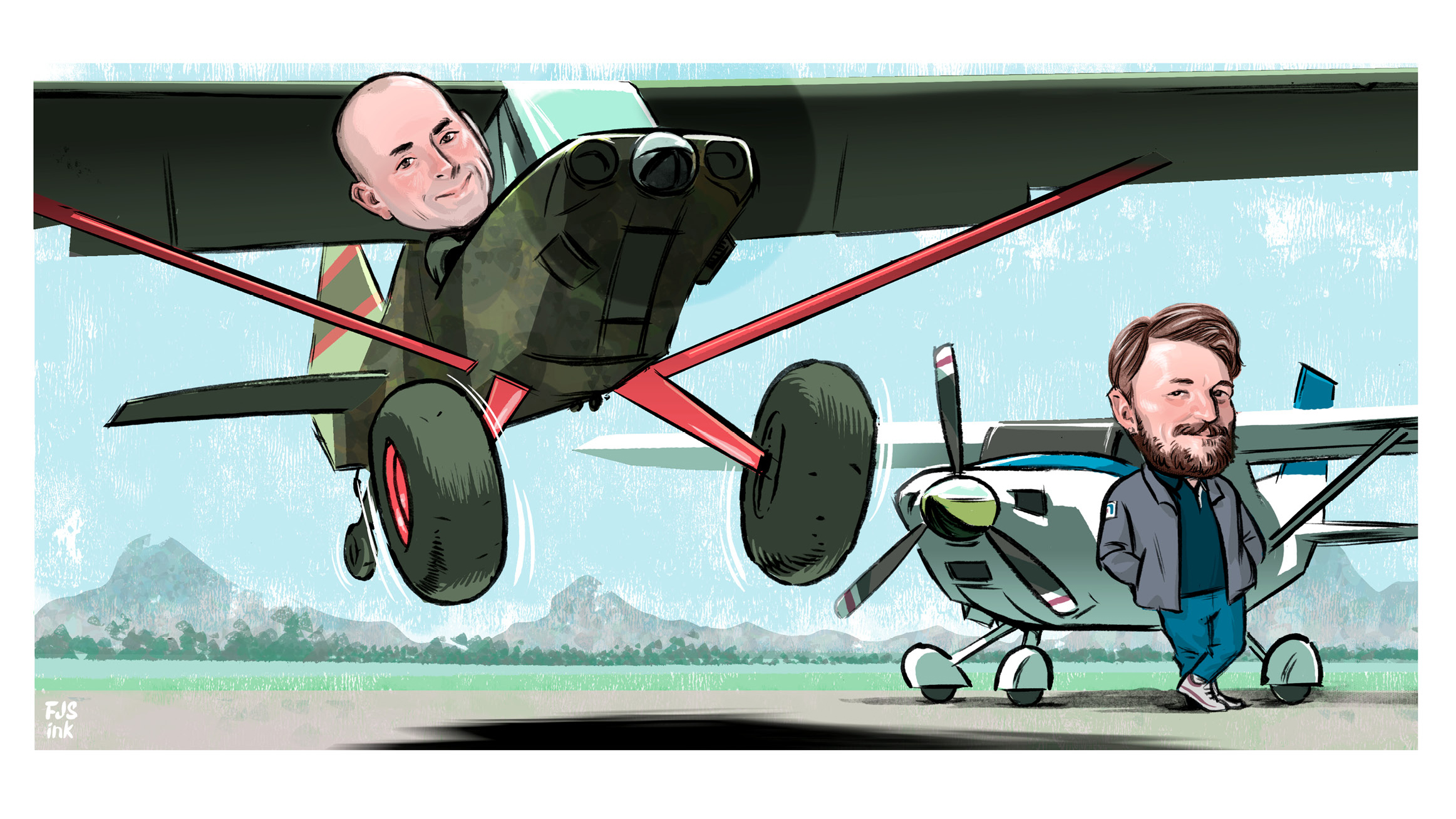
Long live the backcountry
Lots of runway ahead for STOL fliers
By Dave Hirschman
Backcountry flying’s decade-long growth surge is nowhere near peaking.
This demanding form of flight appeals to both new and veteran pilots; it provides access to an endless variety of scenic places; economic barriers to entry are relatively low; and it’s supported by exciting new aircraft and a can-do community.
On an emotional level, pilots have always been drawn to adventure, exploration, independence, and camaraderie—and backcountry flying offers these attributes in spades. Alaska and the Mountain West are bucket-list destinations, yet turf, gravel, and dirt airstrips exist in every time zone, so backcountry flying holds national, not just regional, appeal.
The Recreational Aviation Foundation (RAF) is a welcoming volunteer group that’s actively expanding access to backcountry airstrips in every state. This year, it’s petitioning the U.S. Forest Service to open dozens of remote fields, and organizations like Fly Oz in Arkansas have created entire networks of turf airstrips for adventure fliers.
While much of the new investment in aviation focuses on soulless drones and autonomous aircraft, and much of the emphasis on advanced flight training is centered on avionics mastery and automation, backcountry flying is all about stick-and-rudder skills. Backcountry flying—particularly when it’s done in mountainous areas—tests every bit of pilot knowledge, judgment, and technique.
In economic terms, backcountry flying is less costly than other aviation niches. It’s easy to lament the high sticker prices of new, high-end STOL airplanes. Yet many experimental, light sport, and vintage airframes that excel in the backcountry have relatively modest values and low operating costs. Even at elite STOL competitions, relatively inexpensive (though highly modified) kit aircraft have shown they can perform at the highest levels.
Backcountry flying used to require Ph.D.-level tailwheel skills. But CubCrafters and its heretical nosewheel NXCub broke that monopoly without any performance loss—and Zenith, Cessna, and others produce highly capable nosewheel aircraft for the backcountry. Now, the 90 percent of the pilot population who don’t regularly fly tailwheel aircraft can enjoy backcountry flying as much as any Super Cub ace.
For the legacy fleet of Cessna singles, modifications such as vortex generators, tundra tires, landing gear supports, and engine and propeller upgrades can transform stock Cessna 170s, 172s, 175s, 182s, and 206s into fire-breathers.
Van’s Aircraft, the world’s largest kit airplane manufacturer, is producing RV–15 kits as fast as it can. And while Van’s hasn’t released any sales figures, the amount of interest in its rugged RV–15 shows it’s likely to be one of its most commercially successful designs.
The FAA’s newly adopted Modern-ization of Special Airworthiness Certification (MOSAIC) rules are meant to keep more sport pilots flying and bring new backcountry aircraft to market with fewer regulatory burdens. The pervasiveness of adventure flying on social media, STOL demos at large airshows, and STOL competitions give backcountry flying outsized attention and perhaps make it seem bigger than it really is. But long order backlogs for specialized STOL aircraft show solid demand in this specialized niche, and increasing prices for backcountry flying show there’s lots of runway ahead.
And while backcountry flying may seem like a uniquely American form of flight because of its unrestricted, wide-open-spaces character, people’s fascination with it is worldwide. The development of Rotax and other piston engines that don’t rely on leaded avgas, as well as small turboprops, is sure to enable off-airport adventure flying, especially in places where avgas is prohibitively expensive or simply unavailable.
We’re nearer to the beginning of the backcountry story than the end of it. 
STOL is out of runway
The hype is loud, but future is short
By Ian Wilder
Short takeoff and landing aircraft have taken aviation by storm. Every aircraft manufacturer, from those targeting Part 135 operators to kit manufacturers like Van’s Aircraft, has felt the need to add new entrants into the STOL category. But as performance continually improves, the cost increases. Development, manufacturing, and performance all wind up in the price tag, and we’ve hit critical mass.
While people are paying a premium now for STOL performance, it’s inevitable that people start to check out these pilot’s operating handbooks and realize the pretty penny they’re paying for STOL isn’t worth it compared to “regular” aircraft.
There is no denying that some STOL aircraft are incredible performers. But they all come with a compromise—limited takeoff weights, range and endurance, price, or more. That’s on top of what is seemingly a “STOL tax,” or manufacturers charging what I would consider outrageous prices just because they can market their aircraft as STOL.
So, as potential buyers and aircraft owners stare down the barrel of the STOL craze, it’s as simple as this: More people aren’t going to be going backcountry flying. It’s been glorified on YouTube and social media for years now, but let’s look at the practical aspects.
What percentage of GA pilots actually live near conquerable backcountry? Infrastructure needs—fuel farms, mechanics, hangars—often mean that pilots can’t be completely off the grid. Taking your airplane to and maintaining it in the backcountry is an inherent logistical challenge that most people aren’t willing to meet. And owning a tailwheel airplane and flying around 3,000-foot grass strips on the East Coast is not “backcountry”—as cool as it may be.
I’ve seen too many STOL airplanes adorn the ramp that have never seen a grass strip shorter than 2,000 feet (some that have seldom seen any grass!). So, what is the point? Why are we sacrificing endurance, comfort, and the ol’ reliables (by which I mean Cessna 172/182s of the world) for a mission that we may fly once in our lifetimes?
Pilots have to more critically evaluate their mission. It is a very cool vibe to put on your leather jacket and hop in your backcountry STOL beast, but very few of those people ever end up seeing the true aviation backcountry. In my mind, STOL flyers are waning, and STOL posers are winning.
I have nothing but respect for any backcountry pilot. Their knowledge, skills, and aircraft are typically most impressive and far exceed my know-how. I, too, thought that could be me, in some way. But I looked long and hard in the mirror, and found my mission involves mostly 5,000-plus-foot strips and comfy, cozy FBOs that serve you ice cream after you land.
There’s no doubt that STOL opens the backcountry, and people have taken advantage. But for the wider general aviation audience, the STOL hype has hit a peak. The market has driven prices up the wall, and the utility for the average pilot is low. For me, personally, I’ll be taking the 182 everywhere it is safe to fly it, and I think I’ll be seeing the wide-world just about as much as, and much more comfortably and faster than, the hangar neighbor with a Piper Cub. 

Related Articles