Taming the Kodiak
Backcountry flying with Parkwater Aviation
Parkwater has a pair of Kodiaks, one on wheels and one on amphibs, and a sim for training. The wheel Kodiak is Kodiak 1, the first ever Kodiak 100 off the line, and it has been faithfully training pilots since it was manufactured, never operating in the field outside of training. The amphib is former student John Geddes’ aircraft; he enjoyed his training so much that when Parkwater went up for sale, he bought it. Geddes eventually purchased sister companies Backcountry Flying Experience based in Kalispell, Montana, and Coeur d’Alene Seaplanes in Idaho.
The amphib is a more recent addition to the fleet, but Kodiak 1 has been in the Parkwater fleet since the beginning “through a unique set of circumstances,” says CFI and director of operations Rod Colvin.
“So, I’ve heard stories, but when the delivery time slipped, that customer said, OK, we’re out. And that left the factory high and dry, and they actually needed to make payroll,” says Colvin. “They called one of the board members and said, ‘We have a problem.’ And he said, ‘Well, fine, I’ll buy the aircraft.’ And then promptly decided, what am I going to do with this aircraft?” After making some calls and not finding a spot for it, he decided to start his own organization.
“And that’s where Spokane Turbine Center came from.”
Spokane Turbine Center became Parkwater in 2013, and since then has been the go-to factory trainer for Kodiak aircraft. Although Parkwater began with and still trains the NGO and missionary folks the Kodiak 100 was designed for, Parkwater doesn’t have a typical customer.
Colvin says the aircraft is generally flown either by the owner themselves or by a pilot employed by the owner. You know, it may be a jet, it may be a turboprop of some sort, but this is often the aircraft that gets them to their out-of-the-way location.”
“You can’t get the Gulfstream to the ranch, so you take the Kodiak.”
Run, then walk
Colvin grew up west of Spokane, surrounded by the wheat fields, and was entranced with 4 a.m. wake-ups from crop dusters as a child and pursued aviation since then. He previously worked as an A&P in west Texas; flying floatplanes in Ketchikan, Alaska; and working at a FedEx feeder out of his hometown before joining Parkwater in its first year. He enjoys the diversity of his job, and he instructs in both the wheel and float Kodiak. Today we’ll start with the latter, which they fondly call the “Floatiak.”
What follows is the Kodiak firehose experience. Earlier in the day, I’d flown a Piper Super Cub on floats with the folks at Backcountry Flying Experience (story to come in an upcoming issue of AOPA Pilot). Stepping into the Floatiak is amusing because it feels like growing up from cub to bear. And where a Cub’s about as simple as it gets, the Kodiak is not terribly complex but a relatively expensive and breakable beast. It’s a little intimidating.
The power is, of course, the big change. That power means you need to stick to the rudder a lot more and stay on top of trim. Power adjustments require finesse and, most important, anticipation. There’s also an additional element of stress just knowing you’re flying something worth quite a lot more than the average flight school Cessna 172; that any damage to it will cost quite a lot more as well; and that if you do damage it, another chance like this will be hard to come by, if it ever comes by again.
Colvin says the Kodiak is pretty typical of an entry-level turbine airplane, that I’ll have no trouble adjusting, and that he’ll stop me from burning out the engine on takeoff.
“I think it’s a great transition trainer into the turboprop world. It’s easy to fly, and it’s just an honest airplane. It has some unique designed-in things like the discontinuous leading edge and some things like that that make it have unique flight characteristics. It doesn’t fly like a typical Cessna. That’s not necessarily a good or bad thing. It’s just different.”
Colvin expertly gets us off the dock, and we float around the lake, nice and quiet before he helps me out with the power and sight picture on the takeoff. The initial nose-up attitude, probably around 7 degrees or maybe even more, is so aggressive it’s impossible to see ahead. Once up on the step, visibility improves, and the Kodiak is happy to get into the air. It feels extra heavy with the floats on and an exchange weight of 993 lb. I’m a little self-conscious of how much trim I’m putting in, and Colvin notices my hesitation.
“Do not try to wrestle with this airplane. It will win.”
I continue to roll the trim in until it evens out. The big differences with the power are the delay and the fact that you, the pilot, are the torque limiter. Colvin notes that you can burn out the engine with one bad takeoff, and you can burn yourself by forgetting to put flaps in. With his guidance, we go through a few takeoffs and landings and the basics of the Kodiak. I’m surprised by, other than the engine, how easy and forgiving it is.
“There’s not very many things that will get you in trouble with this airplane, except forgetting the flaps on takeoff. The takeoff roll can increase by 300 percent if you don’t put the flaps down on a short airstrip. That’s not a good ending.”
Magee
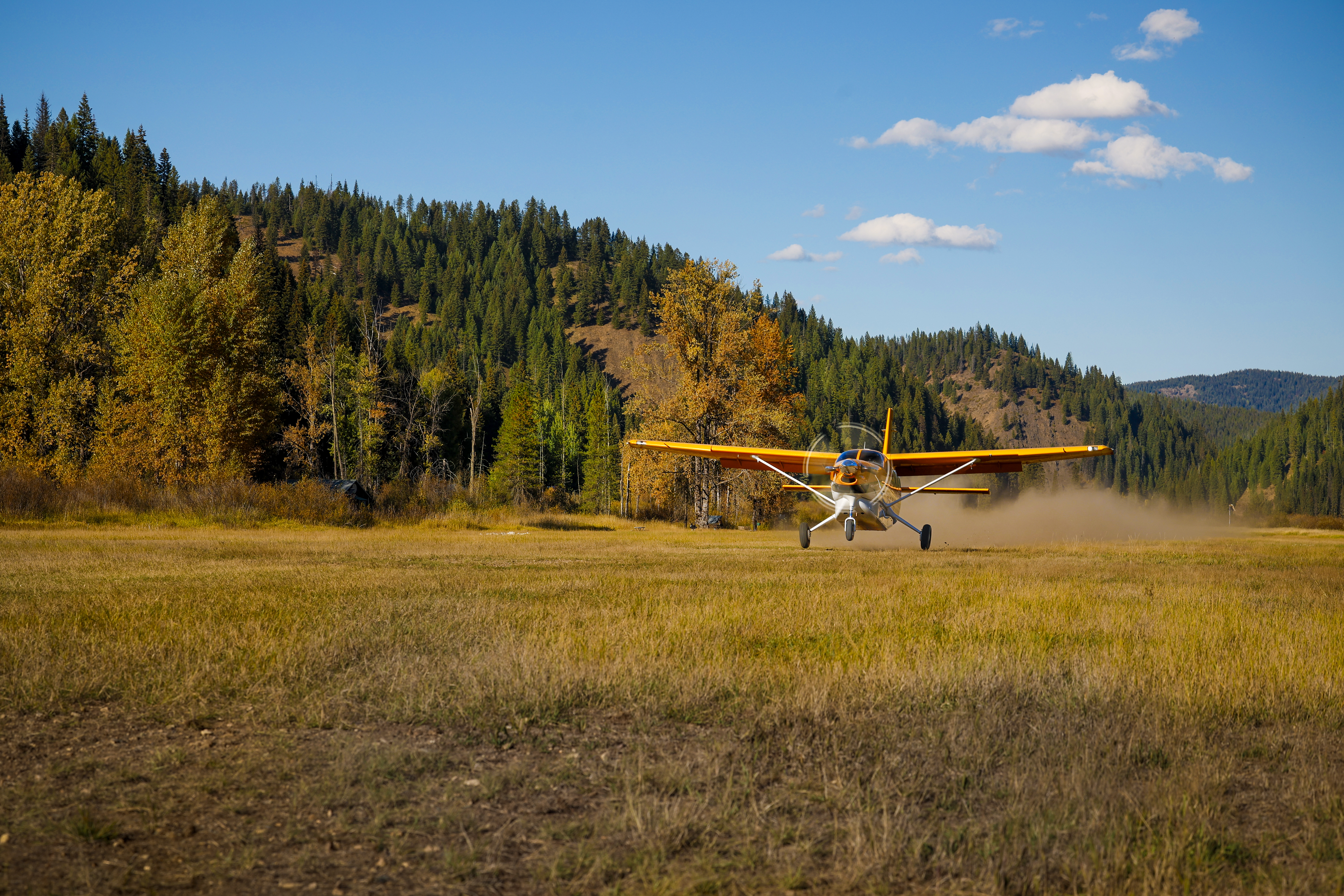
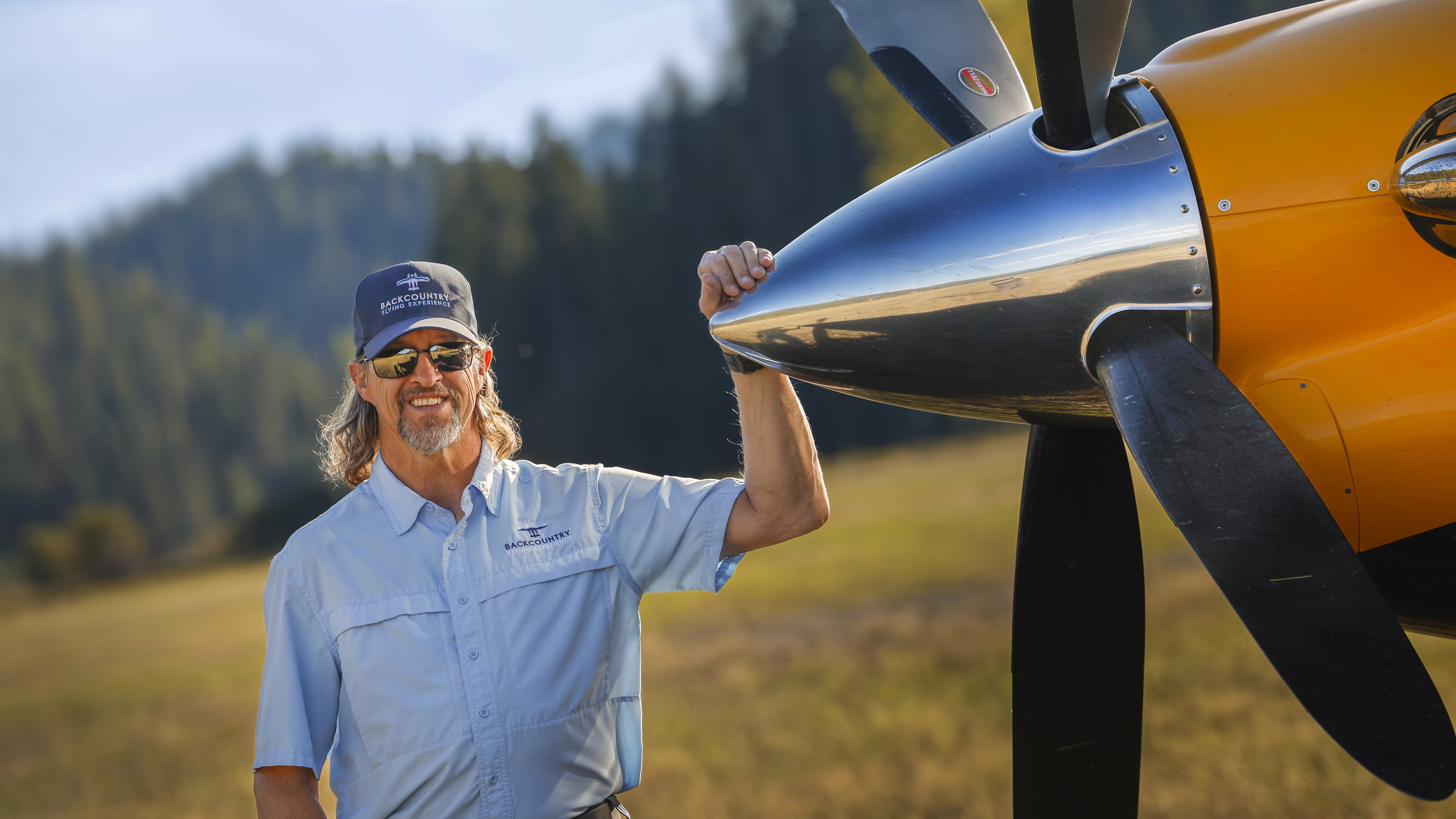
The next morning, we switch to the wheel Kodiak and depart Kalispell for the Idaho backcountry. This time we’re flying with Kevin Heiss, former U.S. Navy helicopter pilot and previous owner of Coeur d’Alene Seaplanes. He admits that the plan when selling the business was not to keep working for it, yet here he is, happy to be here. We’re heading to Magee, Idaho, for a few landings. Heiss promises this will show off the capabilities of the Kodiak and give me a little challenge as well.
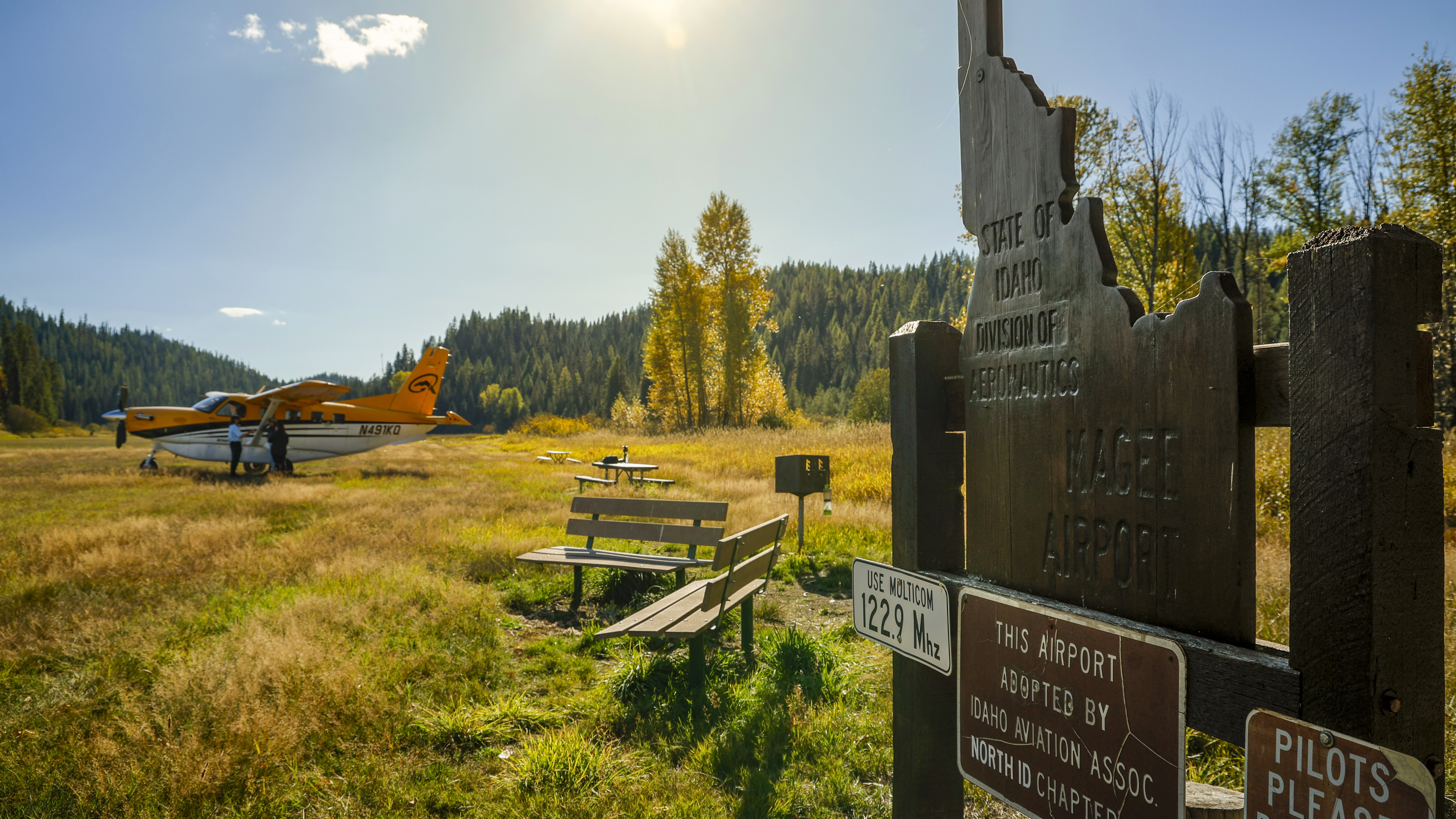
Magee Airport (S77) is tucked into a little valley, with cabins on the field and a pilot house supported by the Idaho Aviation Association. It’s classic Idaho, with its dusty, white stone-lined strip, surrounded by tamaracks that are just starting to turn gold. The day started out cool, but now we’re in at least the 70s, density altitude climbing up to around 4,000 feet.
We overfly the field, seemingly the only aircraft in the area. Magee is nestled in a valley, and we enter the idea of a left downwind, descending, facing a peak with the right wing hugging another line of hills before turning base and following a creek onto final. Once I have the runway in sight, I let Heiss know that I feel like we’re committed.
“Oh, in this? No way,” he says with a smile and a laugh. Seems like I’m thinking with my Super Cub brain. And he’s right—we have enough performance in the Kodiak to climb us out of trouble at any point on the approach. We’re behind the power curve on short final in the 50s and land with no problem. When we go to take off again, the pitch attitude for VX is aggressive, almost as nose high as a water takeoff feels, and Heiss keeps reminding me to bring the nose up, up, up, while we get away from the terrain. We could’ve probably pulled off a touch and go if we’d really needed to.
My three takeoffs and landings get progressively shorter, and the terrain-contouring nonstandard pattern feels normal by the last circuit. I’m now dancing with the music instead of half a beat behind. I can see how the turbine world can become addicting. The Kodiak can land slower than a Cirrus, and it climbs like nobody’s business. A 2,200-foot strip like Magee is light work. What else can it do, how short can it go? I wish I could um, borrow, the airplane for a few days and find out myself. The last landing is the best, and I’m grateful we get to wrap up with that sweet taste in my mouth.
We take a break on the ground, happy to be in the land of no cell service, under bluer-than-blue skies. It’s hard not to be wowed by the places aviation can take you time after time.
“Well, my friends in Alaska will not appreciate me saying this, but I call this baby Alaska without the bugs,” says Heiss. “We have an immense amount of waterways, mountains, activities. There’s boating and hiking and any outdoor activity you can think of. We pretty much have it covered up here.”
We leave, and there’s that familiar twinge from departing the backcountry for the modern world, and we head northwest into the Pacific time zone and Spokane for another trip east back into Idaho in the Floatiak to owner Geddes’ lodge for the night.
The lodge
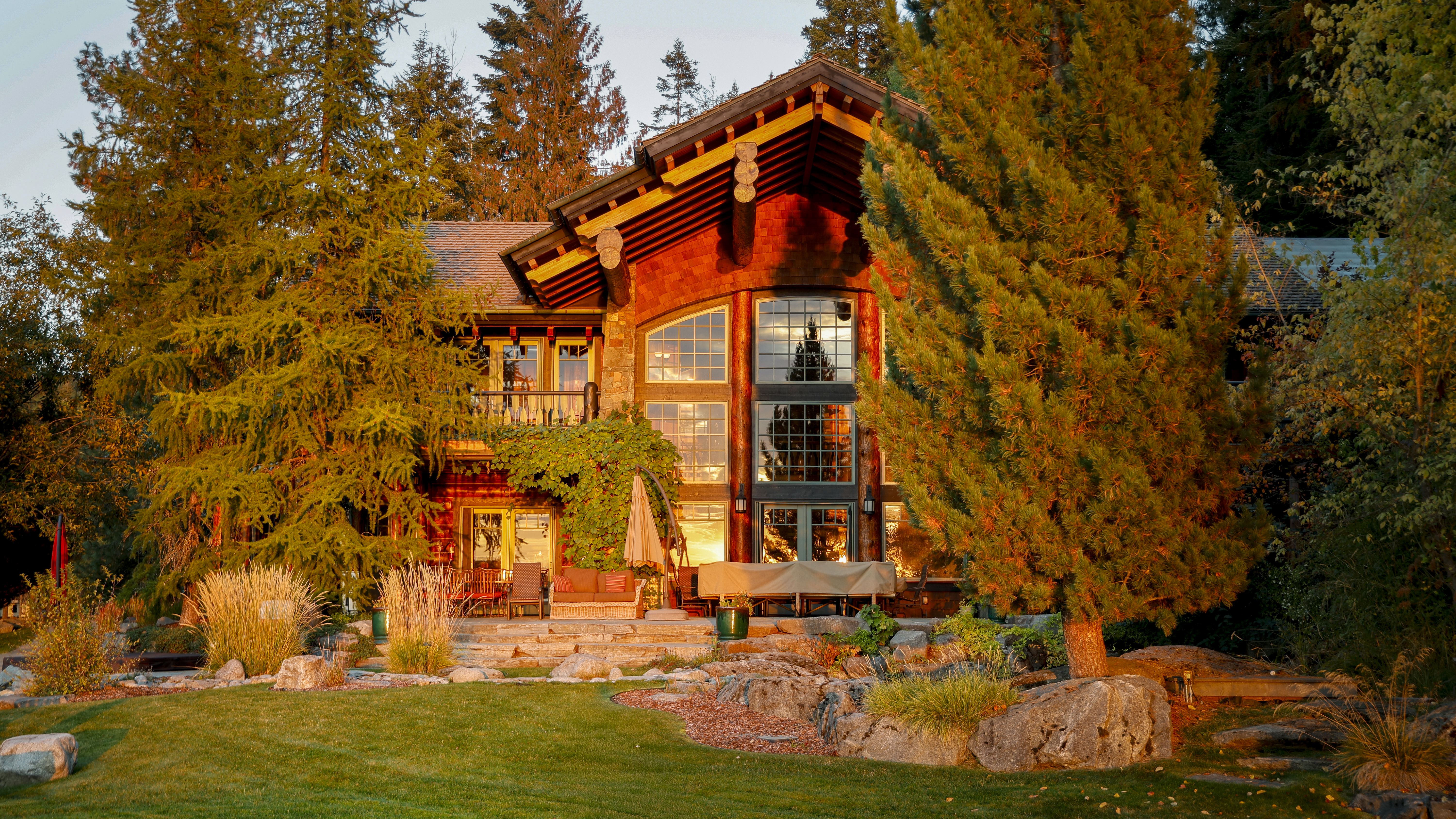
The lodge on Hayden Lake is on the same parcel of land that Parkwater’s owner, Geddes, lives on full time and on the very same lake he grew up on. The grand main lodge building is well-suited for high-end training and also hosts corporate retreats. A great room offers perfect sunset views of the lake, and a theatre-like room is well-suited for training. This more recent addition to the Parkwater experience hasn’t seen a ton of customers yet, but Geddes hopes that will change in the future and seems happy to have it as a business expense either way.
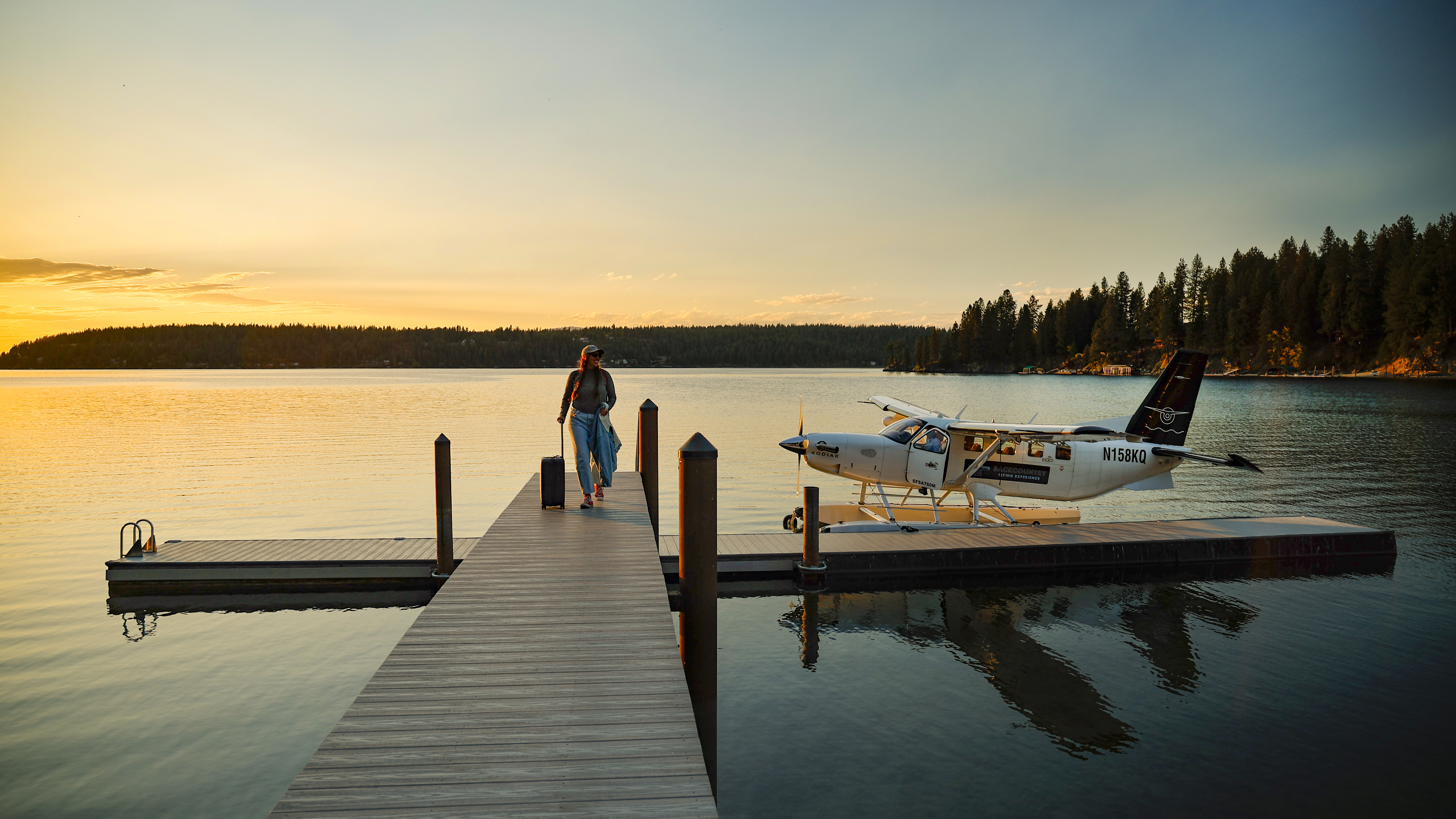
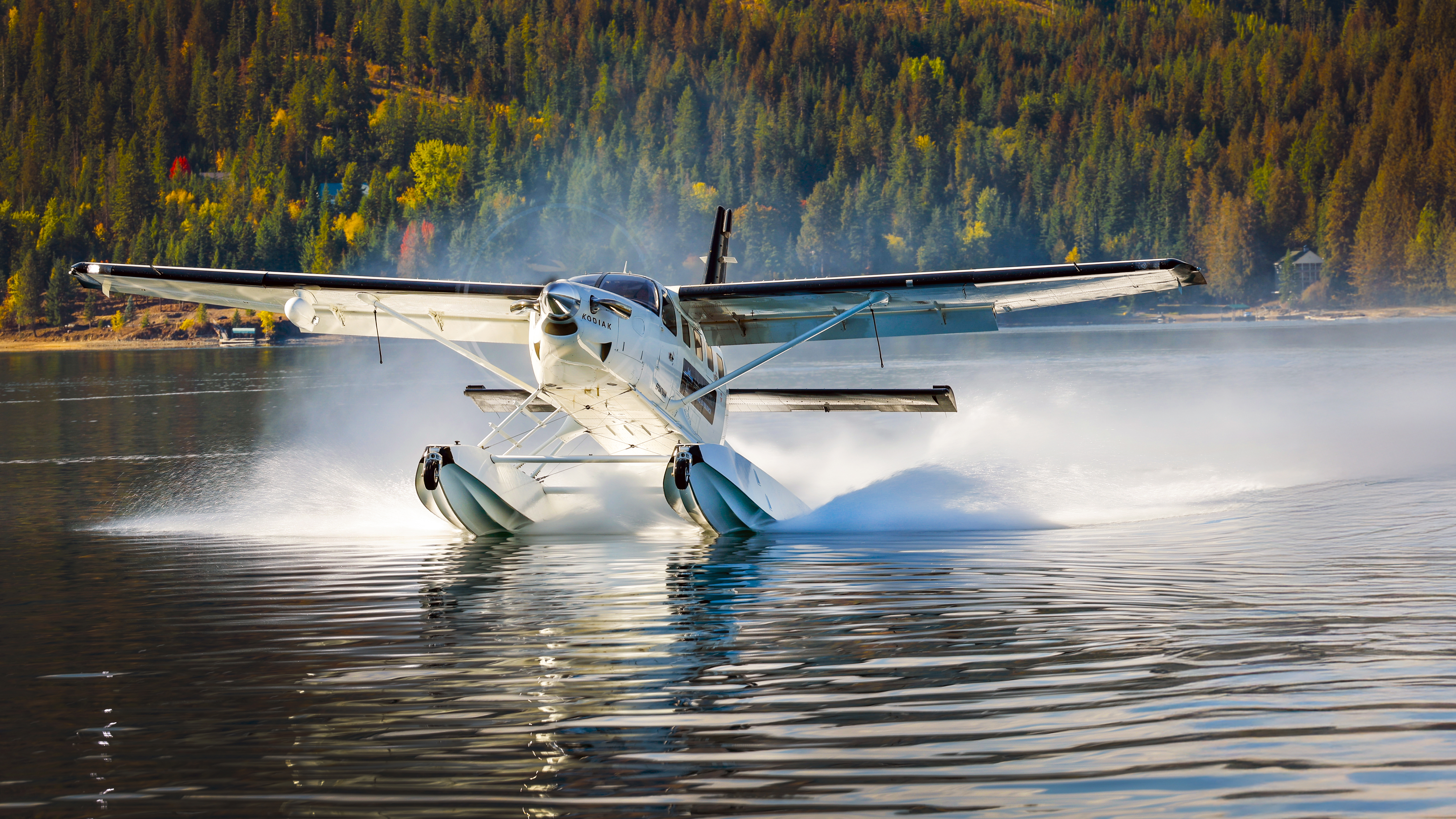
Docking offers some real-world seaplane challenges. The lake is low, and a submerged log peeks one skinny arm out right in line with where we would otherwise approach. The water is crystal clear, and the bottom of the lake is alarmingly close, although far enough Heiss feels good to dock. Geddes waits on the dock to help, a critical aid especially in a bigger floatplane like this one.

Sitting on the dock, the Kodiak is an advertisement for the places you’ll go with floatplanes. It had no problem taking all our gear and floating up in water only a few feet deep, and it looks content now with the backdrop of a truly stunning sunset over the lake. Heiss departs with the setting sun, the sound of the Kodiak at a surprisingly reasonable decibel on this lake where quiet is surely a commodity.
After a home-cooked dinner and dessert on the patio, we spend the night in the sister lodge a short walk from the main one, which can sleep probably dozens in a pinch, with four en suite rooms and more bunks available throughout the main space. Where nature ends and the lodge begins is a fuzzy line, and the design makes this cabin (if you can call this massive home that) feel like a real retreat from the world.
The next morning, Colvin arrives on water wings for our final day with the Parkwater crew. I hand over the controls to him for the fancy flying part of the morning. His landings are excellent, soft like putting your head on your favorite pillow at the end of a long day, a finesse worth striving for after we load up our crew and he hands the controls back to me.
Return
We hop over to Felts, an easy few-minute flight and a shopping cart landing, before taking a tour of the facility. Previously home to the Washington Air National Guard, the Parkwater building is full of history. We see the company’s full motion simulator, what was the first of its kind, and the old tower, which Colvin says is one of the best places to have a quiet lunch.
After a couple days of time zone hopping and exploring some of the country’s most beautiful backcountry, it’s time to go home. We head back to Kalispell City Airport (S27) after switching from the Floatiak into Kodiak number 1 again at Felts. While everything else seems like it’s come together, the unfamiliarity of the rudder trim leads to some gentle and well-deserved ribbing from Colvin on our way back as I fly uncoordinated before finally trimming us out yaw-wise. There’s an autopilot, but Colvin doesn’t even give me the option, and I wouldn’t have taken it anyway. What’s the point when I’ve never flown a Kodiak before this week and don’t know when I will again?
Colvin’s the perfect instructor as we head back to Kalispell City Airport, staying silent but for radio calls as we set up for our approach. I’m finally comfortably ahead of the airplane, and we’ve done enough local flying that I know where the airport is and can find it and set myself up without assistance. With his hands and feet away from the controls and power, we enter a left downwind, base, and turn final. The scale of the airplane is my weakest point, and he advises me to realign on final since I’ve misjudged the centerline with my smaller-airplane sight picture. The pressure’s on to end on a good note, and I’m proud that by now the airplane and I are synced up. We touch down smoothly right where I wanted, the engine whining as I take it back through beta and into reverse to slow down before we taxi to the ramp.
Colvin puts his hands up to let the backseaters know that landing was all me, which I’m grateful for. For a new turbine pilot, the feeling of a great landing and then announcing your arrival with beta has got to be a top-five experience, and it’s hard not to feel like the cat who got the cream at the end of this long and rewarding week. Even with just the abbreviated training experience, it’s clear why Parkwater has been the leader in Kodiak training since the start. 
Related Articles