RedTail Flight Academy
Reshaping access to aviation
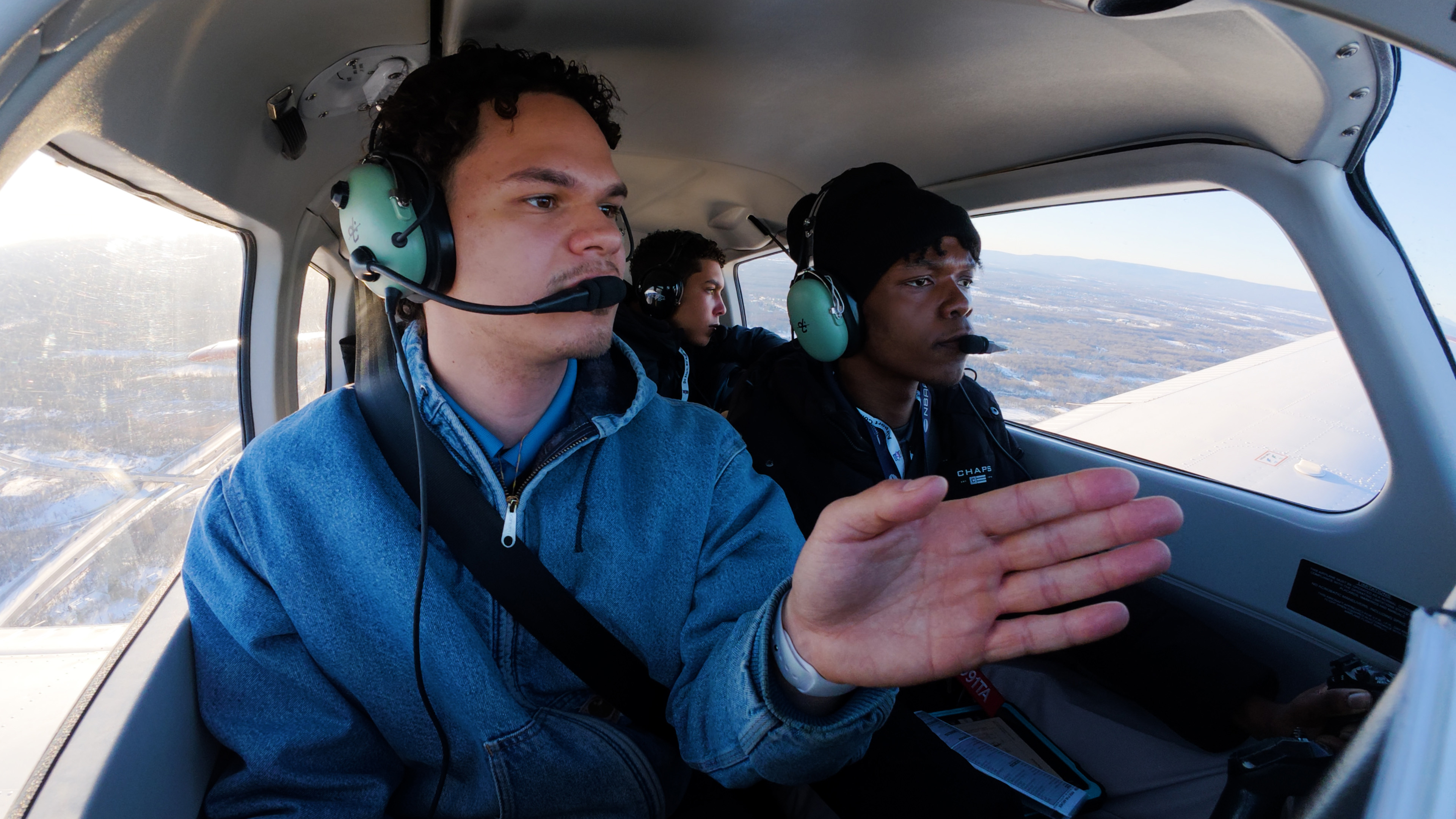
Under the leadership of retired U.S. Air Force Lt. Col. Glendon Fraser, the academy is designed as a pipeline, guiding students from their first discovery flights through advanced certifications. But Fraser is clear that the mission goes beyond flying: “Are we making pilots?” he said. “No, we’re making the next generation of leaders.”
That philosophy is modeled on the legacy of the Tuskegee Airmen. Students are expected to maintain strong academic performance while also mentoring younger participants, creating a cycle where learning and leadership go hand in hand.
For Cameron Ray, that structure has been transformative. After earning a degree in aviation management, he was searching for a way to continue his training when a mentor connected him to RedTail. He applied, was granted a scholarship, and joined. Two years later, he returned as an instructor.
“What stands out here is the environment,” Ray said. “This program feels more like a family. You can ask questions, have real conversations, and I make it a point as an instructor to make it feel like a friendly environment instead of me just talking at you.”
At RedTail, mentorship happens constantly—formally in the classroom, but also in everyday moments: like during lunch, when Executive Director Carlos Rodriguez started giving a lesson on aerodynamics over sandwiches.
For Myles McNair, who recently enrolled as a student, this support system provides a purpose and direction. Inspired by his grandfather, who once believed aviation was out of reach because of systemic barriers, McNair now trains in a program built to break down those barriers.
“A big part of being here is giving back,” McNair said. “You’re learning, but you’re also helping the next group coming up.”
Students regularly mentor younger participants in programs that begin as early as elementary school, gaining experience in communication and leadership. For McNair, teaching is the most important part: “Being able to articulate why we’re here but also articulate our journey and mission and be able to help the next generation.”
The academy also tackles one of aviation’s most persistent obstacles: cost. Through scholarships and partnerships, RedTail has provided more than $300,000 to college-bound students, opening access to training that would otherwise be financially out of reach.
Fraser’s goal is to build a self-sustaining system where students move through the program, enter the industry, and eventually return to mentor the next generation.
“We want them to succeed out there,” he said, “but also to come back and help someone else find their way.”
In an industry slowly working toward broader representation, RedTail Flight Academy is preparing students for careers and reshaping who gets to pursue them. 
 redtailflightacademy.org