Accelerometer (G meter)
Your airplane’s stress gauge
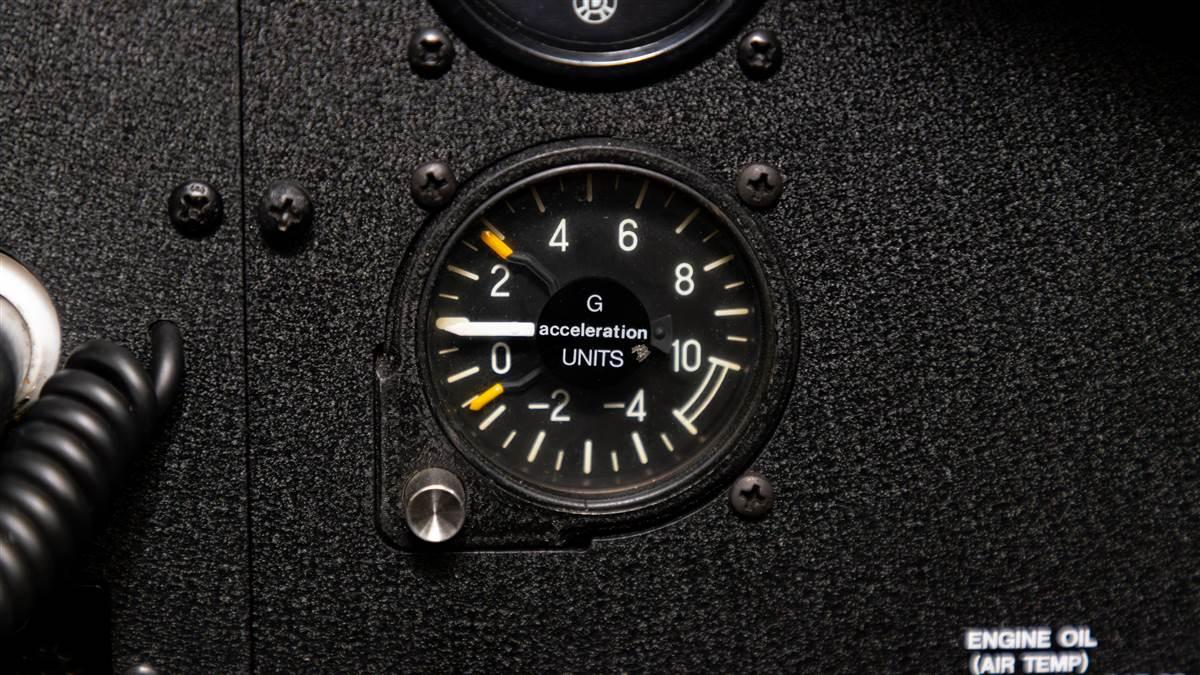
These phenomena are caused by increased aerodynamic loading on the aircraft, called load factor, and we can measure this stress using an instrument called a G meter (or, more technically, an accelerometer).
In simple terms, a G meter measures how many times the force of gravity the airplane is subjected to, where 1 G is straight and level, unaccelerated flight. Positive load factor corresponds with pulling back on the yoke, where 2 Gs and 5 Gs indicate twice and five times the force of gravity imposed on the airplane, respectively, and so on. Negative load factor, as you’d expect of a center-zero scale, is expressed in negative numbers and corresponds with pushing the stick forward. Importantly, as load factor increases, the speed at which a stall occurs increases as well because of the increased angle of attack required to generate lift.
Airplanes are designed for specific G limits, and the primary purpose of a G meter is to help prevent overstressing components and compromising the aircraft’s structural integrity. Monitoring the G meter gives pilots a better sense of how their control inputs and turbulence affect the airframe.
The inner workings are simple. Inside the standard analog G meter is a small weight attached to a spring (or suspended like a pendulum in older variations) that moves in response to acceleration along the aircraft’s vertical axis, deflecting the needle on the instrument to indicate the current G load imposed on the aircraft.
Such instruments are standard in aerobatic aircraft, like those used in upset recovery and spin training, but they are less common in classic trainers. Some aircraft with modern avionics may have digital G meters installed, which some consider more accurate and reliable.
But whether analog or digital, the G meter serves as the airplane’s stress gauge, connecting the dots between floating pens, technical load factors, and control inputs while helping you keep the airplane in one piece.
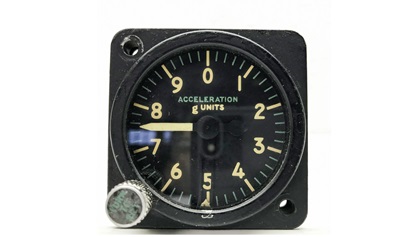 Analog
Pros: Intuitive and easy to scan trends; old-school charm.
Cons: Limited data display, readings can drift over time or become inaccurate because of worn components.
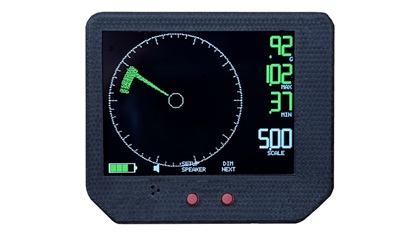
Digital

Related Articles


