Delay evidently exceeded anti-ice limit in Challenger crash
Business jet crashed on departure from Bangor, Maine
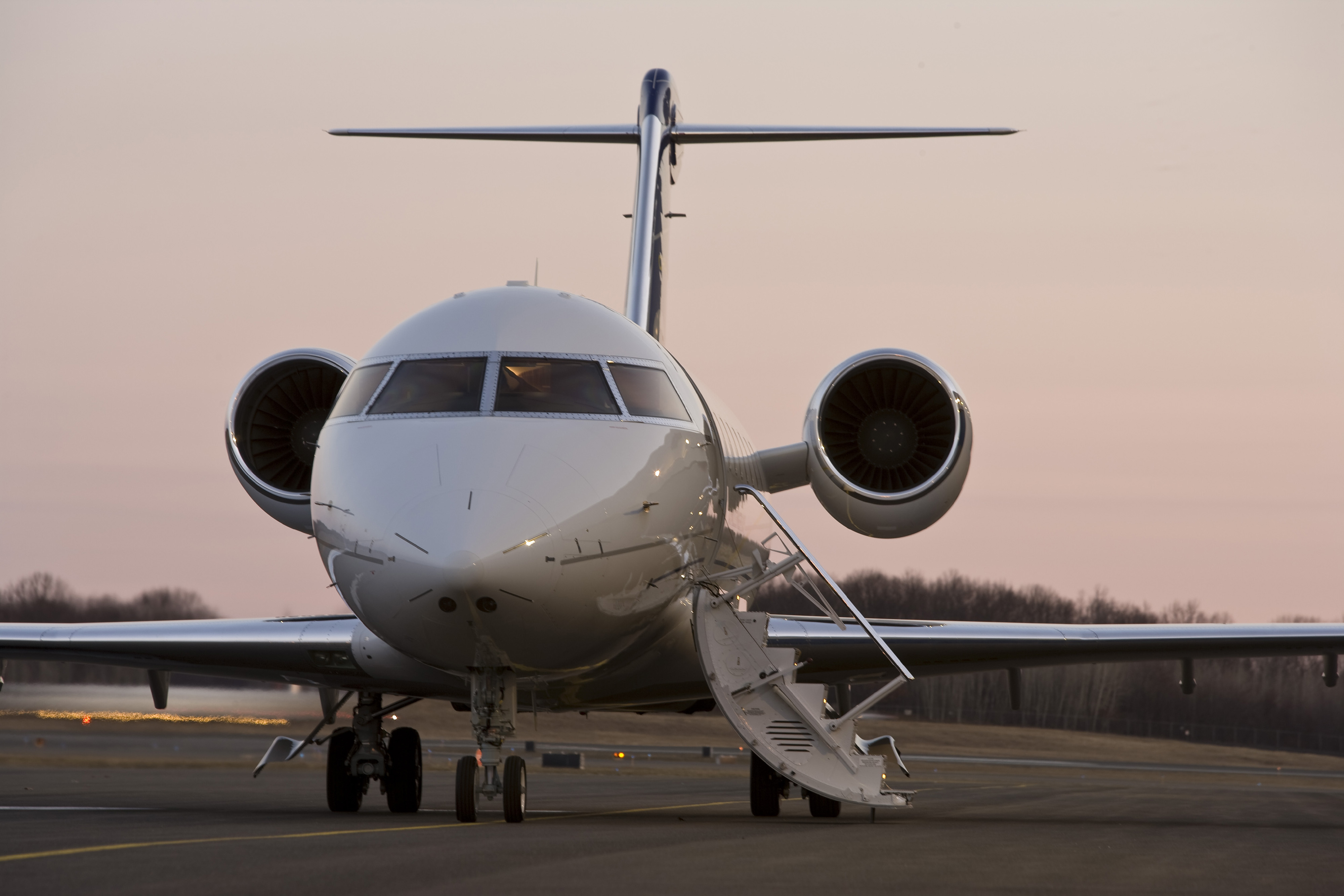
Intensifying snowfall, bitter cold, and an eight-minute interval between deicing and the start of the takeoff roll suggest icing was likely a factor in the crash of a Bombardier Challenger 650 jet bound for France that climbed less than 50 feet above the runway before hitting the ground in Bangor, Maine, on January 25.


ADS-B data from Global ADS-B Exchange and audio recorded by LiveATC.net paint a picture of a hasty departure under the leading edge of a massive winter storm that other pilots resisted.
The recorded temperature was 3 degrees Fahrenheit (minus 16.1 degrees Celsius.) Combined with falling snow, the Challenger crew, who configured the aircraft for takeoff prior to deicing, had only a few minutes to get off the ground before the contamination protection of anti-ice fluid applied in the midst of intensifying snowfall would be expected to fail. The Challenger was issued an instrument flight rules clearance at 6:30 p.m. Eastern time from Bangor International Airport (where it had landed at 6:09 p.m. Eastern time for fuel), to Châlons Vatry Airport in France, nearly 100 miles east of Paris.
The Associated Press reported January 26, citing a statement from the airport, that there were six people on board the Challenger, and none survived. The aircraft crashed seconds after liftoff, came to rest inverted, and caught fire—a sequence of events that is similar to previous accidents involving Challenger 600 series aircraft that lost control soon after attempting to take off with wing contamination. In January 2002, a Challenger 604 crashed in the United Kingdom during such a failed takeoff attempt attributed to frost contamination on the wing. Nearly three years later, another Challenger variant crashed in Montrose, Colorado, in light snow. The probable cause of that accident was similarly found to be "the flight crew's failure to ensure that the airplane's wings were free of ice or snow contamination that accumulated while the airplane was on the ground." The crew's lack of experience flying during winter weather contributed to the Colorado crash, the NTSB determined.
The Challenger 650 that crashed in Bangor was built in 2020, and registered to a Texas limited liability company, according to FAA records. The AP reported that the aircraft, which began the day in Houston, Texas, is registered to a corporation with the same address as the law firm Arnold and Itkin Trial Lawyers. Authorities did not immediately release the names of those on board. The Bangor Daily News reported January 27 that Tara Arnold, the wife of the law firm's cofounder, Kurt Arnold, was among those killed and identified to the media by a family friend. The daughter of Shawna Collins, an event planner, confirmed to local media that her mother was also among the passengers, and Gary Hosmer told a Houston outlet that his son, Jacob, was the pilot.
'I keep telling them this is stupid'
An illuminating conversation about weather conditions between two airline pilots on the ground control frequency as the massive winter storm bore down and the Challenger was being sprayed with deicing and anti-ice fluids likely went unheard by the Challenger crew, which had been directed to change frequency to communicate with the deicing truck.
Just before 7:17 p.m., the Challenger crew called in their order: "We’re already fully configured, so let's just do Type One entire ship, Type Four wings and tail." (Type I fluid is used for deicing, and Type IV is used to coat airfoils and prevent ice or snow from sticking to the surface.)
Less than a second later, an Allegiant flight, which had taxied to Runway 33 for takeoff and requested time to perform "a quick tactile check" reported back to air traffic control on the tower frequency they would need to return to the ramp, citing two reasons: "One, our deice fluid has failed, and two, I don't think the visibility is good enough for us to go, so we're going to have to taxi back to the gate here."
The Allegiant flight was informed visibility had just deteriorated to three-quarters of a mile—a significant threshold with respect to aircraft icing prevention. At 7:22 p.m., the crew of the Challenger, parked on the deicing pad, called ground control with a question about oceanic clearance, but did not inquire about the weather.
About 10 minutes later, before the Challenger crew reported ready to taxi to the runway, a Breeze Airways crew on the ground asked to converse with the Allegiant crew on the ground frequency regarding the pretakeoff "tactile" check that had prompted the Allegiant crew to return to the ramp.
According to the FAA Ground Deicing Program General Information document published in August, tactile checks employed by FAR Part 121 crews may involve physically touching aircraft surfaces, though a visual inspection could be performed in some circumstances. The Allegiant pilot confirmed on the ground control frequency that the tactile check had identified contamination, and that the anti-icing fluid application did not appear to be effective, because the light, powdery snow then falling had begun to stick to the aircraft: "Uh, yeah, so I don’t know what blew over the end of the runway, but the visibility dropped and it stuck to us like there's nothing there."
"Yeah, my guys are trying to make us go, but I keep telling them this is stupid," the Breeze pilot responded.
Two minutes later, at 7:35 p.m., N10KJ reported ready to taxi to Runway 33 for departure. At 7:42:44 p.m., the Challenger was cleared for takeoff on Runway 33. ADS-B data show the aircraft lined up and began its takeoff roll at 7:44:00 p.m. It accelerated to a maximum groundspeed of 158 knots at rotation, then slowed to 147 knots for a few seconds before the data trail ends, 33 seconds after the takeoff roll began.
According to the FAA Holdover Time Guidelines (winter 2025-2026), the acceptable interval between application of deicing and anti-ice fluids and flight in very cold conditions and when the fluid is applied with the aircraft in takeoff configuration is measured in minutes, particularly when there is precipitation. For example, the adjusted generic holdover times for SAE Type IV anti-ice fluids, with the temperature between zero and 7 degrees Fahrenheit and light snow, range from nine minutes to 30 minutes—declining to between two and nine minutes in moderate snow. A footnote on Table 19 points to Table 54 and calls for lower holdover time limits because the snowfall was occurring at night, with the air temperature below 30 degrees Fahrenheit, and visibility at or below three-quarters of a mile. Given those conditions, any precipitation at that temperature would be deemed either moderate for purposes of holdover calculation, allowing no more than nine minutes of holdover, or heavy, in which case the allowable holdover time drops to zero.
The audio recording and the ADS-B data show the Challenger crew did not take nearly as much time conducting pretakeoff checks as the Allegiant crew had moments before, stopping for 30 seconds at the hold-short line; it is unclear if the crew had time to conduct a visual inspection for wing contamination from the cabin. That inspection had taken the Allegiant crew about seven minutes at the hold-short line from request to reporting completion, based on the timing of radio transmissions. Both aircraft taxied about a mile from the deicing station to Runway 33; the airliner opted to return to the ramp, while the Challenger crew attempted to take off, loaded with enough fuel to fly nonstop to France.
The NTSB noted in its final report on the 2004 Colorado crash that the significant effects of contamination of Challenger 600 series wings on stall speed and angle of attack had been documented during previous investigations of similar accidents:
"Previous Safety Board investigations of takeoff accidents involving airplanes with contaminated upper wing surfaces have found that the presence of a small amount of surface roughness on the upper wing surface can reduce maximum lift by as much as 33 percent, depending upon the extent and level of roughness," the NTSB wrote. "Wind tunnel and flight-testing by the accident airplane manufacturer indicated that the presence of surface roughness equivalent to 40-grit sandpaper on a CL-600-2A12-type wing can reduce the stall AOA up to 7 [degrees] compared to the stall AOA of an uncontaminated wing. Once localized airflow separation begins on a portion of a contaminated wing, that wing can stall before the other one, which results in lift asymmetry and large roll rates that are not responsive to control inputs."
The British Air Accident Investigation Branch reported similar findings from its investigation of the 2002 accident: "A small degree of wing surface roughness can cause a major reduction in the wing stall angle of attack… The Challenger 604 aircraft typically does not stall symmetrically and any tendency to roll could be accentuated by asymmetric ice contamination."
The AOPA Air Safety Institute is funded by charitable donations to the AOPA Foundation, a 501(c)(3) organization. To be a part of the solution, visit www.aopafoundation.org/donate.

Related Articles


