Zero to Hero
The path to an airline career is rarely a straight line
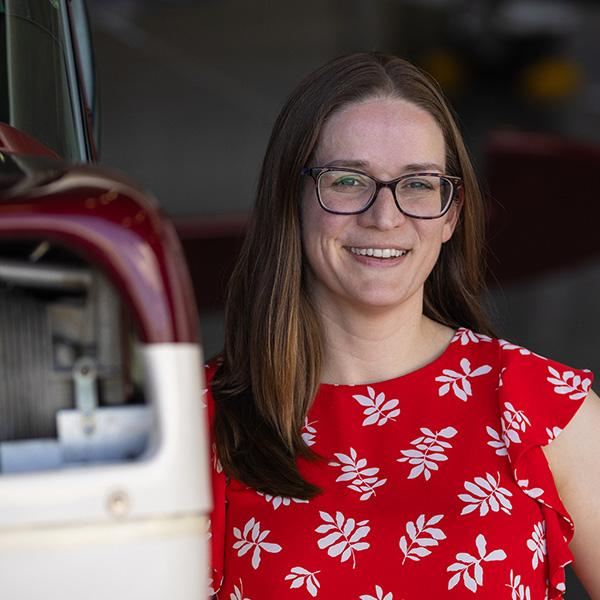
In 2018, Danielle Donovan showed up at the fixed-base operator at Wilmington International Airport (ILM) in North Carolina and asked if the company offered flight lessons.

The FBO wasn’t a flight school, but, as Donovan says she would experience many times in her flying career, “You don’t know what you don’t know.”
The FBO pointed Donovan to the local Part 61 school, starting an aviation journey that would take her through domains of general aviation she didn’t know existed to a class date at a major airline this fall. Like many aspiring airline pilots, she set out with an idea she needed to go from zero to 1,500 flight hours to qualify for an airline job and a slew of unknowns in between: How to pay for training? What jobs are available to low-time commercial pilots? What career risks are worth it to expand your skills or take advantage of a hiring boom? What major airline is the best lifestyle and culture fit—and what regional airline is the best path to get there?
These questions have no single, static answers. But tracing one pilot’s path from zero hours to a coveted position at a major airline can help aspiring pilots make their own informed decisions. After all, you don’t know what you don’t know.
Paying for training

Donovan’s mother is a flight attendant, and she said she always had a goal of flying for an airline.
“Growing up with your mom going to work to Paris for three days makes it really hard to think a desk job is going to work out for me in the future,” she said. So, when her college soccer season ended and she was ready to jump into the next big thing, she scheduled three to four lessons a week at the local flight school, treating flight training like one of her college classes.
For pilots eager to start an airline career, highly structured Part 141 training programs at academies and universities can be the most direct route to a start date—but the condensed timeline often comes with a sizable loan. Donovan had considered attending an aviation program at a university, she said, but she couldn’t stomach the price tag. Instead, she attended community college and scheduled her lessons at a Part 61 school. After earning her private pilot certificate in April 2019, she continued on to instrument training and built time toward the commercial certificate, offering to fly with local pilots who needed a safety pilot and splitting rental costs with another local trainee.
Donovan also got a job working the desk at the maintenance facility affiliated with the local flight school, which came with an employee discount.
“I thought I was signing up to call people and say, ‘You can come pick up your aircraft on Tuesday,’ or ‘You can bring your plane in on Thursday,’” she said. “And it turned into payroll, HR, ordering parts, shipping parts, managing a lot of the company’s finances and business decisions, selecting vendors, handling monthly payments, things like that. A lot of business skills that I probably lacked at the beginning that I do now have, though.”
The company did outstation maintenance for Part 121 air carrier operations, which meant she was on call 24/7. She says this experience is a favorite topic of interviewers because it showed she’s seen another side of the industry.
Donovan juggled work, school, and flying for several months as she worked on her flight instructor certificate: “Go to work 8 to 5, go fly in the evenings, classes, rinse and repeat.”
The payoff was balance in her finances. Her mom paid for her private pilot certificate, which at the time was about $8,500, and her parents paid for about a third of her college expenses. The rest Donovan covered with scholarships, student loans, and her full-time job. Ultimately, she ended up with just $12,000 in student loans.
“Being able to kind of pay as I went and make my own training schedule allowed me to be more flexible with my payments, and time building with an aircraft owner versus a flight school with an instructor is a fraction of the cost,” she said.
Then, in April 2020, Donovan earned her flight instructor certificate. And her flight school was hiring.
Teaching and learning

Donovan’s flight school offered her a job on the day of her CFI checkride.
“Initial CFI, I feel like you learn so much from that,” she said. “I would say the things you learn in CFI are how to teach differently, how to look at problems from different angles—how to stay on your toes is probably the number one thing I learned. You never know what’s coming next.”
While working at the flight school, Donovan did some right-seat corporate flying and instructing at a local flying club on the side. So, when the flight school asked her to sign a contract including a noncompete clause, she moved on to independent instructing.
Donovan enjoyed instructing in the flying club airplanes and with students who owned their own airplane, but she wanted to build hours more quickly. Plus, she was doing mostly private pilot instruction, not instrument instruction, and she felt like she had plateaued. A good friend who had previously worked at PlaneSense, a charter operator flying mostly single-engine turboprop Pilatus PC–12s, introduced her to people who worked there, and she put in an application.
“I’m pretty sure I emailed sweet Stephanie at PlaneSense HR every week, saying, ‘Hey, I updated my application in case you guys wanted to look at it again.”
She got the job—and loved it.
“We did our own flight planning, our own fuel planning, our own weight and balance,” she said. “We loaded the bags ourselves. We catered the planes ourselves. We interacted with the customers. And you never knew where you were going beforehand. It was just kind of on the fly, once you land, our company operations team would give you a call and tell you where you’re going next.
“So it was really cool. I got to see a lot of smaller airports in America, not just these like regional airports where regional airlines fly, but like small GA airports. And it really shows like the vitality and the importance of these airports. And it was a cool experience to have before going into the 121 world.”
Making it big
Approaching the 1,500-hour mark, Donovan interviewed with four regional airlines in spring of 2022, during the post-COVID hiring boom. She got offers from all four, and she accepted the one from PSA Airlines. She hit 1,500 hours that August and started with PSA that same month. She passed her line check for captain upgrade in December 2024. She is now a captain on the CRJ-700 and -900.
She says PSA offers opportunities through mentorship, union involvement, recruiting, and training—and she now passes on her knowledge as a line check airman. As a line check airman, she does line checks, teaches new captain upgrades, and teaches new-hire first officers once they complete initial ground school and sim training.
“I get to do their first flight as an airline pilot, which is about the coolest thing ever,” she said.
Maybe cooler? Getting a job offer from American Airlines.
Advice

With her start date at American approaching in September, Donovan has advice for others navigating their own path to an airline career. First: Don’t rush it.
“Going at the pace that you feel like you’re getting the most out of it is the most important thing,” she said.
She also emphasized the importance of community.
“Networking is huge,” she said. “Your network is truly your net worth. And I know so many amazing people that knew somebody or introduced me to somebody that was able to either give me information, give me advice, or even bring me to another job opportunity that I didn’t even know that I wanted yet. So being open and learning from everyone and through every situation that you come through, I feel like that’s one of the biggest keys to success in this industry.”
She said she was lucky to have a community of pilots and mentors at Wilmington.
“I remember a point being like, 1,500 hours doesn’t actually exist. Nobody actually has 1,500 hours,” she said. “It feels impossible. So I felt like I was talking to people, like, how did you actually get it? How did you actually get to 1,500 hours, because it feels like I’m climbing a mountain that has no end in sight?”
Working at the airport and attending aviation conferences helped expose her to niche jobs in the industry that she may not have otherwise known about and to build that network. At the maintenance facility while she was building hours toward the commercial certificate, she said she would ask owners about their flying—whether they needed a safety pilot for instrument hood time or if they were building time for their own commercial certificate.
The ups and downs of airline hiring affect any aspiring airline pilot’s career trajectory. Donovan recognizes the role of the post-COVID hiring boom in her landing a regional airline job right at airline transport pilot hour minimums. She also took a chance in committing to aviation full time after earning an associate degree; airlines at the time did not require a bachelor’s degree, which allowed her to start her airline career earlier and resume her academic studies later. Then, when she put in her bid for captain, an aircraft backlog paused hiring and slowed upgrade training.
“It takes the smallest change for the hiring environment to change,” she said. “Being competitive, being ready, being prepared, and just doing the best to make yourself the best pilot you can be is the best way to handle it. Just being ready at all times is kind of what I feel like is the key to success. Being grateful, knowing where opportunities are, even if it’s not the opportunity you thought you originally wanted. It can be a great adventure.”
Related Articles