Hallowed ground
Exploring NASA's Kennedy Space Center
Gates open to restricted areas, granting tourists special access to hallowed ground at NASA’s Kennedy Space Center Visitor Complex, where the Saturn V launched mankind to the moon, the space shuttle program lifted off, and the Orion Spacecraft carried astronauts farther from Earth than ever during a lunar flyby mission in April.

The Kennedy Space Center is “alive again,” an employee at the center’s visitor complex commented during a summer visit. More than 1.5 million people explore the center on Florida’s Merritt Island each year, making it a hub of activity for tourism, research and development, and regular space launches. The bus tours offer rare access, with highlights including the massive vehicle assembly building (VAB) and command center, all while government and commercial space research and exploration work continue. A stop at the Gantry at LC-39 offers views of multiple launch pads and at the Saturn V display, visitors can see the rocket that propelled the Apollo astronauts to the moon.
Multiple launch sites come into view nearing the Gantry at LC-39, the first stop on the bus tour. The four-story structure, part of NASA’s Mobile Launch Platform 3 that was decommissioned in 2023, is located just over 2 miles from Launch Complex 39B, where the Artemis II crew launched April 1 for their deep-space lunar flyby, offering optimal views. Bleachers have been added for spectators to watch launches from certain pads. A large SpaceX-branded building is also visible near Launch Complex 39A. SpaceX, one of the giants in commercial space efforts, schedules multiple launches per month. While gazing at the launch pads, it is easy to imagine the anticipation, excitement, and focus of the space and ground support crews launching Apollo/Saturn V, space shuttle, or Artemis missions.
Inside the Gantry, children and adults can design and launch their own rockets on touch-screen computers while sitting on pistons from one of the two massive crawlers that “helped to carry Saturn V rockets, space shuttles, and more,” according to the space center. Each piston weighs about 75 pounds.
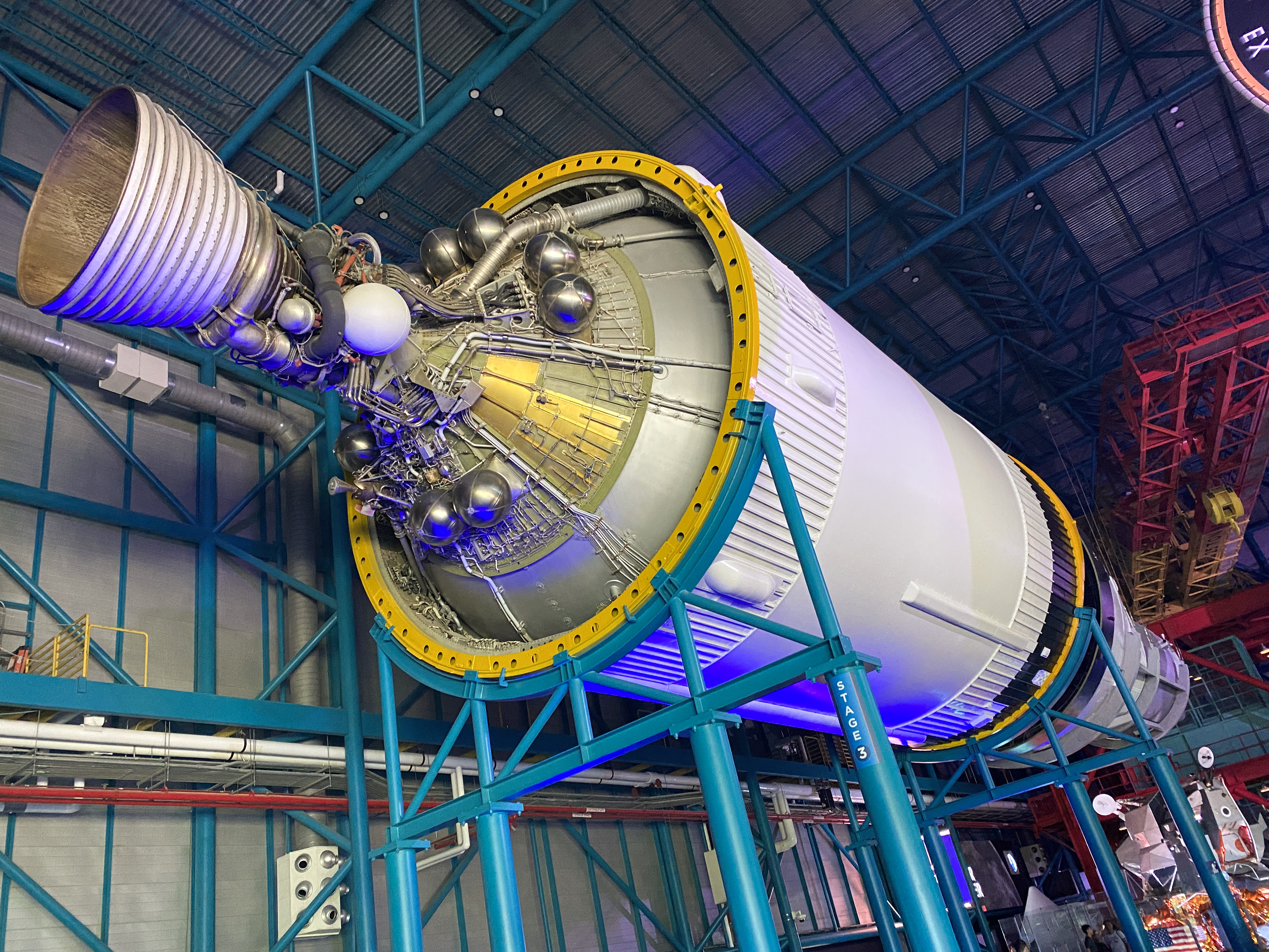
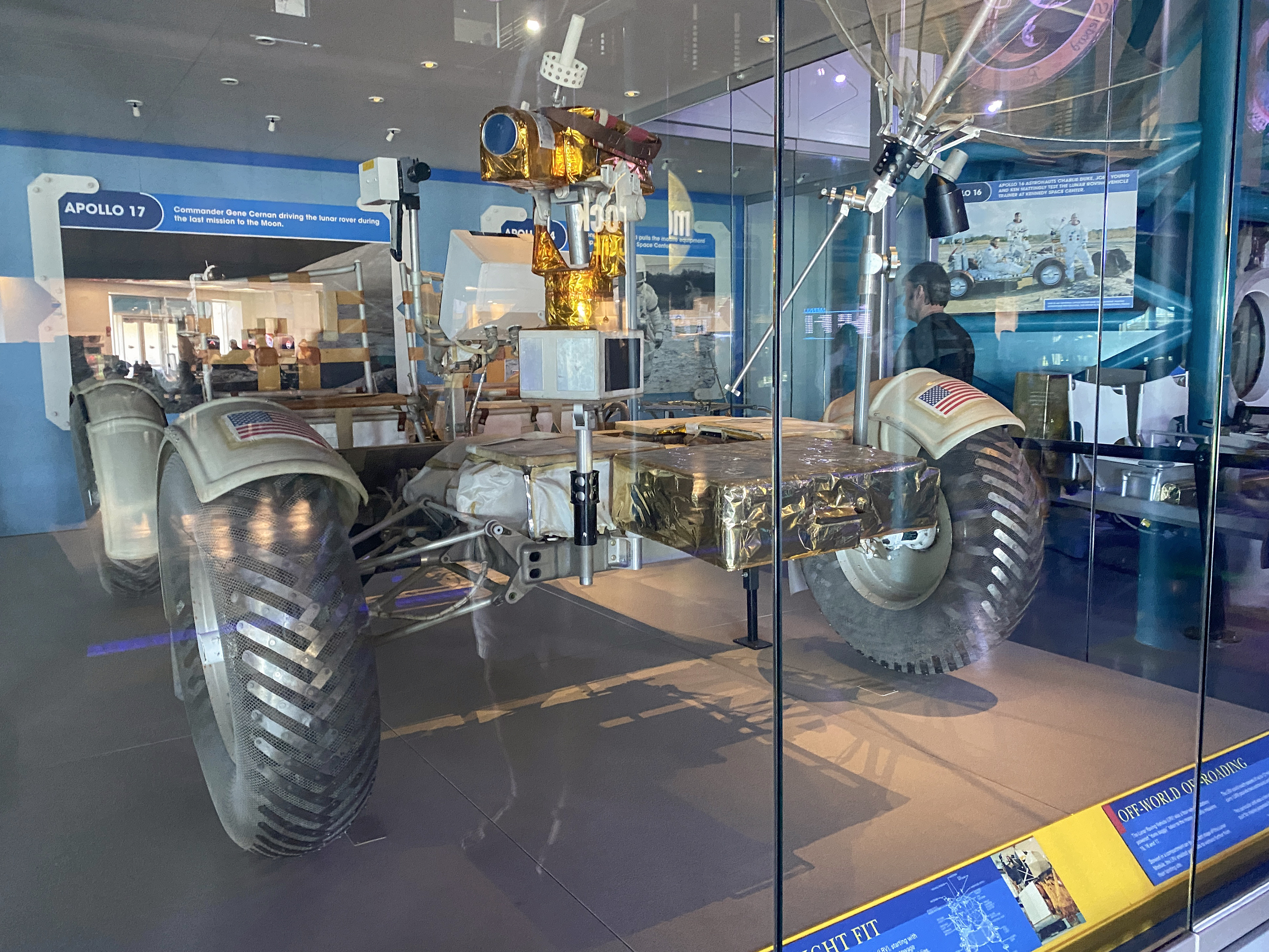
The Apollo/Saturn V Center greets visitors with an opening film before they enter the main exhibit building featuring a Saturn V rocket separated into its stages to celebrate “the unprecedented achievement of putting humans on the Moon,” according to the visitor center. Saturn V rockets launched from Kennedy Space Center multiple times between 1967 and 1973, taking astronauts to the moon and putting the United States’ first space station, the Skylab, in orbit. Visitors can walk below the rocket while perusing exhibits such as moon rovers and astronaut suits. They can even touch a moon rock.
At the main campus, the space shuttle Atlantis exhibit opens with a powerful tribute to the shuttle program, leaving many misty-eyed as they learn about the dream, trials, errors, and ultimate successes of developing a reusable spacecraft that could launch on a rocket and land like a glider. A breathtaking surprise reveal leads to more than 60 interactive stations that enthrall and delight children and adults alike. The highlight—seeing the space shuttle Atlantis with its cargo doors open as if it had just undocked from the International Space Station. Exhibits include a memorial honoring the 14 astronauts who lost their lives on the Challenger and Columbia shuttles, and space shuttle simulators. In total, six space shuttles were built, with five of those launching 135 missions between 1981 and 2011, according to NASA.
While in the Atlantis building, don’t miss the opportunity to “travel” into space in its shuttle launch experience. Strap in and pretend you are an astronaut for this ride that simulates the shuttle’s eight-minute ascent into orbit. According to the visitor center, the experience is what “veteran NASA astronauts call the next best thing to flying aboard the space shuttle.”


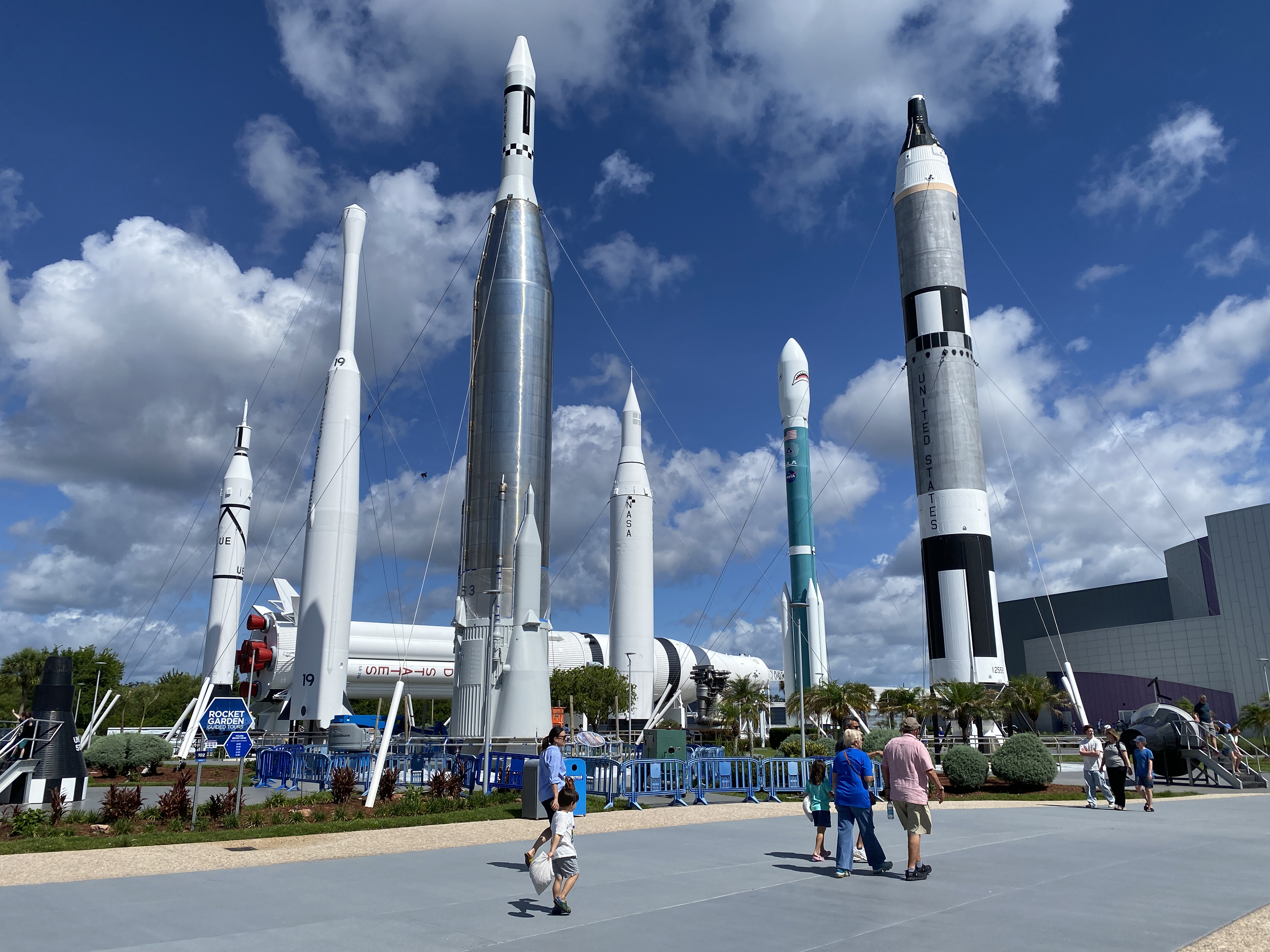
Visitors can also explore the Rocket Garden, see Mars rover replicas, walk through the U.S. Astronaut Hall of Fame, and chat with an astronaut. Children can run off surplus energy (if they have any left) at the multi-level Planet Play building. Add-ons for the visit include the Astronaut Training Experience and Mars Base 1 in which participants experience what it would be like to live and work on Mars for a day.
For a complete visit to Kennedy Space Center, allow two days ($91 for 12 and over, and $81 for ages 3 to 11), more if adding on the astronaut training or Mars experiences, which take about a half day or more themselves. Special guided tour packages are also available and led by a veteran NASA astronaut or space expert. Discounts for members of the U.S. military and for seniors, and one-day admission tickets are also available.