FAA lifts Centennial Airport operations restrictions
New procedures in place following stakeholder meeting
The FAA has approved a plan to mitigate safety concerns that prompted the agency to prohibit parallel runway departures, most pattern work, and touch-and-goes at Centennial Airport near Denver for nearly two months.

Those restrictions disrupted flight training and other operations at one of the nation's busiest general aviation airports, with more than 300,000 operations each year, and led to a number of organizations—including the Colorado Pilots Association and AOPA—getting involved.
Under the mitigation, controllers will instruct aircraft departing the parallel runways (35L/17R and 35R/17L) to turn 10 degrees from their runway centerlines, giving the two departure paths 20 degrees of separation. The airport says the procedure will be phased in gradually, with more traffic allowed in the pattern over time.
"Pilots operating at Centennial Airport must listen carefully to and follow all ATC instructions as these procedures are implemented," the airport authority said in a statement.
The new procedure comes after an FAA order on October 1 to immediately stop simultaneous parallel departures, touch-and-goes, and most pattern work after a safety assessment found aircraft drifting toward one another on departure. The directive came with no warning to airport management, operators, or the air traffic control tower.
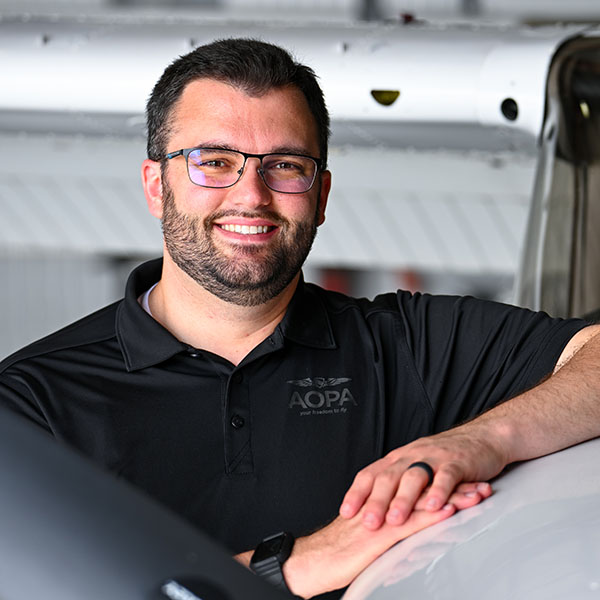
"While the initial restrictions were disruptive to the Centennial Airport community, we appreciate the FAA's work with the airport authority, air traffic controllers, flight schools, local pilots, and AOPA to address safety concerns," said AOPA Northwest Mountain Regional Manager Brad Schuster. "Pattern work, including touch-and-goes, is an important part of flight training and helps pilots stay safe and proficient. We hope this plan will allow flight schools and other operations to return to normal as quickly as possible."