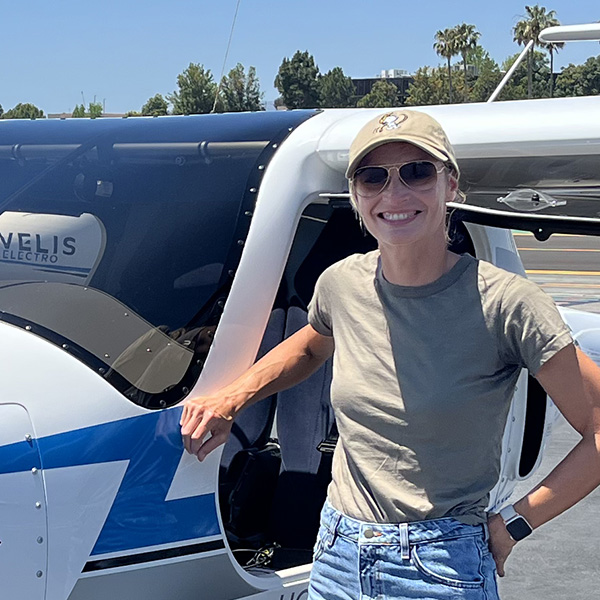
A Cessna named 'Juliet'
More than hours and miles, the airplane builds memories
For certificated flight instructor Gary Palmer, his Cessna 172 is a way to travel, teach, and share his love of flying.

After 15 years together, his Cessna, affectionally known as Juliet, is more than a way to get from one airport to another. Juliet has taken him across the Southwest, introduced hundreds of children to aviation, and helped teach pilots who might otherwise have given up.
When he began looking for an airplane, he spent a year and a half renting and saving his receipts. He compared the cost of renting with the payments he might make on an airplane loan and used those figures to establish a budget.
He considered a Cessna 182 but kept coming back to the 172. Most of his flying was within 100 to 150 miles of his home base at Zamperini Field in Torrance, California. The extra speed of a larger airplane would often save him only half an hour.
After six months of searching, he found Juliet on the same day he had placed a deposit on another airplane. Juliet had the autopilot and GPS he wanted, although the price exceeded his budget by about 50 percent.
Juliet is not a typical 172; it has a larger engine and modifications that improve its performance and carrying capability. Palmer said the airplane’s useful load is 973 pounds, allowing him to carry four adults and luggage within the airplane's weight and balance limits. "As my mechanic says, this ain't your average 172," Pamer said.
The airplane's value, though, goes beyond price and performance. Palmer participates in the Experimental Aircraft Association's Young Eagles program, introducing children to general aviation. He has flown nearly 500 young people. He enjoys seeing the smiles on their faces when he lets them take the controls and their excitement when they return to their parents after landing. Some have approached him several years later to tell him they'd earned their private pilot certificates. Some remember him as the first pilot who took them flying.
Palmer also donates sightseeing flights to charities and takes up friends who have never experienced flying a small airplane. He enjoys seeing aviation through the eyes of someone discovering it for the first time. "What I have is a gift," he said.
His wife, Lynda, has shared many of those experiences. She also contributes to Time to Fly Planes, where Palmer offers articles and resources drawn from his years of flying and flight instruction to help student pilots make informed decisions and become safer aviators. Lynda brings her digital marketing expertise to the business while continuing her work with horses.
On Palmer's website he encourages prospective owners to consider the full cost, including financing, insurance, parking, maintenance, fuel, and even subscriptions. He compares ownership with other paths to aircraft access, including renting, partnerships, and flying clubs. One of the most important variables, he said, is how often the airplane will fly. An owner who flies 200 hours a year spreads fixed expenses over twice as many hours as someone who flies 100 hours per year. For Palmer, however, the numbers are only part of the decision. Pilots also need to consider what they want to do with an airplane.
Juliet's versatility became especially apparent during a recent cross-country flight from Torrance to Scottsdale, Arizona. The route required careful planning around mountainous terrain, military airspace, and the busy Phoenix metropolitan area. Palmer chose to fly under visual flight rules, allowing him to adjust his route and altitudes as conditions changed.
Near Banning Pass, he encountered mountain-wave conditions that tested both the aircraft and his judgment. Despite applying full power and pitching up, he found himself descending at approximately 300 feet per minute. Rather than try to force the airplane to climb, he considered his options, monitored his airspeed, and waited for conditions to change. The downdraft eventually eased, and Juliet began climbing again.
The experience reinforced something Palmer teaches his students: Knowing an airplane's capabilities matters, but so does understanding your own. Palmer doesn't think that only an owner can truly know an airplane, but he does believe that every pilot should have an owner's understanding of the airplanes they fly. What matters is learning their systems, understanding their limitations, and practicing the skills needed when a flight doesn't go as planned.
The belief in preparation and individual progress also led Palmer to develop his Student Pilot Bill of Rights. The document grew out of his own training experiences and years spent mentoring pilots. He had encountered students who were unhappy with their instruction but believed they had no choice. Palmer wanted them to understand that flight training is a service, and they have a right to know what they are receiving. His seven-point document addresses access to training records, lesson planning, communication with instructors, scheduling, instructor changes, and costs. It also encourages pilots in training to obtain their training information if they decide to change schools. One of its central ideas is that students should know how they are progressing—not simply how many hours they've logged. A logbook may show that a student practiced steep turns, landings, or navigation. It doesn't necessarily explain whether the student is close to mastering those skills.
Palmer developed a visual assessment tool to help fill that gap. Using a circular chart with individual spokes representing required maneuvers and skills, he shows students where they stand and what needs more work. Each spoke tracks progress from practicing a skill to performing it safely and meeting the standards for a checkride. Students can see themselves getting closer to a goal instead of wondering when an instructor will decide they're ready to solo.
Students should also be able to ask questions and change instructors when a training relationship isn't working. Changing instructors, he said, shouldn't mean starting over. "My lessons never truly follow the lesson plans I originally built," Palmer said, explaining that he considers where each student is and what they need next. For Palmer even a short flight can offer an opportunity to stay proficient or learn something new.
Juliet may not be the fastest, but it still takes Palmer where he wants to go and more importantly, gives him the chance to bring others along. See where Juliet and Palmer head next on Instagram.