A master's degree in aviation
Advice for your commercial pilot training
Each new certificate adds to a pilot’s privileges. The student pilot certificate (along with instructor input and endorsements) allows a pilot to fly alone, and these solo flights are important for growth and confidence. Private certification means that a pilot can plan a flight herself and take friends and family along for the journey. The commercial certificate enables a pilot to charge for her services and carry passengers, who may not even know the pilot and who trust in the FAA certification process that she will be safe.
During my training, the most valuable lessons I learned were far more subtle than a quick study of the Airman Certification Standards – Commercial Pilot Airplane (FAA-S-ACS7B) might provide. What are the items that instill confidence in a passenger? They are the same that convince a designated pilot examiner that you deserve a master’s degree in aviation.
Designated examiners are charged with flying with and assessing applicants to ensure that their skills, training, and mindset are consistent with the certificate level at stake. The ACS merely provides a platform that ensures our evaluations cover the most important topics and that we see how a pilot flies her airplane through a wide range of flight profiles. In “Between the Maneuvers” (July 2025 AOPA Pilot), I offered advice to assist with any practical exam. I shared that it is a mistake to become hyper focused on the tasks themselves and lose sight of the big picture. Taking a practical approach to clearing the area, flying with precision between the maneuvers, using checklists effectively, and flying a perfect pattern every time were some of the takeaways. Here, we’ll focus on the path to commercial certification.
Use simulation to your advantage. Certification under Part 61 requires that an aspiring commercial pilot have at least 250 hours of flight experience. You may be surprised to learn that the FAA allows 50 of those hours to take place in an advanced aviation training device (AATD), like the One-G Foundation 1000 that models a Cessna 172 with the Garmin G1000 system at my local Franklin County Airport (UOS). While the $55-per-hour rental fee makes it a cost-effective training component, using the AATD to fly departures and approaches in other parts of the country, say, or learning to address emergencies that are realistically and safely presented, makes it an effective one too.
Overcome discomfort with stalls before taking the exam. Aspiring commercial pilots are often anxious around stalls, dread demonstrating them on the exam, and breathe an audible sigh of relief when they’re over. It shouldn’t be that way. The accelerated stall requires pulling back on the yoke in a 45-degree bank until an impending stall occurs. The Airplane Flying Handbook (FAA-H-8083-3C) describes buffeting and aural stall warning as indications of an impending stall. The typical candidate recovers after the slightest chirp of the stall horn. But that may not be the only accelerated stall that’s required. The ACS allows the examiner to request either the power-off or power-on stall recovery to happen only after a full stall occurs, during which the bank angle is kept at 20 degrees. If any of this discussion makes you nervous, take a thorough course on stall and spin training so these demonstrations feel like nonevents.
Make good decisions. Sounds easy, right? On the topic of personal minimums, I may hear a candidate say that she’d prefer to have double the FAA fuel reserves at the end of the flight, or she may prefer to take off from runways at least twice as long as the calculated takeoff distance. But I’m not interested in what’s nice to have; rather, I want to know what she’ll do when the real pressure is on. I want to know how she’ll handle landing at an airport to find that the fuel pump is broken and the nearest airport with fuel will mean landing with 30 minutes of fuel. What will she do when she lands on a short strip on a summer day with the family, and if she doesn’t depart in the heat of the day, they won’t make the reunion planned for that evening. Every year, we see cases where pilots run out of fuel or hit terrain during a high density altitude takeoff. Convince your examiner that you have a plan to avoid that. Disappointing others, while never fun, needs to be part of your repertoire.Disappointing others, while never fun, needs to be part of your repertoire.
Abiding by FAA regulations should be a no-brainer on your practical, but you’d be surprised at what we examiners experience. I’ve seen candidates who can recite the required equipment for VFR flight (91.205 VFR) but decide to take off with a nonfunctional oil temperature gauge. And even if a piece of equipment is not required for the flight, consider fixing it anyway. INOP stickers all over the panel—yes, I see that on occasion—are just not a good look, and accepting aircraft deficiencies can become a slippery slope.
Be a responsible consumer of the information that electronic flight bags (EFBs) provide. I sometimes cringe when a candidate asks if EFBs are OK for flight planning, so I make it clear that we will dig into the pilot’s operating handbook charts to ensure that the EFB is doing its job. If you can’t verify all the calculations, then the EFB has become a black box, and the output shouldn’t be trusted. Each time I dig into my own POH, I glean useful insights that improve the way I fly my airplane.
Don’t be wowed by the overly precise calculations that an EFB displays. When I planned a flight from UOS to NEW last summer, my EFB anticipated that the flight would take 2 hours, 34 minutes, and Niky would use 36.4 gallons of fuel. Many candidates delight and take pride in reporting this level of precision, but those sentiments are misplaced. On that trip, the headwind was greater than anticipated, and I delayed leaning the mixture in cruise while I busied myself with the rerouting that ATC provided. In all, Niky used over 40 gallons during that trip, and had the winds been favoring the north runway at NEW instead, the engine would have proved even thirstier than that. Niky’s old 1960s-era POH charts, which look as if they were drawn with a fat crayon, can provide an estimate within a few gallons. And that is the more reasonable takeaway from such a calculation.
Remember what’s most important on a flight. I can’t imagine a flight for hire during which time a chandelle or eights on pylons would seem like an appropriate maneuver. I suppose these advanced exercises do demonstrate that a pilot can authoritatively command an aircraft through a range of airspeeds and attitudes while caring about passenger comfort at the same time. Strive to command your airplane authoritatively and smoothly.
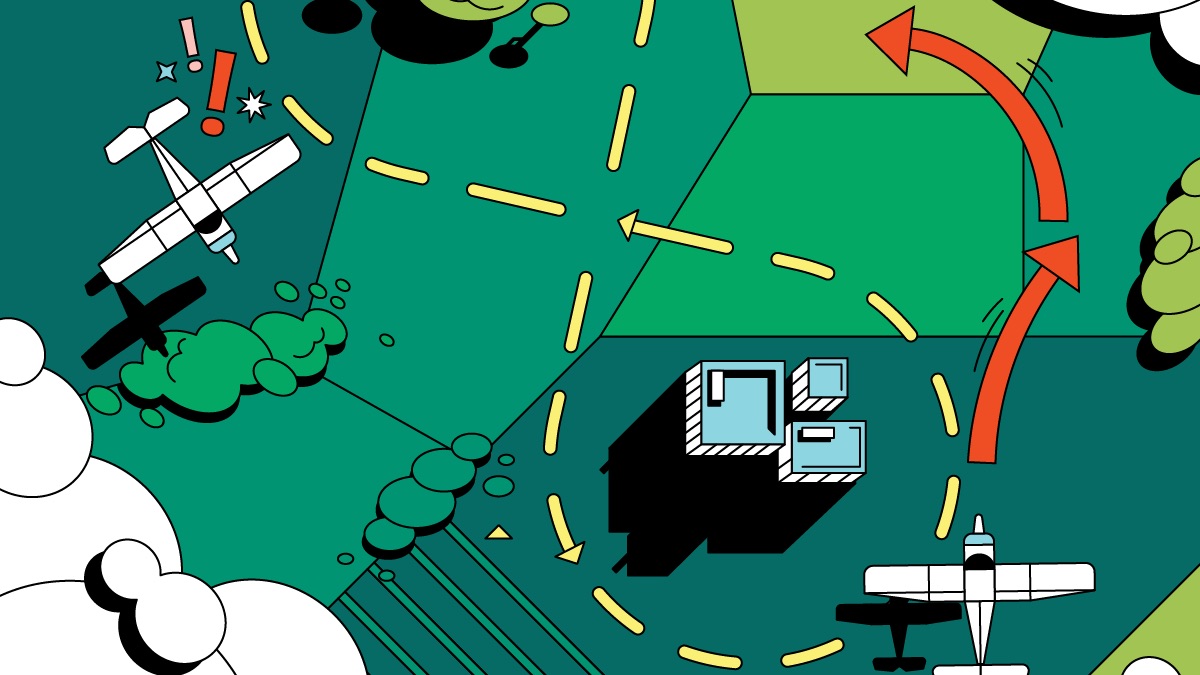
But a commercial pilot should also understand that flight safety is paramount. I’ve seen candidates become fixated on the pylon and completely miss another aircraft that was heading toward us. That’s unacceptable. I’d rather see a less-than-perfect maneuver if it means the pilot continually scanned for traffic while performing it.
Commercial certification is a wonderful goal, whether it’s a path toward an airline career or merely to instill greater confidence in passengers. While the ACS details the requirements for each task, it’s really about demonstrating to the examiner that you have the skills, knowledge, and good judgment to operate at a masterful level. You never know where that path might lead.
Related Articles


