Launchpad into the alps
Buttwil tests and rewards pilots who relish a challenge
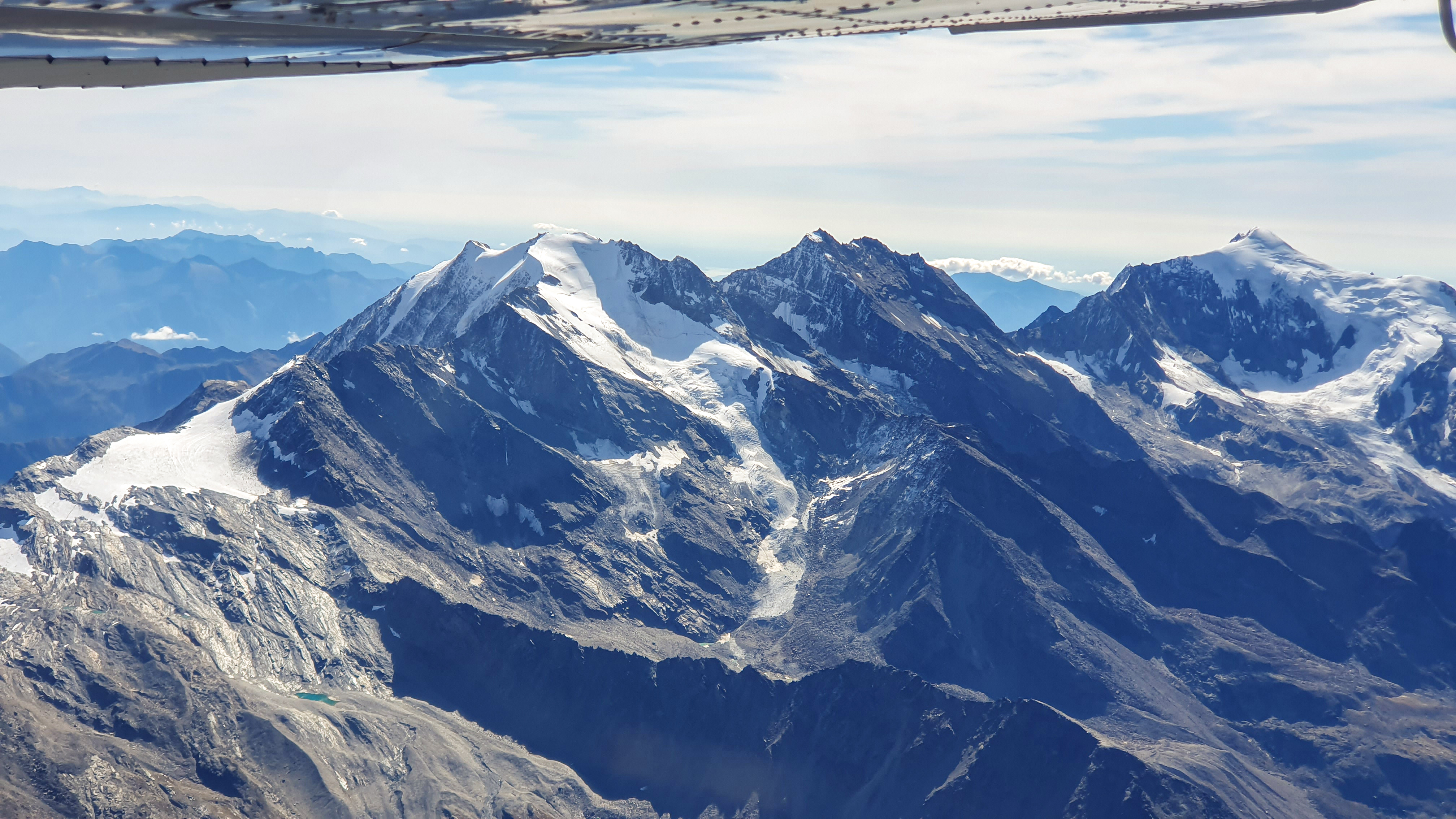
First mentioned in documents in the year 1160—more than a century before Switzerland’s first incarnation as the “Eternal Alliance of the League of the Three Forest Cantons”—the farming village now has about 1,200 residents. Cows wearing typical Swiss leather collars with large bells lounge on bucolic meadows, and above them, the familiar buzz of single-engine piston aircraft echoes across the sky.
Buttwil Airport (LSZU) was established in 1969 on Lindenberg hill when pilots in nearby Spreitenbach saw their airfield close because of the expanding footprint and airspace requirements of Zurich’s international airport (LSZH). It’s now one of the most active training airfields in the greater Zurich area. The Eichenberger family, owners of the eponymous local flight school, helped found the airport more than 55 years ago. Now led and managed by the third generation, Flugschule Eichenberger trains both fixed-wing and rotary pilots and operates sightseeing tours through the Alps, which rise about 20 miles, or a 15-minute flight, south of the area. Other users of the airfield include a glider club, a sailplane flight school, and a parachute jump club.
Buttwil’s single grass runway runs 16/34, and while it’s officially 675 meters, or 2,215 feet, long, a displaced threshold at the approach end of Runway 34 means the landing distance available is less than 1,600 feet. The airport is located at 2,372 feet msl, high enough to peek out over the blanket of fog that often socks in Switzerland’s central valleys during the late summer and autumn months.
Andi Medlhammer, a part-time flight instructor at Flugschule Eichenberger, and I have known each other for most of the 20 or so years we have both been flying out of Buttwil. He taught me everything I know about short- and soft-field operations, the hazards, thrills, and delights of flying in the mountains, as well as the challenges general aviation faces in pocket-size Switzerland—a country that is about the size of Vermont and New Hampshire combined.
“Airspace in Switzerland is really compact and congested, and general aviation does not have a high priority,” Medlhammer says. He also holds an FAA private pilot certificate and has flown extensively in the United States.
“Zurich airport takes a lot of space, and most of the airspace here is controlled,” he said. In addition, numerous military flight zones are dotted across the small (neutral) nation that are often closed to GA pilots, even just passing through. “There’s a great deal of admin that goes into preparing for every flight. If you’re not talking on the radio, you won’t get very far.”
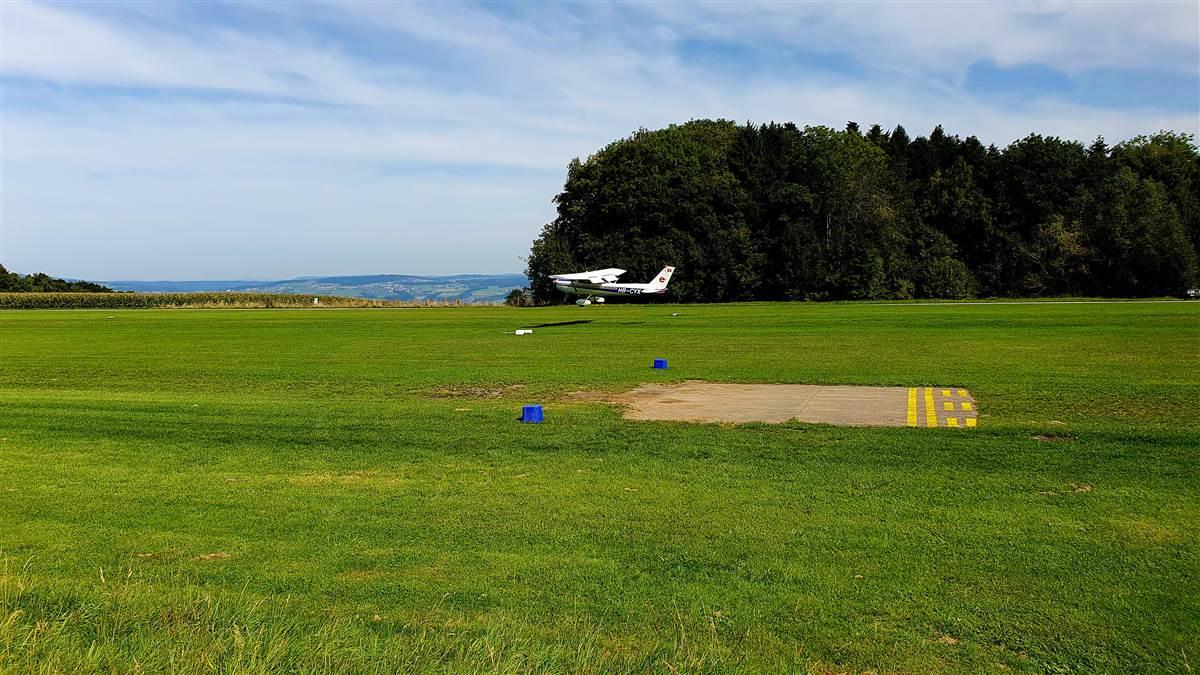
The prevailing winds in Buttwil are from the northwest, making Runway 34 the most often used. But tall trees located just off the departure end require pilots to make a 15-degree turn to the right as soon as the wheels leave the ground.
Coming in to land on Runway 34 requires a steeper-than-normal approach and descent over another set of trees and a meadow. The regular guidance for the landing is: aim at the grazing cows, and you’ll make the runway just beyond the electric fence that keeps them from wandering into your approach path. (And remember, you have just 1,600 feet.) That guidance has served me well since 2004.
The flight school has a fleet of eight fixed-wing aircraft and four helicopters available for charter to holders of the appropriate European certificates: three Cessna 152s, two 172s, one 172RG, one Varga 2150A, and one Piper Cub. The helicopter fleet includes two Enstrom F28Cs, one Robinson R44, and one Enstrom 480. The school offers sightseeing flights of various durations, from about 30 minutes for a local tour over the Alpine foothills to about two and a half hours if you want to see more of the higher peaks.
When you return to Buttwil, you’ll be ready to yodel. More importantly, you’ll be hungry. The airport restaurant, called The Hangar, is conveniently located right next to the runway. Plenty of outdoor seating allows you to keep an eye on the aeronautical comings and goings atop Lindenberg hill.
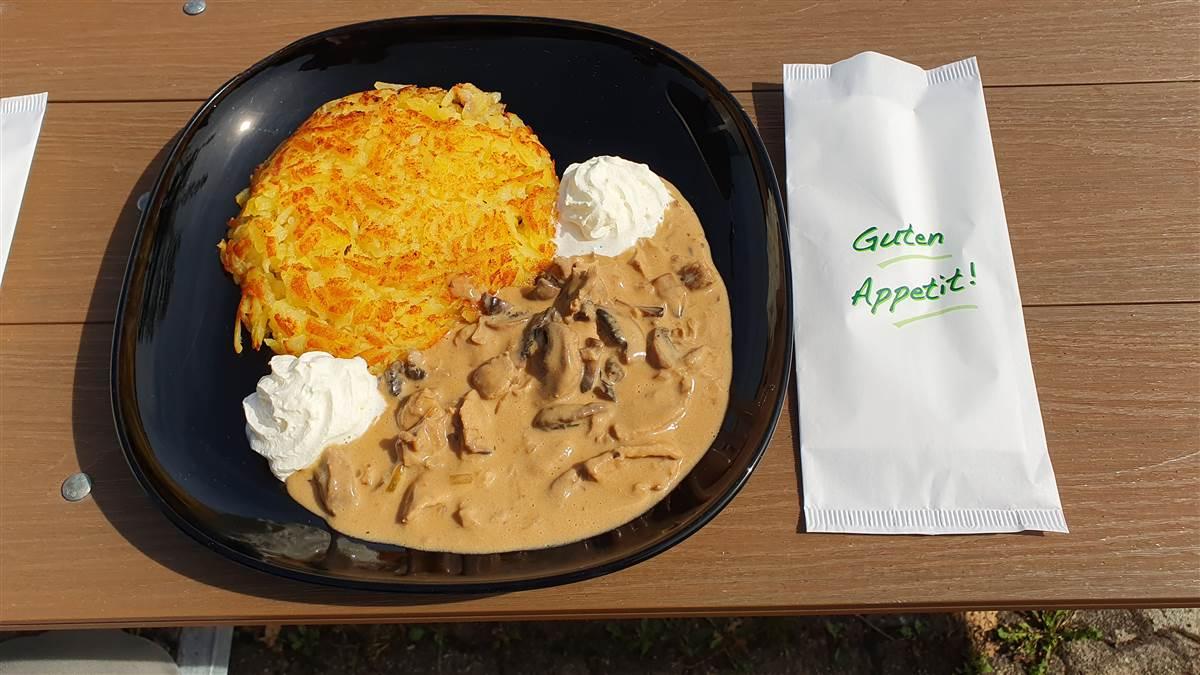
Alongside standard Swiss pub fare like burgers, cordon bleu, and cheese fondue, you’ll also be able to sample a traditional local favorite called Züri Gschäntzelts, which roughly translates from the Swiss German dialect into “sliced meat, Zurich style.” The meat (pork or veal) is sauteed in butter with onions and mixed in a white wine, cream, and mushroom sauce. It’s eaten with a side of Rösti—traditional shredded and fried potatoes, usually served as crispy pancakes.

The price of the day’s outing is steep. But the beauty of the Alps makes it all worth it, Medlhammer says.
“It’s so stunning up there. There’s always something new to discover, and we are really blessed for that.” 
 flugschule-eichenberger.ch
Related Articles


