DIY: Oil change
Removing damaging contaminants from your engine
FAR Part 43, Appendix A allows the pilot-owner of a certified aircraft to change the engine oil and filter without the oversight of an aviation technician by following acceptable aircraft inspection and repair methods, techniques, and practices (such as Advisory Circular 41.13-1B).
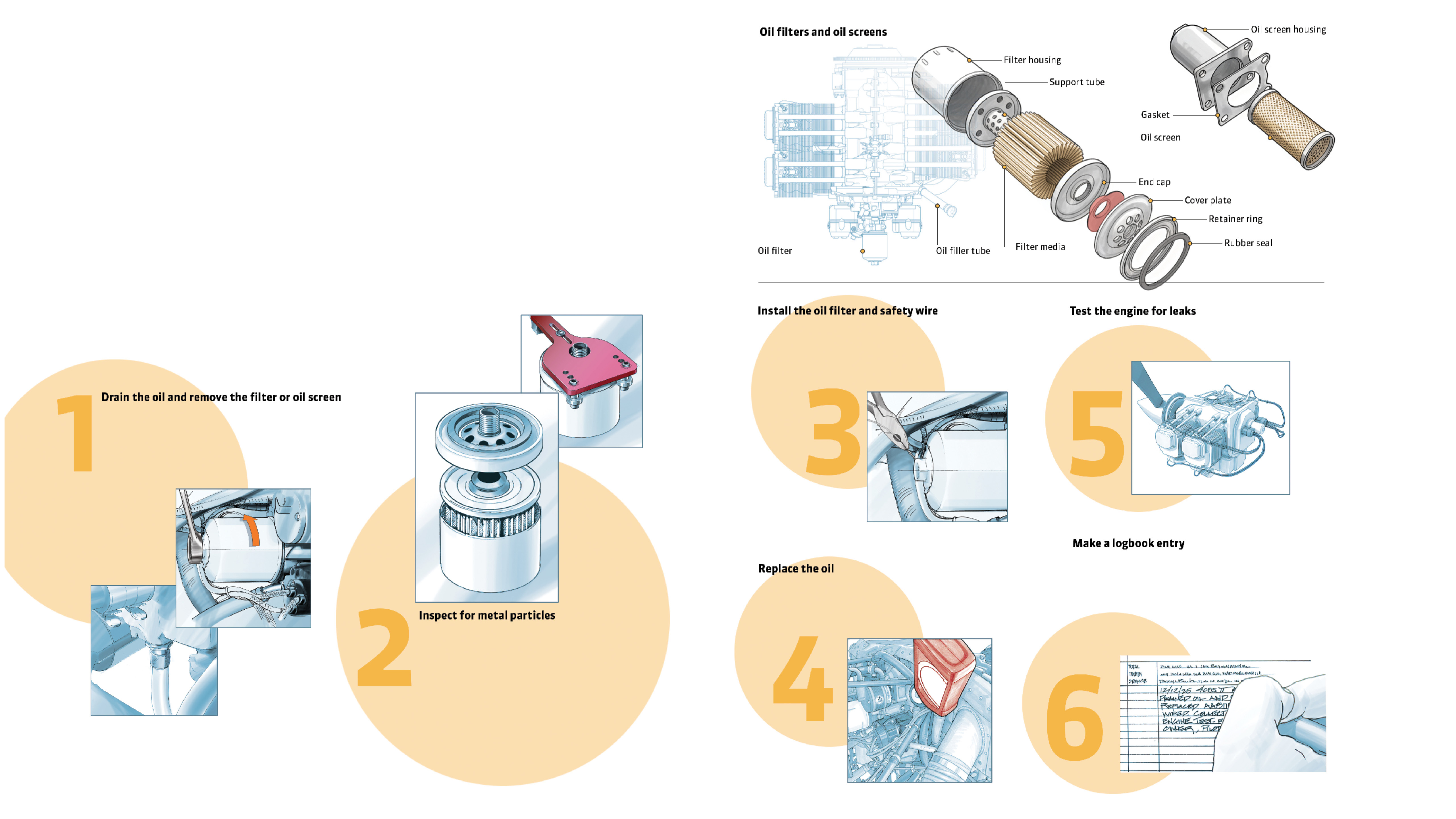
Illustration by Charles Floyd
Piston aircraft generally require an oil change every 50 tachometer hours if the engine has a spin-on oil filter and every 25 tach hours if it does not (many older aircraft have a non-disposable oil pressure screen that does not filter oil as well as a spin-on oil filter).
- Drain the oil and remove the filter or oil screen. Although not a requirement, flying the airplane before draining the oil circulates and warms the engine oil, which helps scavenge carbon, lead, and other deposits from the engine. Draining cold engine oil will leave some of these contaminants in the oil sump. Many FBOs collect and recycle used engine oil.
- Inspect for metal particles. Use an oil filter cutting tool to open the oil filter and remove the filter media. A small quantity of fine metal particles in the filter (or on the oil screen) is normal. An appreciable amount of metal should be discussed with an aviation technician before returning the aircraft to service. Some oil drain plugs are magnetized; don’t forget to look for metal on the plug. An oil sample can be sent to an oil analysis lab to determine the amount of microscopic metal and other contaminants in the oil to develop a trend on engine wear.
- Install the oil filter and safety wire. Tighten the new filter to the manufacturer’s specifications, and use a torque wrench to avoid over-tightening. Don’t forget to safety wire the oil filter to keep it from loosening in flight. Oil screens require a new copper gasket every time they are removed and reinstalled and must be safety wired. Some oil drain plugs may also require safety wire.
- Replace the oil. Consult your pilot’s operating handbook, mechanic, or type club for the best oil to use in your aircraft engine. Sticking to the oil change interval is arguably more important for engine longevity than your choice of oil manufacturer or viscosity.
- Test the engine for leaks. Run the engine on the ground until the oil begins to heat up, then shut off the engine and check for oil leaks around the drain plug and oil filter (or oil screen).
- Make a logbook entry. The logbook entry must include the date, total time, a description of the work performed, your signature, certificate type, and certificate number. Here is a sample entry:
12/12/25 4055TT Airframe, 1025 SMOH EngineDrained oil and replaced with 7 quarts 20W50 oil. Replaced AA48110-2 oil filter and safety wired. Collected oil sample for analysis. Engine test-run, no leaks noted. Kollin Stagnito Owner, pilot certificate #1234567
[email protected]

Kollin Stagnito
Senior Vice President of Media
Senior Vice President of Media Kollin Stagnito is a commercial pilot, advanced and instrument ground instructor and a certificated remote pilot. He owns a 1953 Cessna 170B.
Related Articles


