Lorraine Morris
Cessna 120 and 140 restorer
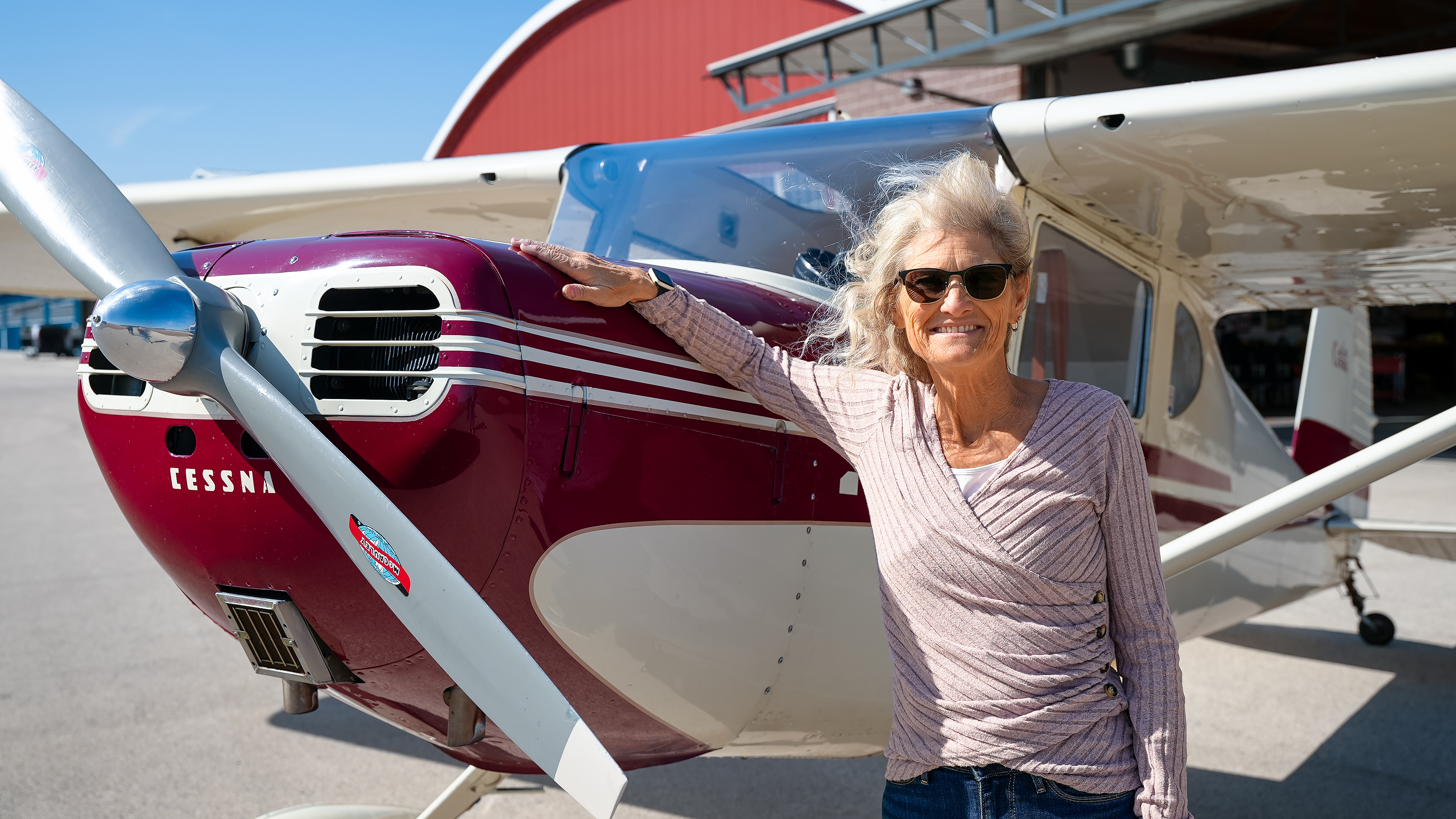
She also qualified to fly the Experimental Aircraft Association’s historic Boeing B–17 Flying Fortresses Aluminum Overcast as pilot in command on educational tours across North America. But since 1988, her true aviation passion has been restoring Cessna 120s and 140s with her airline transport pilot and airframe and powerplant mechanic husband, Ken, in their hangar home at Poplar Grove Airport (C77) in Illinois.
How did you get started in aviation?
My father was a private pilot, and he offered to help me learn to fly between high school and college. So that’s how I got started. After college—I hadn’t flown for five years at that point—I was trying to figure out a way to get back into aviation because I didn’t really like my job that much. I called Ken and asked if he would teach me to fly again. He said, ‘Sure.’ Within three months, I learned to fly again. I learned to fly from the right seat. I learned to fly tailwheel, and I got my CFI.
Favorite aircraft?
If somebody said you can only have one airplane, it would be a Cessna 140A. The thing I like about the 140 is it does everything pretty good. It doesn’t do anything great, but you can do just about everything. You can go long distance. You can go hop around the pattern cheaply. You can take the door off and take pictures. It does a lot of things really well.
Favorite aviation-related activity?
I like to go up in the evening and just fly around and check out what’s down the roads that I cannot see when I’m driving. Like, what’s behind there? When I’m flying, I’m not really caring about altitude or heading and I’m all over the place. Drives Ken bananas.
What is your biggest challenge?
Now that we’re doing a lot of maintenance stuff, it’s keeping current in the different airplanes that we have. I think that’s a tough challenge for me.
Advice for students?
Learn in a tailwheel. You learn what your feet are for. And learn in a 140 because you’re sitting right on top of the center of gravity. Unlike a Piper Cub, where you can feel the airplane swinging around you, in a 140 you are right on the center of gravity, and you have to pay attention to everything around you. You can’t just rely on the view.