Lessons before the accident
Inside Fear of Landing, what aviation accident reports reveal, and the details they leave out
Ask a new pilot what scares them most and the majority will say the radio—they worry about saying the wrong thing, interrupting someone, or sounding like a beginner.

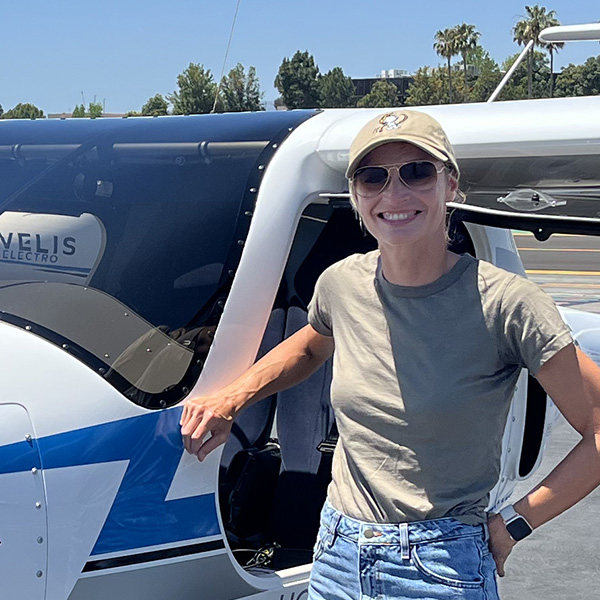
Sylvia Wrigley has spent roughly two decades reading accident reports, tracking patterns, and turning dry findings into stories that can teach. She isn't collecting wreck narratives, she's studying what happens before the headline—the small decisions, subtle pressures, and human factors that build toward an irreversible moment.
The title itself is a deliberate inversion of "fear of flying." Many people worry about being in the air, but pilots recognize landing as the critical phase of flight—when workload peaks, decisions become immediate, and human factors matter most.
One of the most surprising patterns Wrigley highlights is the mismatch between what pilots fear and what is actually reflected in accident data. Pilots new to general aviation often fixate on the radio, worried they'll embarrass themselves or step on a call. Yet radio anxiety is rarely a factor at the root of the crash. "You're much better off speaking up," she said, "than you are being quiet. I think it's not helped by the YouTube channels, you know, 'JFK ATC tears a new one' for this pilot or whatever the headline is."
Meanwhile, fuel mismanagement shows up again and again. "The thing I never hear anyone talk about that they're nervous about is fuel mismanagement and that's a huge issue that comes up all the time," Wrigley said. Yet fuel mistakes continue to happen.
Wrigley also noted that sometimes pilots cling to the original plan when the smartest move is to reevaluate. "A wrong decision often is better than no decision. You can change your mind. So, if you're going to go to this airfield because it's got the longest runway, then you realize, you know what? I've gone from a partial failure to full engine failure. Now I'm in trouble. Then obviously rethink that. There's a couple of instances where a pilot has had landing options and not taken them." Pilots often press on and continue toward their intended destination, hoping conditions will improve and the initial plan will work. By the time they accept the reality of the situation, their margin is gone.
Another pattern Wrigley has noticed is how often accidents occur when a pilot takes someone up for the first time. She doesn't blame passengers but acknowledges that a passenger can be a distraction multiplier at exactly the wrong moment. Weight distribution shifts, handling feels different, trim changes, and suddenly a familiar airplane isn't familiar. This is where surprises stack, and where the airline concept of a sterile cockpit becomes a survival tool for GA pilots, especially new ones.
Wrigley urges pilots to stop turning training into a competition. Talking about earning a private pilot certificate in 40 hours suggests that speed equals competence. But the milestone worth celebrating isn't the minimum hours—it's the skill and judgment to earn the license whether it takes 40 hours or well beyond. We should normalize the reality that your first solo is nerve-wracking, you might plateau, or might even have to take long breaks. None of this is failure. Skill development is uneven, confidence fluctuates, and weather and environment vary. A pilot who takes longer to reach proficiency may end up being safer than one who rushes through training. This matters because early accidents aren't caused by not knowing—they're caused by performing for friends, schedules, or ego.
Aviation writing itself can fall into traps: sensationalizing blame (pilot error) or using sterile recitations with no human context. Wrigley instead asks: How did the day start? What conditions were set? What small choices led there? Her work stands out because she refuses to reduce accidents to a single mistake. She focuses on the chain of decisions influenced by psychology, fatigue, weather, training, and expectation. GA pilots don't have a full airline operation behind them—they're the meteorologist, the engineer, the planner, and ultimately the decision maker. By telling the full story, Wrigley restores the humanity that accident reports often omit. Her writing reminds readers the goal is not perfection, but awareness.
Wrigley often reminds pilots that preparation is what saves lives. In her post, "Any Landing You Can Float Away From: Successful Ditching in the Arctic," she recounted the story of two pilots ferrying their Piper Malibu home across the North Atlantic back from Wittman Regional Airport in Oshkosh, Wisconsin. They knew exactly what crossing cold, remote water demanded. They wore immersion suits up to the waist, kept the life raft within immediate reach, reviewed procedures, and maintained clear communication about who was flying and who was monitoring. So, when a structural failure forced them to ditch, that preparation turned a potential tragedy into a controlled survival. They declared an emergency early, transmitted their position repeatedly, and deployed the raft; the rescue was quickly carried out by the Royal Danish Navy supported by the Royal Danish Air Force. They survived not because they avoided failure, but because they were ready for the moment something went wrong.
The contrast between prepared pilots and pilots under pressure reveals something essential: Safety is not the absence of failure—it's the willingness to act decisively when conditions change. The Malibu pilots didn't cling to their original plan; they accepted reality early and executed their contingency plan.
Pressure is invisible because it doesn't appear on instruments or trigger alarms; it can't be measured directly. But its effects are measurable in accident reports, decision timelines, and missed opportunities to divert. Pressure is what quietly erodes judgement. Pilots who prepare, set personal minimums, respect fatigue, communicate early, and accept the inconvenience of changing plans are the ones who preserve their options. They are the ones who land.