EDT strategies
Making sure your IFR clearance is ready to depart when you are
By J. Mac McClellan
The number-one reason pilots and companies fly turbine airplanes is to travel on their own schedule.
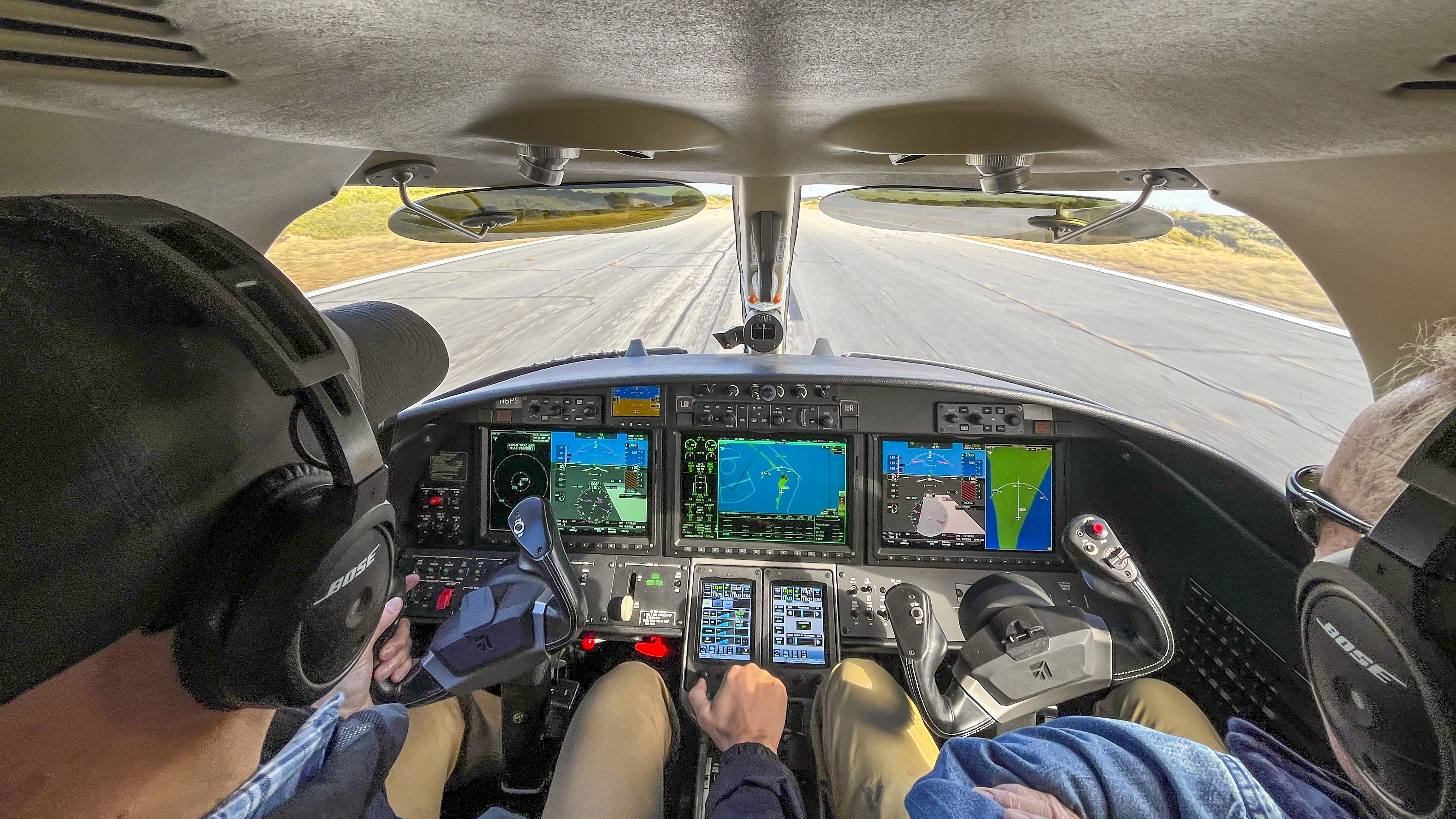
We’ve all experienced the awe of friends who can’t imagine that we take off without days or even hours of rigid scheduling. What an efficient way to travel. What a luxury. But taking off exactly when we want to isn’t totally unconstrained. We must be sure that IFR clearance is there when we want it.
At first, establishing the estimated departure time (EDT) on the flight plan seems simple. Just be sure to file the plan at least 30 minutes before departure time and you’re set. And that works for many trips, but we need to prepare for when plans change, which is often in the corporate environment, and maybe even more frequent for personal travel with family.
All of us use, or should, one of the major flight planning services to file our IFR flight plans. My favorite is FltPlan.com which is free and has been around the longest. ForeFlight began serving the light airplane market with terrific chart and weather graphics but is now a full-capability service growing in popularity with turbine airplane operators. And there are others.
The flight planning services store your information in their own computer network until it’s time to transmit the data to the FAA computer system, typically three hours before EDT. FltPlan.com, the one I know best, will store a future flight plan for days or weeks or months so you can really plan ahead and know the information will be sent to the FAA on time.
The FAA’s ATC computers ingest the flight plan and a preliminary routing is issued and a four-digit squawk code assigned usually three hours before filed EDT. You can see the expected routing on the flight plan service, but it’s not a clearance. In busy airspace especially, expect a change in the actual clearance routing. And pilots can’t see the squawk code until the clearance is issued.
That preliminary clearance and squawk code stays in the FAA system until two or even three hours after filed EDT and then it is flushed if you don’t call for it. How long a clearance remains in the FAA system after EDT varies from one ATC center to another, with two hours being an approximate average.
The one center I’ve encountered that flushes the clearance after only an hour is Miami because it runs out of squawk codes. Miami Center covers a vast congested space over south Florida, but also over most of the northern Caribbean and Gulf, and that’s a lot of traffic. Because all traffic approaching the U.S. Air Defense Identification Zone must be squawking an assigned code even when VFR the available codes get used by traffic already in the air so the Miami Center can’t afford to have unused codes locked up waiting for late takeoffs. There are only 4096 codes available with our transponder system.The bottom line is filing an EDT 30 minutes earlier than you actually expect to depart is much better than wanting to take off ahead of your filed EDT.
It would appear that you have a large window of time to call for your clearance if it’s in the system three hours before, and at least an hour after EDT. But that’s not always the case.
The FAA’s computer system sends the IFR clearance to the originating ATC facility only 30 minutes before EDT. In most facilities the clearance is still printed out on a paper “strip” as well as displayed on screens. That’s when the clearance is readily available to the controller when we call clearance delivery, ground, or the approach control or center governing the departure airport. Because your flight plan is in the FAA’s system a controller can search for it before the 30-minute window. But that’s a secondary task for the controller as workload allows. Ask for the controller to search for your clearance at Teterboro on a Friday afternoon, for example, and you’ll hear some choice words, or simply be ignored.
So, one important IFR filing strategy is to file an EDT that is before you expect to take off if there is a shred of doubt about your actual takeoff time. That way the “strip” is there waiting for you.
Making sure your strip will be available is really important when you can depart VFR from a small airport and plan to pick up the clearance in the air. You have no way of knowing how busy a controller will be when you “pop up” in his airspace looking for an IFR clearance. And the controller has no obligation to accommodate you if his workload with existing traffic is high.
But if your strip has been there for many minutes or an hour he’s expecting you to show up and it’s easier for him to issue the code and get you into the system. That’s why when departing nontowered airports without remote clearance delivery communications I always have the plan EDT at least 30 minutes before I actually expect to depart.
Another reason to file an EDT early is to allow time to get the clearance and set up the avionics. In the light airplanes where most of us trained it’s standard practice to call for a clearance after engine start. That makes sense because the piston airplanes lack the battery power, or APU or low electrical drain ground avionics operation turbine airplanes have. In turbine airplanes it’s good practice and professional to have the clearance, set up all avionics, and run the checklists so you’re ready to taxi as quickly as possible after engine start.
Even at nontowered airports it’s not necessary to wait until ready to taxi to get your clearance. Copying the clearance and being released for departure are two separate events. It’s good practice to get the clearance and then call back for takeoff release when you’re number one at the runway.
Entering your plan in the flight planning service at least a day ahead is helpful for traffic management. The flight planning services coordinate with FAA flow control almost a full day ahead of EDT. The airlines have their “canned” plans in the system, too. Flow control doesn’t issue a clearance, but it does help the FAA anticipate congestion periods and routes and try to work around them. It’s most important to have the plan in early when using congested airports or regions, or when a major event is attracting more than the usual traffic.
When your plans—or more likely the plans of your passengers—really go off the rails and you may not depart for more than an hour or two after filed EDT the first thing to do is call the controllers for your departure airport and ask them to extend the departure time. They can do that, but the flight planning services or FSS can’t. Once the flight plan is transmitted to the FAA’s ATC computers only controllers can alter it, including EDT.
On the other end of possibilities, being really early, the best strategy is to file a totally new flight plan. The key is to file an EDT that is 30 minutes later than when you head for the ramp. The ATC computers will process the new plan right away and issue a clearance strip within minutes. Your original flight plan will stay in the system and eventually be flushed when you don’t call for the clearance. Sometimes this strategy generates overlapping clearance strips and the controller says, “I’ve got two clearances here, which one do you want?” No harm in that.
The bottom line is filing an EDT 30 minutes earlier than you actually expect to depart is much better than wanting to take off ahead of your filed EDT. At congested airports, it’s essential the clearance is waiting for you. The same for popping up VFR looking for your clearance.
The FAA gives us and our passengers tremendous flexibility to use our turbine airplanes on our schedule, especially compared to ATC systems in other nations. With a little understanding we can almost always have that clearance strip waiting on our first call. 
J. Mac McClellan is a corporate pilot with more than 12,000 hours and a retired aviation magazine editor living in Grand Haven, Michigan.


