Mia Anderson
AOPA scholarship helped propel her future
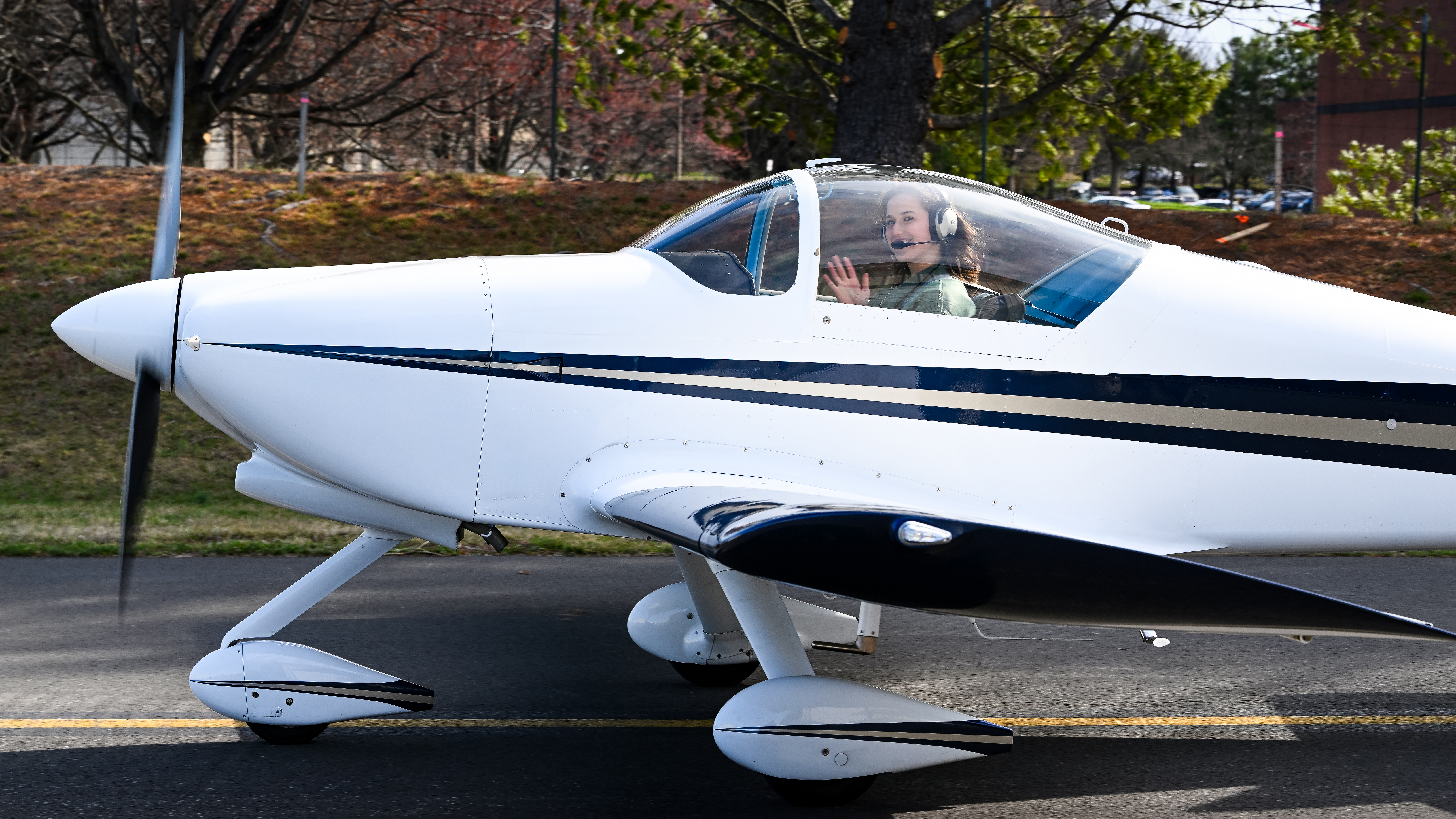
 And while it is amazing to be the first female to compete in both gliders and airplanes at nationals, I’m just doing what I love. Some people do this for money. Some people do this for fame. It’s hard to make money in the airshow world, but it’s just what I love, and I love gliders, and I love airplanes.”
At 19, Anderson has already been on her aviation journey for more than six years. She took her first introductory flight when she was 13 years old, flying with a friend of her father in a 1947 Cessna 120.
“From that moment, I just fell in love with flying,” she says. “They say there’s an aviation bug and it bit me pretty bad.”
Even though she’s from an aviation family—her father is a pilot who flies for Southwest Airlines and her mother and grandmother were Southwest flight attendants—Anderson has charted her own path through aviation. She was so enthusiastic about flying after her intro flight she didn’t want to wait until she was 16 to get her pilot certificate. So, she started flying gliders. She convinced her parents to take her to a gliderport in Arizona, where she met U.S National Glider Aerobatic Champion Jason Stephens, who has been her instructor and mentor. Anderson earned her glider certificate before getting her driver’s license. In 2024, she won the primary category in the U.S. National Aerobatic Glider
Championship, one of the first female pilots to do so.
She earned her private pilot certificate at 17 and started flying fixed-wing aerobatics with Bob “Rooster” Schmidle in Leesburg, Virginia, in his American Champion Super Decathlon (see “Pilots: Bob ‘Rooster’ Schmidle,” March 2025 AOPA Pilot).
“I actually became the first female to compete in both powered and glider aerobatics at the national level,” she says. “Simple things like spin recovery in a glider are different than in a Super Decathlon; in the glider, you recover, and you’re out of the spin. In the Decathlon, you’ve got to kind of lead it and time it right.”
One of the highlights of Anderson’s aviation journey was receiving an AOPA flight training scholarship. She believes one of the reasons she was awarded the $10,000 scholarship was her nonprofit organization, Air Ambition, which she started to encourage young people to fly and pilots to mentor other pilots.
“I’ve seen what scholarships have done for me, and I would love to start scholarships. Maybe pay for somebody’s checkride or an intro discovery flight,” she says. “I’m a small nonprofit; I don’t have much money. Everybody needs a little bit of help.”
But starting in late March, Anderson was on the move. She’s finished two years in community college and has been accepted in Southwest Airlines’ Destination 225° program in Pensacola, Florida. In 13 months, she will have all her ratings and a two-year commitment with one of Southwest’s partners.
“Once you finish that commitment, you get your ATP, and Southwest hires you,” she says. “I’ll be a first officer with Southwest, so I’ll have a big airplane job to fund my little airplane habit.”
 airambition.org
Related Articles


