When right feels wrong
Keys to a successful start in the right seat
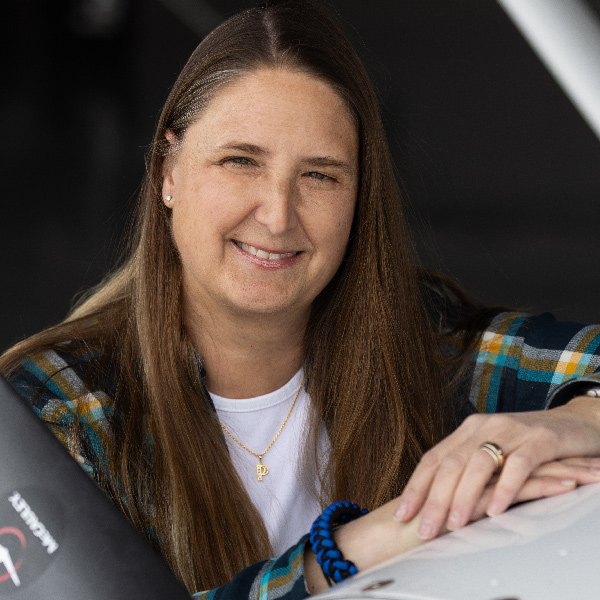
But one of the toughest things to master for your instructor certification is flying an aircraft from the right seat while also talking through maneuvers and guiding candidates to become safe pilots like you.
Piloting an aircraft from the right seat, even for those of us with no aviation career aspirations, is a challenge worth attempting. It gives you a new appreciation of the art of flying.
When it came time for me to jump into the right seat for the first time a few years ago during my CFI training, it felt familiar and oh, so completely wrong, all at the same time. It was a similar feeling to the one I had when I first drove a stick-shift car in a country in which traffic travels on the other side of the road.
Your instinct is to just close your eyes and shake your head, as you hope that everything returns to normal when you reopen them.
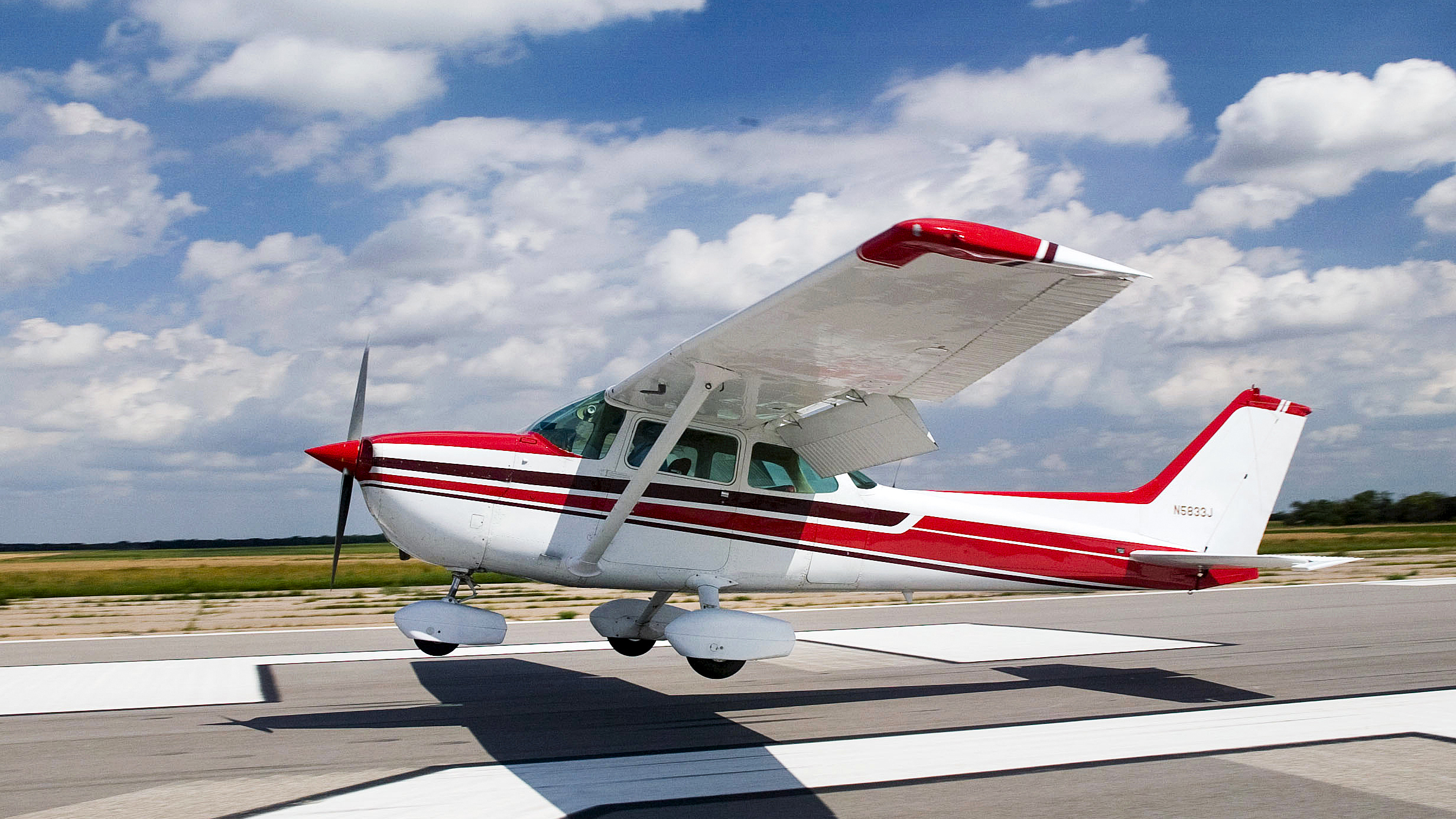
While the aircraft hasn’t changed—it’s the same trusty Cessna Skyhawk in which you first soloed and collected your 250-plus hours of aeronautical experience—your perspective has. From the right seat, the cockpit looks, feels, and sounds different, almost as if you’re looking at yourself from a completely new angle.
The avionics and the throttle are still at the center of the dashboard, as is the red mixture knob and, if you grew up in constant-speed prop, the blue prop lever. The faint smell of 100LL hasn’t left, and the cracked plastic coverings are still there too.
But everything else is just…odd. It’s backwards. And that’s the biggest challenge that you’re going to have to wrap your head around. Until this point, you have only ever occupied the left seat, so your brain has left-seat muscle memory to overcome.
The first lesson when you begin your CFI journey is to give yourself grace.
Let’s start with the sight picture. You’re sitting on the opposite side of the aircraft now, and the first thing your instructor—now sitting in the left seat—will tell you about is the “parallax error.” That’s when something looks different because you are observing it from a different angle. There will be a visual misalignment between what you remember seeing the last time you flew and what you are actually seeing now.
The first time you’ll notice this is while taxiing. Lining up the cowling’s rivets (as in a Skyhawk) with the yellow line on the taxiway can be great as a reference when you’re first trying to get the feel of it. During training, I was always told to taxi so that the center line passes below and between my feet. That’s not a bad piece of advice to maintain when you’re sitting on the right side of the aircraft, too.
Then let’s talk about the physical awkwardness of it all. You’re reaching across the cockpit to start the engine, check the magnetos, and usually the primary instruments, gauges, and/or flight display are facing the left seat, not the right. So, you’re always looking toward the left to keep an eye on everything. (And we know that when you look to one side, your hands on the yoke will tend to follow…so always be aware that you might be inadvertently drifting left.)
If you’re operating an aircraft with steam gauges, here too, the parallax error will trick you. Because of the shifted perspective, the instruments will look different to you than their actual readings. Your instrument scan must be deliberate, conscious, and automatic, especially during takeoff, landing, and maneuvers like steep turns.
OK, so once you’ve figured out where to find your Cessna 172 Skyhawk’s fuel pump switch (it’s in the same place but just hidden a bit below the yoke now from the right seat), let’s talk about hand-eye coordination of flying the aircraft.
As we noted, everything is swapped. You now have your left hand on the throttle instead of your right, and your right hand is controlling the yoke or stick instead of your left. That feels really weird in the beginning. Adjusting power to finesse your maneuvers now requires a conscious effort from your left hand, rather than the effortless nudge you’ve gotten used to from your right. It will feel clumsy at first.
You’ll probably get the hang of the takeoff and cruise pretty quickly, and mastering steep turns and stalls will come, too, although rudder awareness matters more than ever. Landing, however, is a whole different kettle of fish. Inevitably, you’ll fly what you think is the centerline, but as you approach the ground, you’ll realize that you are off on the right side of the runway (because of the parallax error), and as you touch down, you’ll likely side-load to the left, as you attempt to course correct with the rudder. Your depth perception will feel skewed, and the timing of the flare will take practice, once again, because the jobs that your hands are doing are reversed. It took me 20 hours of instruction and too many landings to count for that feeling to…feel right.
Mastering flying from the right seat is a rite of passage—if you are airline bound, but also if you are not—that sharpens your stick-and-rudder fundamentals and your judgement. Try it out sometime. It will humble you…and it will make you a better pilot.