Voltage regulator
Like a pressure valve on a water pipe
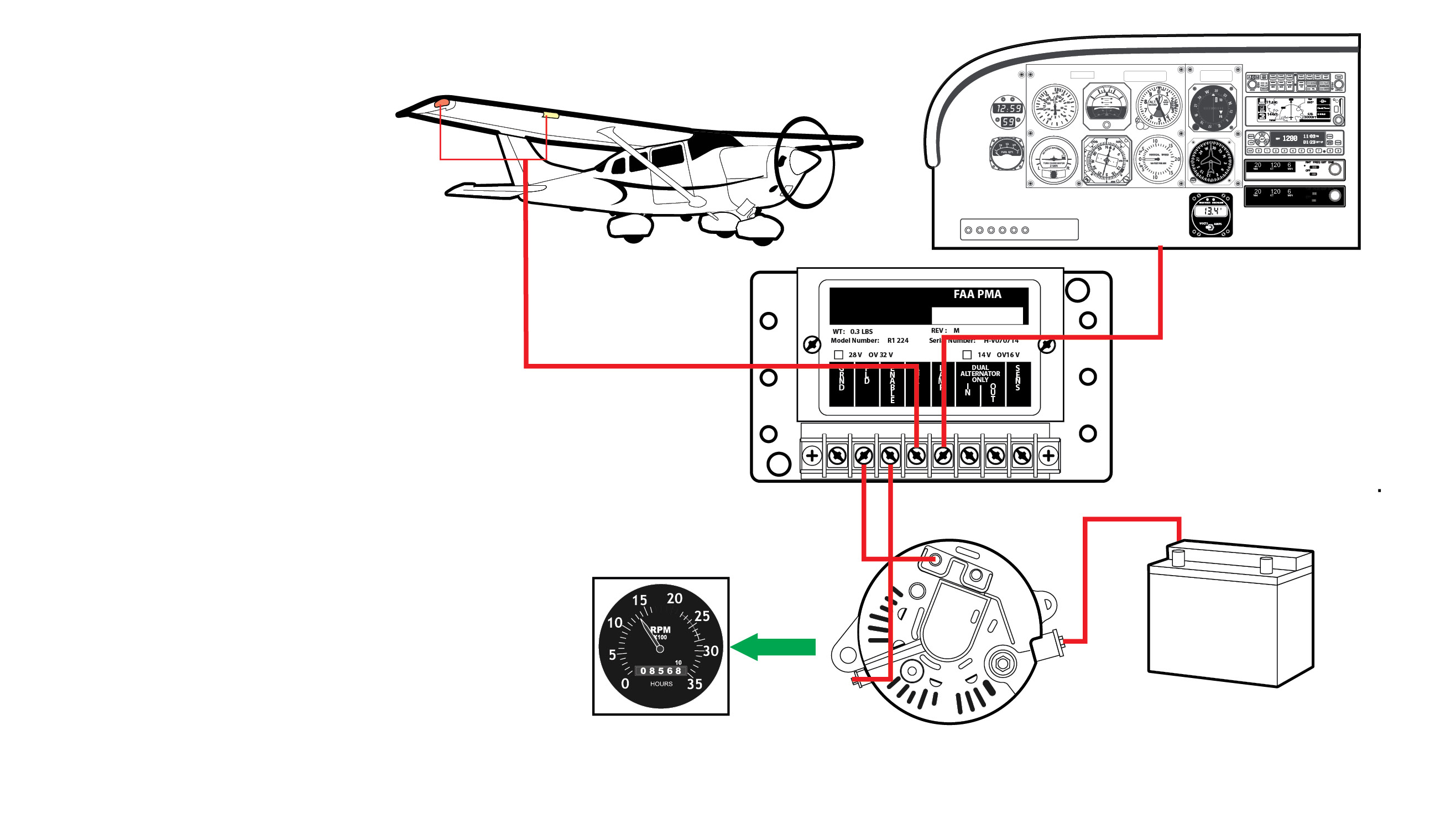
As rpm increases, the rotor spins and generates alternating current, which is then converted to direct current by a rectifier so it can power your aircraft’s electrical system. The faster the rotor spins, the greater the output. But even while sitting on the ramp at low rpm, the alternator is already producing more current than the system needs—enough, in fact, to damage your avionics, battery, and lights. Therein lies the function of the voltage regulator—a device that regulates the alternator’s output and prevents that excess energy from causing problems. Without the regulator, the voltage would spike as engine rpm increases, potentially creating real problems for all things electrical in your airplane.
Think of the voltage regulator as a pressure valve on a water pipe. It monitors system voltage (water pressure) and adjusts the alternator’s current output (flow of water) so that, no matter the engine’s rpm, the voltage stays within a safe range—just above 12 volts and 24 volts for those respective systems.
There are two primary types of regulators you’re likely to encounter: modern, electronic (solid-state) voltage regulators, found in most general aviation airplanes; and older, relay-based electromechanical regulators, sometimes seen in older aircraft built before solid-state technology became standard. The mechanical variety relied on moving contacts that could wear over time, resulting in voltage fluctuations or failure. The transition to solid-state regulators, between the 1960s and 1980s, was welcomed for improved reliability and more precise voltage control, good news as avionics technology became more sophisticated.
There are two failure modes, overcharging or undercharging, and corresponding warning signs you should be on the lookout for.
Overcharging occurs when voltage is not regulated and rises above the normal operating range. If equipped, watch for a high or climbing reading on your voltmeter. Your landing and panel lights may be unusually bright as well..
Undercharging occurs when the regulator fails to supply enough power and is indicated by a discharge on the ammeter. At that point, the aircraft’s electrical system would be operating solely on battery power, a temporary resource that can’t be depended on for very long.