Making progress
A flying breakthrough on the ground
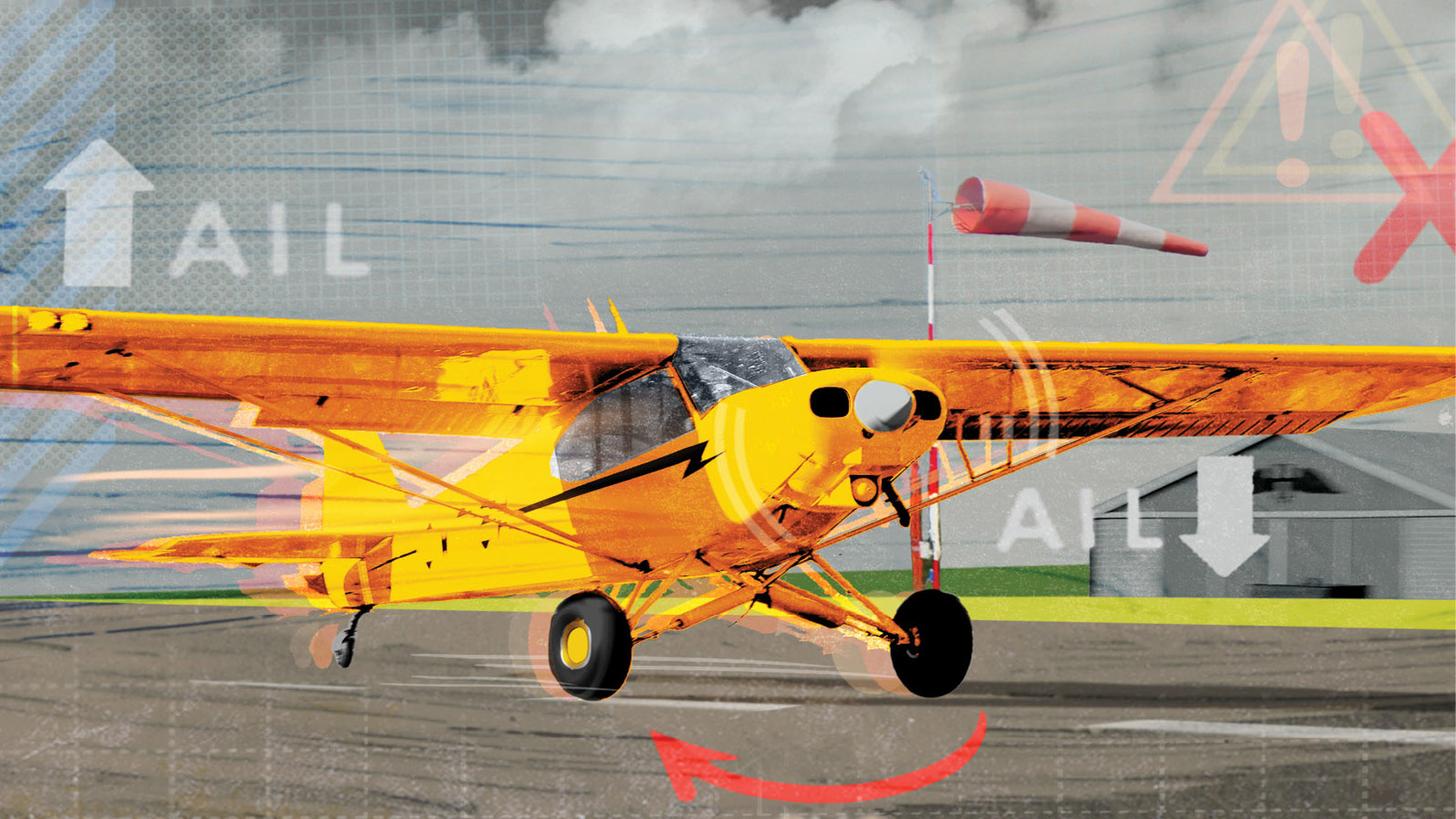
I was new to tailwheel flying and had recently obtained my endorsement in a PiperCub. I was impatient to build real-world experience and, frustratingly, the weather wasn’t cooperating. It was a bitingly cold winter day at my home airport in Memphis, Tennessee, with a 15-knot west wind and a low, gray ceiling. Conditions were obviously unsuitable for flying the VFR Cub. But perhaps there was another way to make progress and build on my small bit of tailwheel knowledge.
The windsock stood straight out showing a perfect crosswind at nontowered Gen. Dewitt Spain Airport’s north/south runway. I opened the hangar doors and pushed the Cub onto the ramp while my instructor and the Cub’s owner, Dwight Smith, hand started the Continental engine.
I hopped in the rear seat and strapped in. Dwight swung the prop, and the 100-horsepower engine barked to life. I let the engine idle while pressing down on the heel brakes as the wind rocked the airplane on its bungee landing gear. It took 10 minutes or so for the engine oil to reach 80 degrees and I taxied to Runway 35 for runup.
Unsurprisingly, no other airplanes came or went as I monitored the common traffic advisory frequency on a handheld radio. Even though I had no intention of flying, the next step made my heart race. I announced I was taking Runway 35 for a fast taxi to the far end.
With the airplane aligned with the centerline, I held full left aileron as I advanced the throttle wide open. A few seconds later, I added forward stick to raise the tailwheel off the pavement and stabbed the right rudder to prevent the Cub from weathervaning into the wind. Once the Cub was up on its main gear, I reduced the power by about half and did my best to track the centerline.
It took quick and constant footwork and full aileron to keep the left wing down and the airplane rolling straight ahead. Just beyond the halfway point on the 3,500-foot runway, I reduced engine power to idle and slowly lowered the tailwheel to the ground. It still took lots of rudder input to keep the airplane from swerving while the Cub slowed to a stop. Then, near the end of the runway, I made a 180-degree turn and lined up with Runway 17. I had a direct crosswind again, this time from the right, as I announced that I would make another high-speed taxi run going south.
Once again, I held full aileron into the wind, pushed the throttle lever up, added forward stick to raise the tail, and made multiple jabbing rudder inputs. The nose would dart left and right but quick taps on the rudder pedals brought it back to the center. Passing midfield, I reduced engine power to idle and flew the tailwheel to the ground. These fast taxis were more difficult than takeoffs and landings because there was no time to sit still.
In an hour, I made about a dozen round trips up and down the pavement.
 WHAT HAPPENED
Near the end of the runway, I made a 180-degree turn and lined up with Runway 17.
“That looked like a lot of work for exactly zero flight time,” Dwight said. “Is there any tread still left on the tires?”
I told him I’d bring him a new set of brake pads because I rode them pretty hard. He chuckled and accepted.
To this day, the crosswind Cub fast taxis made for one of the most memorable and demanding training exercises I’ve ever done, and the most productive. I didn’t recognize it in the moment but the solo fast taxis had been a personal breakthrough.
Related Articles


