Flying low
Inside the growing effort keep ag flying safe as drones proliferate
Agricultural pilots memorize fields as well as obstacles, study wind direction, track towers, and plan escape routes before descending at crop level onto fields. Increasing drone activities add new complexity to one of aviation's most demanding jobs.

As uncrewed aircraft become more common over farmland, the National Agricultural Aviation Association (NAAA) says the future of agricultural aviation may depend less on competition between drones and pilots and more on how they coordinate. While drone technology has advanced rapidly—particularly in the theater of war—there is no immediate danger that autonomous flying tankers will replace Air Tractors and their ilk flown by human pilots.
The history of aerial application began in Ohio on August 3, 1921, Barber said. More than a century later, crewed and uncrewed ag aircraft collectively treat approximately 137 million acres of cropland annually, in addition to millions of rangeland and forestry, according to NAAA.
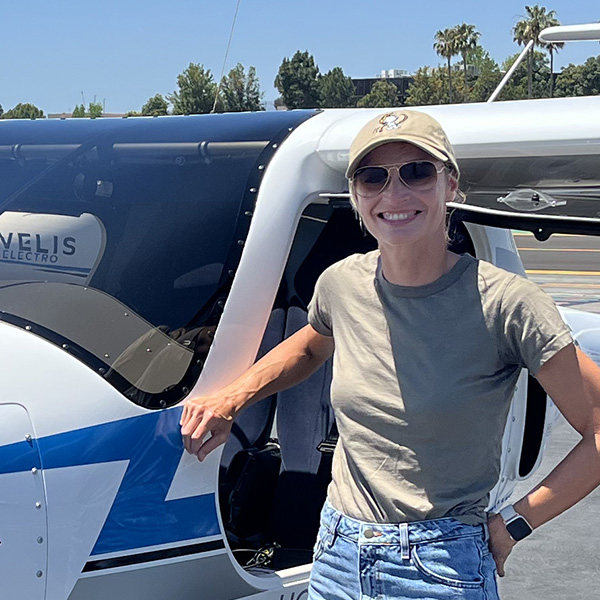
For Emily Daniel, @agpilotchick on Instagram, and a third-generation pilot who now runs a New Jersey ag aviation operation with her husband, the discipline that defines agricultural flying starts long before anyone enters the flight deck.
Daniel grew up flying, studied meteorology, instructed, flew skydivers and charter, then worked her way into the ag pilot's seat, but not before spending significant time on the ground. She loaded aircraft with chemicals, mapped fields, answered calls, and learned the equipment before ever spraying a field herself.
"Most people spend a minimum of one season, but usually more than one on the ground, just loading airplanes," she said. "You could be fully qualified, commercial license, all your time, but you're still not qualified to apply that product and do it safely."
That apprenticeship model exists for a reason, Daniel explained. "There are things you can learn on the ground about how the equipment works that if you learn them on the ground, it prevents them from becoming emergencies in the air." The barrier to entry is real and intentional. On a typical liquid application, she said, an ag aircraft may be flying only 10 to 15 feet above the crop. Dry applications are often higher, around treetop level, all close to obstacles that demand constant attention. Before entering a field, Daniel said, she circles from about 500 feet, scanning broadly, then works her way lower. She keeps a paper map as a backup, even when GPS files are loaded.
"I start broad," she said. "I do a minimum of two complete laps around the fields, and if it's unfamiliar, I'll do as many as I need before I feel comfortable diving down."
For ag pilots, wires remain among the industry's biggest operational threats. The wires that anchor towers, irrigation systems, unexpected obstacles, and changing field conditions add to the complexity. Unlike many forms of aviation where pilots may have thousands of feet to react, ag pilots often make split-second decisions just feet above the terrain. "You'll see high tension lines," Daniel said, "but the small power lines, especially if it's going to a small shed or building you wouldn't expect to have power, that can get you into trouble very fast."
The rapid growth of drone operations has introduced a new layer of risk into an already complicated airspace. A 2025 NAAA survey found 20 percent of aerial application operators reported an unsafe drone encounter during the agricultural season, up from 16 percent in 2024 and 11 percent in 2023.
Daniel's concern increased after one incident in which her husband arrived to treat a field and spotted a drone trailer nearby. The drone was airborne, but its operator had not coordinated with the aircraft. Her husband radioed her not to come to the field, and both aircraft were shut down until the conflict was resolved. "There are a lot of rules, but there are people operating them who don't know all the rules," Daniel emphasized.
Daniel believes drones can have a place in agriculture, especially in smaller fields, sensitive areas, or where fixed-wing or turbine aircraft may face operational limitations. Her worry is operators who enter the space without fully understanding aerial application; people who are drawn to the technology without the same depth of training ag pilots carry into every job.
NAAA urges drone operators to give right-of-way to crewed agricultural aircraft and equip drones with visible strobes, ADS-B, and other detection technologies. (The FAA has since 2023 required drones operated outside of small, pre-approved areas to broadcast a "digital license plate," which is separate from the ADS-B system, and primarily visible to air traffic control and law enforcement.) The association also recommends that drone pilots proactively contact local aerial applicators before operating in agricultural areas. Barber doesn't believe drones will replace crewed agricultural aviation. Large turbine agricultural aircraft can carry hundreds of gallons of liquid crop treatments, such as fertilizers, pesticides, or herbicides, over expansive farmland in ways small drones cannot.
Through its sister organization, the National Agricultural Aviation Research and Education Foundation, NAAA supports research, drift mitigation, safety education, and technology transfer initiatives for both experienced and aspiring ag pilots. One of its cornerstone programs is the Professional Aerial Applicators Support System, an industrywide safety education program taught at state and regional conventions, supported by “Fly Safe” messaging during the spraying season.
Recently, NAAA developed a Flight Risk Assessment Tool (FRAT) specifically tailored to agricultural aviation. Unlike generic aviation checklists, FRAT evaluates annual, monthly, daily, and preflight risk considerations specific to low-altitude operations.
If something feels wrong, the guidance is simple: Stop and reassess.
"We really push all pilots using it, especially younger inexperienced pilots," Barber said.
NAAA's safety programs increasingly address stress, fatigue, and mental readiness alongside traditional operational hazards. Barber said operators are encouraged to remove pilots from flying duties if they are overwhelmed or not mentally prepared to fly.
Aspiring ag pilots are encouraged to earn commercial and tailwheel endorsements as well as obtain pesticide applicator licenses, attend industry conventions, and connect with experienced operators willing to mentor the next generation. NAAA also offers career resources, mentorship guidance, and scholarship information for aspiring ag pilots and operators through its online career portal.