New tech for Epic turboprop
Safety upgrades for a hyper-competitive category
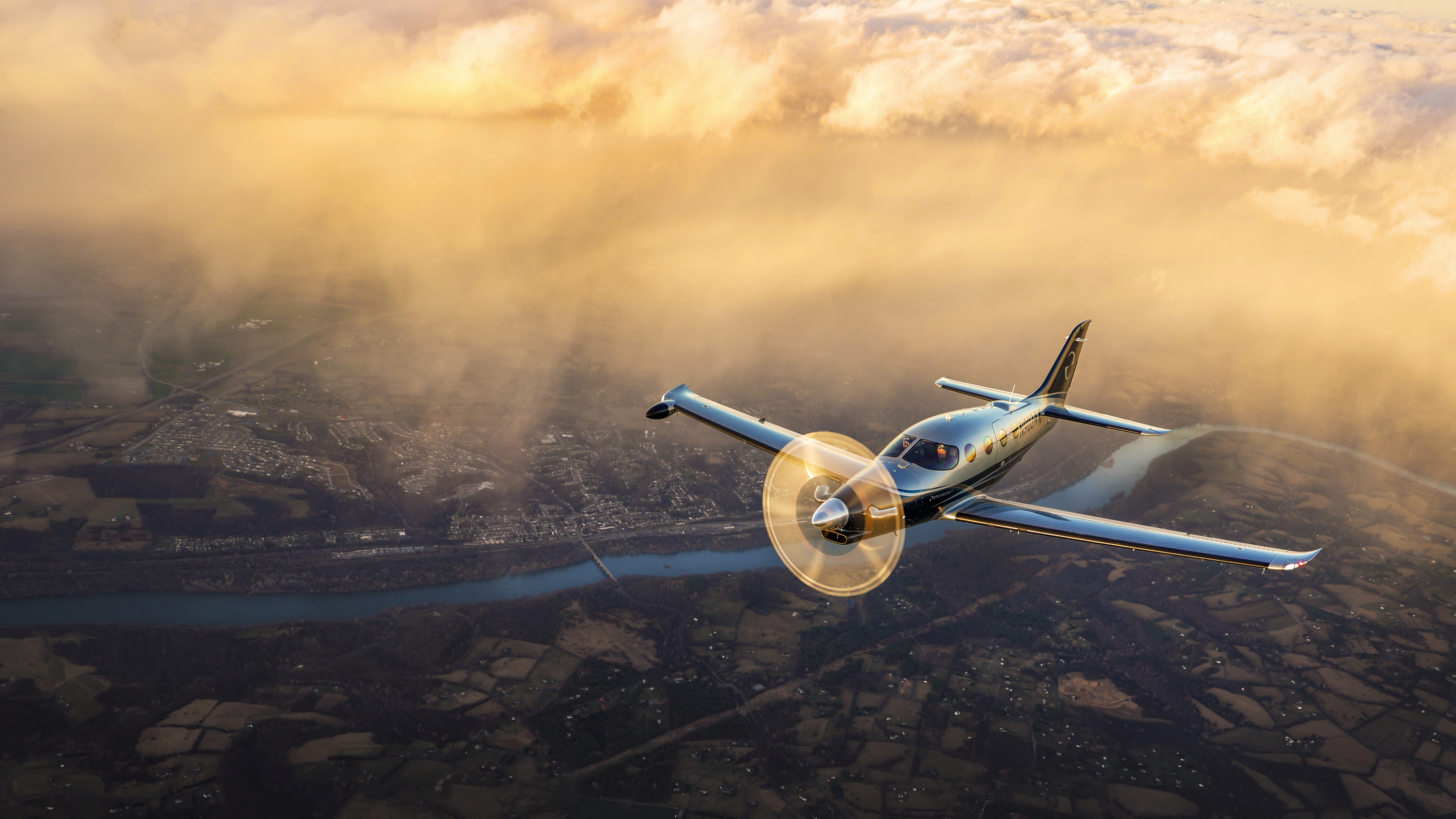
The Epic must climb slowly at a greatly reduced power setting to stay behind a fully loaded Beechcraft Bonanza A36 that’s serving as a photo/video platform for this article. With four people aboard the Bonanza and the cargo doors removed, it’s ascending at about 110 KIAS through light-to-moderate chop while the Epic, flown by sales manager Trevor Blackmer, loiters off its right side to keep pace.


It’s here that the Epic’s autothrottle first makes its presence felt.
The autothrottle senses that the Epic is flying slowly and decelerating, and it activates automatically and adds power to prevent an inadvertent aerodynamic stall.
“The autothrottle is tied into the Garmin ESP [Electronic Stability and Protection] system and comes on automatically in certain situations,” Blackmer says. “It’s another tool to avoid loss-of-control accidents.”
The AX is the most technologically advanced E1000 model to date. It’s equipped with the Garmin Autoland system as well as an upgraded G1000 NXi avionics suite. The autothrottle is an essential building block for the Garmin Autoland system pioneered on the Cirrus SF50 Vision Jet and Piper M600 in 2020. The system allows airplanes to descend and land autonomously if the pilot becomes incapacitated in flight. Autoland is standard equipment on new Cirrus aircraft including the SR20 and SR22 Generation 7 piston singles and Daher TBM turboprops starting with the 940. It’s also capable of being retrofitted to the Beechcraft King Air 300 and 350 twin turboprops.
In the Epic AX, the autothrottle is a transformational tool that can be used in just about every phase of flight.
At takeoff, for example, the autothrottle can take over as soon as the pilot advances the power lever. Then it commands full engine power and constantly adjusts to avoid torque and temperature limits.
“It operates like a FADEC [Full Authority Digital Engine Control] system,” Blackmer says. “It knows the engine’s limitations and won’t exceed them.”
During cruise, the pilot can set the autothrottle to optimize speed, fuel efficiency, range, or endurance.
The autothrottle is especially useful during descent to command speeds that comply with air traffic control directions, minimize bumps, and avoid exceeding flap and landing gear deployment speeds. If a pilot levels off without increasing engine power, the autothrottle advances the power lever on its own to maintain the desired airspeed. Even if the autothrottle isn’t engaged, it will activate on its own to avoid aerodynamic stalls.
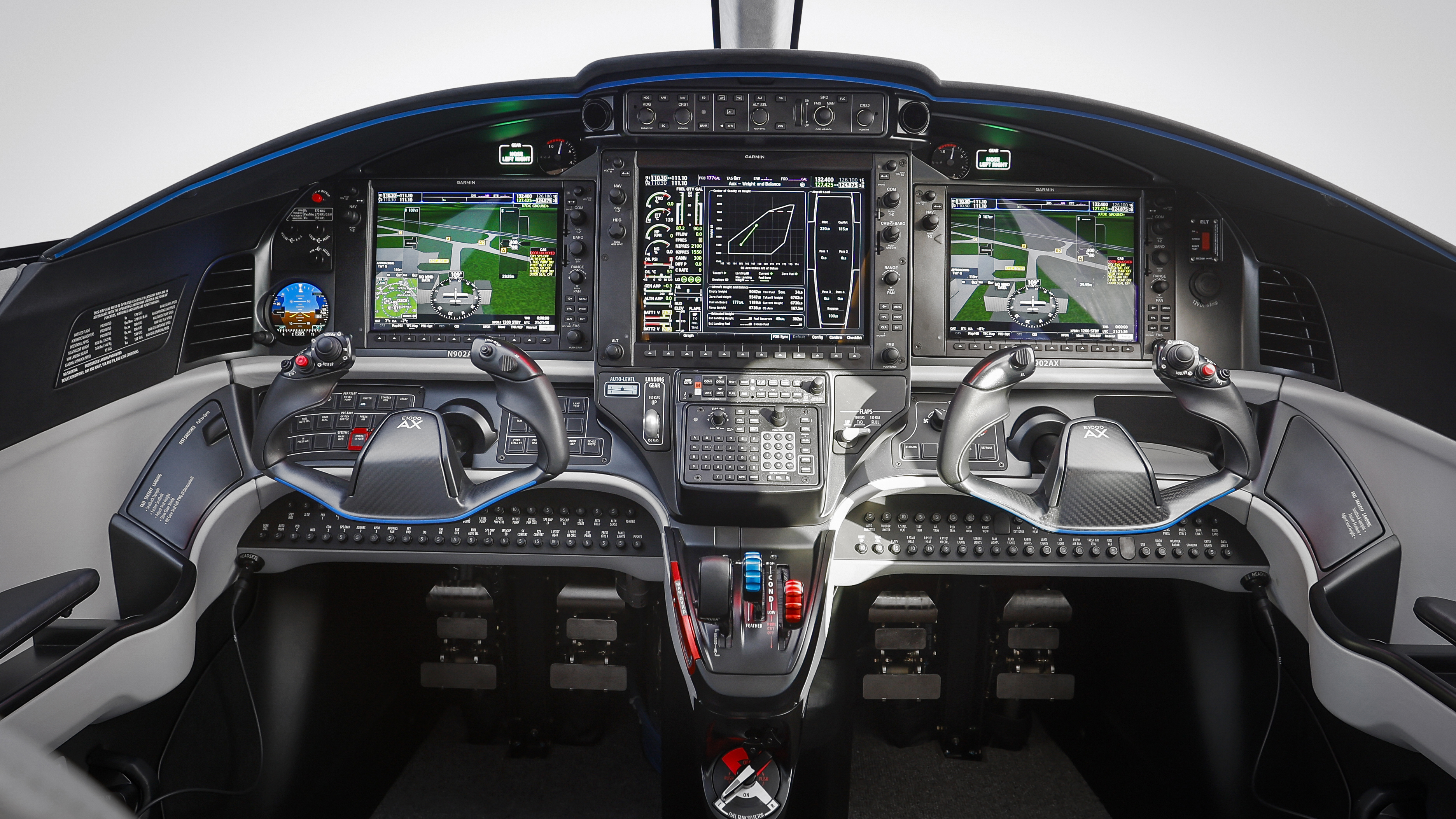
On approach, the pilot can set a speed that fits local traffic, or one that’s optimized for the airplane’s current weight and wind conditions.
The Epic G1000 AX’s automation also has some other tricks. It engages the yaw damper automatically at 250 feet agl during the initial climb and disengages it at 200 feet agl before landing.
An electronic module known as “brake hold” is linked to the autoland brake actuator and prevents the parking brake from being deployed in the air, and it sounds an aural warning if the parking brake remains on during the takeoff roll. Also, when the pilot sets the parking brake, shuts the engine down, and removes battery power, the parking brake releases so that the airplane is always ready to tow. There’s no danger of the nose gear getting damaged by a tug attempting to move the airplane while the parking brake is on.
Boutique training
Epic has delivered about 115 airplanes to date, and about 30 of those are E1000 AX models. The current retail price is $5.35 to $5.5 million depending on options, and the backlog is about one year. The Epic factory in Bend, Oregon, produces about three new airplanes per month, and the company expects to deliver 38 this calendar year.
No type rating is required to fly an Epic aircraft, but insurance companies typically require model-specific training. Initial pilot training typically lasts about one week and includes 16 hours of flight training, half in a simulator at the company’s Bend headquarters and half in an airplane. Training is included with the sale of each new airplane.
Annual recurrent training for Epic pilots typically lasts one or two days and alternates between simulator sessions one year and in-airplane training the next.
Epic pilots range widely in experience from relatively new instrument pilots with less than 1,000 total flight hours to career airline pilots with tens of thousands. Initial training is done to ATP standards, and Blackmer says G1000 avionics familiarity and IFR currency and proficiency are the best predictors of success.
“Each training program is individually tailored and takes the pilot’s background into account,” Blackmer said. “It’s not a one-size-fits-all approach with a set schedule like you’d typically see in type-rating courses. We have very high training standards, and we have an exceptionally high success rate because we don’t take a cookie-cutter approach. Our initial training program typically takes about five days—but it’s not limited to five days. It’s a boutique program that’s built around the individual.”
One-button missed approach
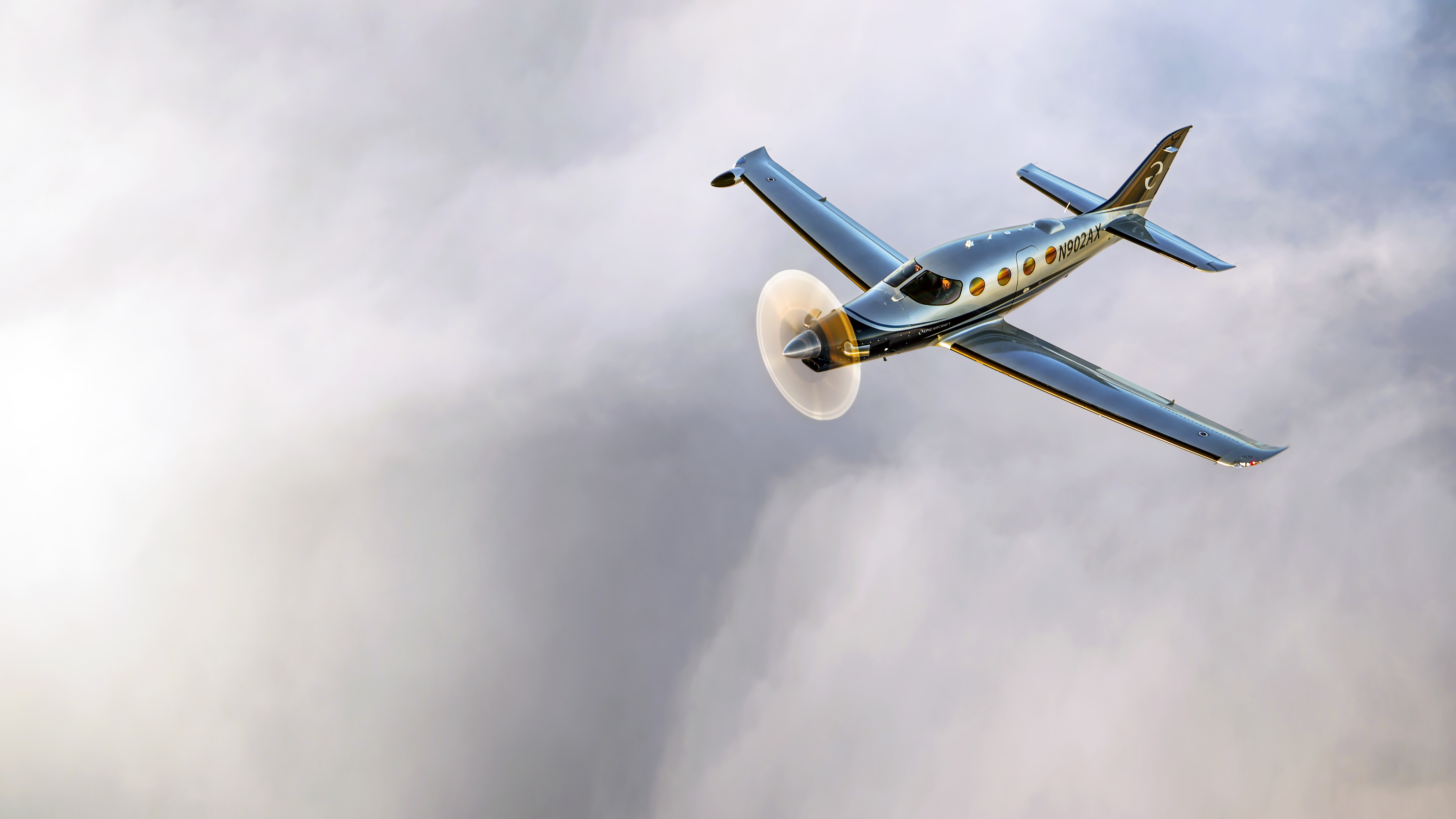
The sun is setting as our photo flight concludes and the Epic peels off to perform an ILS approach in visual conditions at nearby Eastern West Virginia Regional Airport (MRB) in Martinsburg.
A gusty northwest wind favors Runway 26 and the autopilot is flying with the autothrottle engaged as we’re cleared to intercept the final approach course about 10 miles out. Blackmer reduces speed to 160 knots using the autothrottle dial on the autopilot control panel at the top center of the instrument panel.
We intercept the glideslope at 3,000 feet and Blackmer sets approach flaps. Then he dials back the speed to 140 knots and extends the landing gear. Finally, he slows the airplane to 100 knots on final approach and we descent toward the decision height at 200 feet agl while the ghostly power lever moves forward and aft on its own to keep the airspeed constant—a difficult task in these choppy conditions.
As we reach decision height, Blackmer presses the Takeoff/Go-Around button on the power lever and the airplane begins flying the missed approach on its own. The power lever moves forward, the nose pitches up about 10 degrees, and the aircraft accelerates briskly.
Blackmer moves the flaps to the takeoff position, then raises the landing gear, and finally brings the flaps all the way up. The Epic climbs on course and follows the GPS-derived path to the holding point.
“This kind of automation takes a potentially stressful, high-workload event and makes it easily manageable,” he says. “The autopilot stays engaged, the autothrottle manages engine power, and the airplane flies the missed approach and enters the hold all by itself.”
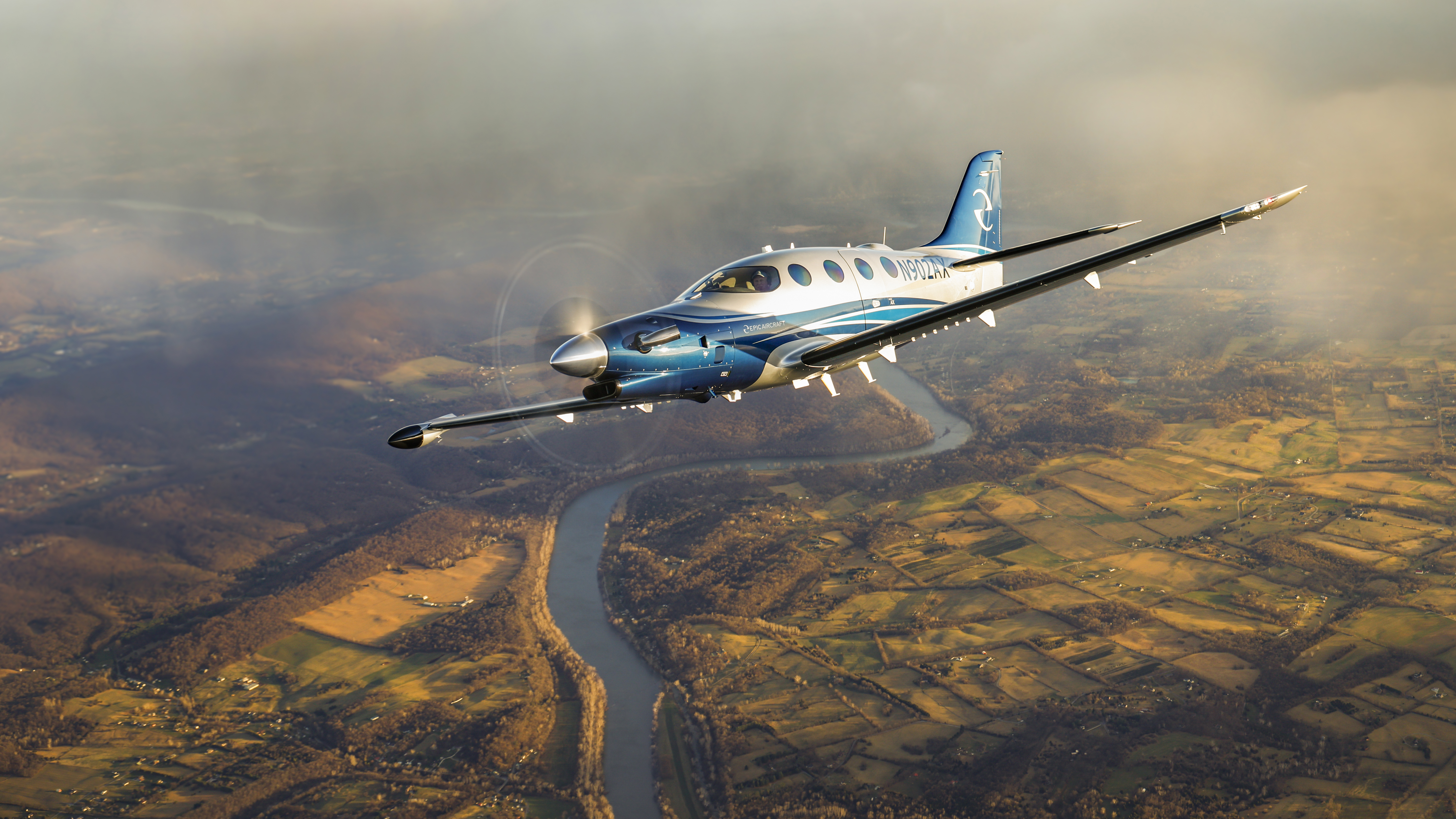


Once the pilot presses the Takeoff/Go-Around button, the only remaining tasks are raising the flaps and landing gear.
Last, we return to our starting point—AOPA’s home base at the Frederick Municipal Airport (FDK) about 25 miles away—for a visual approach and crosswind landing. Blackmer flies the airplane manually but engages the autothrottle for precise speed control.
It’s fully dark now, and Blackmer configures the airplane for landing and commands 100 knots on final approach as he follows the PAPI lights to Runway 23. The power lever makes continuous adjustments to maintain that airspeed as it contends with a direct 20-knot crosswind that’s gusting to 32 knots.
The Epic’s reference speed is 95 KIAS regardless of aircraft weight, and pilots aim to cross the runway threshold 50 feet above the ground at VREF, then flare at 85 KIAS and touch down about 75 KIAS.
Blackmer sticks to those speeds despite the wind gusts and the trailing link main landing gear touches down at about 78 knots. The airplane decelerates rapidly using flat propeller pitch, then reverse. The Epic slows to taxi speed in about 500 feet even though Blackmer hasn’t touched the wheel brakes.
“The prop is extremely effective at bringing the airplane to a stop on ground,” he says. “The flat-pitch Beta range allows you to decelerate quickly and precisely control taxi speed without wearing out the wheel brakes.”


Hyper-competitive market
The single-engine turboprop market is among the most competitive in the general aviation industry with Pilatus, Daher (TBM/Kodiak), Piper, Epic, and soon Textron with its long-awaited Denali seeking to carve out their own turf.
Epic clearly aims to be the performance leader. It’s the fastest (333 KTAS) and has the highest ceiling (34,000 feet). But it’s long been content to stay on the sidelines while others lead the way on safety features like Garmin Autoland and avionics upgrades. Now that Epic has added autonomous landings and the autothrottle that enables that feature, an avionics upgrade is the next logical upgrade.
But Epic seems to have plenty of room for sales growth without changing anything. The company sold 62 airplanes last year—about one-third more than it can build in any 12-month period—even though it’s not yet certified in Europe. About three-quarters of the Epics sold so far are flown by owner/pilots, and that would seem to indicate it’s got room to grow among corporate and fractional operators.
In a time of rising fuel prices, an Epic that flies nearly as fast as a light jet at a dramatically lower fuel burn would seem to have a promising future.
“It’s natural to compare Epics to other single-engine turboprops—and we really stand out there because we’re the fastest and fly the highest,” Blackmer says. “But we also compete really well against used jets, especially when it comes to operating costs.”
Blackmer said Epic expanding internationally and making fleet sales haven’t been priorities because the company has been selling airplanes as quickly as it can make them domestically.
“We’re focused on the domestic market because demand here is really strong,” he says. “But there are definitely opportunities for us internationally. This airplane’s capabilities are unique—and people everywhere recognize that.” 
Model: Epic E1000 AX
Price: $5.35 million to $5.5 million
Powerplant / PT6A-67A, 1,200 shp
Propeller / Hartzell 5-blade composite
Length / 35 ft 10 in
Height / 12 ft 6 in
Wingspan / 43 ft
Seats / 6
Cabin width / 4 ft 7 in
Useful load / 2,956 lb
Payload w/ full fuel / 1,177 lb
Fuel capacity / 264 gal
Takeoff distance over 50-ft obstacle / 2,254 ft
Best rate of climb at sea level / 4,000 fpm
Normal cruise / 317 KTAS
Max range / 1,560 nm
Max operating altitude / 34,000 ft
Landing distance over 50-ft obstacle / 2,399 ft
All specifications are based on manufacturer’s calculations. All performance figures are based on standard day, standard atmosphere, sea level, gross weight conditions unless otherwise noted.
 epicaircraft.com
Related Articles


