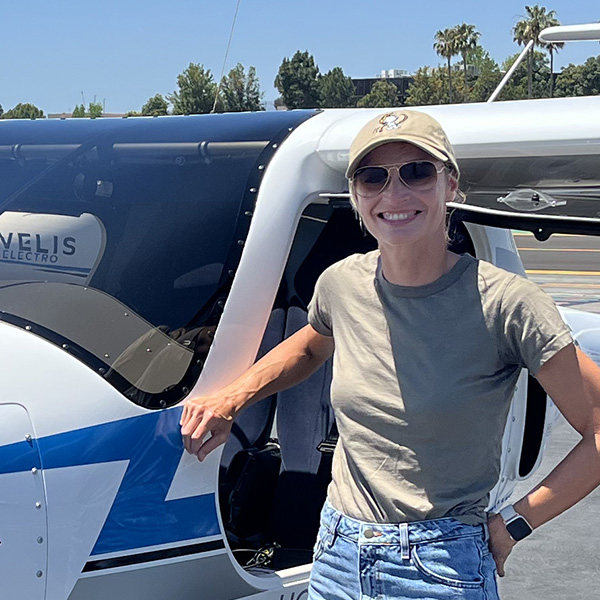
Wally Funk belonged to the sky
She spent her life proving it, then soared beyond
From the time she was a small child in Taos, New Mexico, Wally Funk wanted to fly. For more than seven decades, she pursued that goal despite barriers that repeatedly limited opportunities for women in aviation and spaceflight.

Funk died at 87 on July 8 in Grapevine, Texas, after a life that took her from childhood dreams of flying in the mountains of New Mexico to spaceflight at age 82 aboard a Blue Origin rocket. Along the way, she built a career in aviation that included piloting, instruction, safety investigations, and advocacy for greater opportunities for women.
In 1961, Funk volunteered for the Women in Space program, a privately funded effort to see whether America's best female pilots could handle the same evaluations NASA gave its male astronaut candidates. Although she was only 21, four years younger than the program's stated minimum age, her flying experience earned her a place in the group. She became the youngest of the 13 women who were later known as the Mercury 13.
During testing, Funk spent 10 hours and 35 minutes in a sensory deprivation tank, one of several evaluations designed to measure astronaut fitness. Despite the group's performance, the program never received NASA support and was ultimately discontinued. NASA instead selected the Mercury Seven, all of them men. Funk later applied to NASA programs but was told she lacked the qualifications required for consideration. NASA did not open its astronaut corps to women until 1978, by which point Funk was 39, well past the age the agency wanted.

After earning her airline transport pilot qualification, Funk also encountered barriers in commercial aviation, where airlines were not yet hiring women as pilots. Rather than leave aviation, she pursued other opportunities while she kept flying. As the FAA's first female flight inspector and later as the NTSB's first female air safety investigator, she spent 11 years investigating roughly 450 accidents, helping make aviation safer. She also continued teaching, eventually assisting more than 3,000 students toward their private or commercial pilot certificates while logging more than 19,600 flight hours.
Funk finally got her chance to go to space on July 20, 2021, when Blue Origin founder Jeff Bezos invited her aboard the New Shepard rocket's first passenger flight. The trip lasted just over 10 minutes and reached an altitude of 107 kilometers (66 miles). At 82, Funk became the oldest person to fly in space, surpassing the previous record held by astronaut and former Sen. John Glenn. Although that record has since been broken, she remains the oldest woman to have flown in space and the only member of the Mercury 13 to do so. In March 2022, AOPA honored her with its R.A. "Bob" Hoover Trophy, recognizing a career built as much on mentorship as on flying skill.
Funk leaves behind a record that reflects both her achievements and the obstacles she faced. Despite being turned away from NASA, shut out from the airlines and told for years that she did not qualify for the one thing she wanted most, that persistence eventually carried her into space. By then it seemed like the question was never whether she belonged in the sky, but whether the ground could ever hold her.