Their father’s legacy
An auto mechanic’s flight dreams take off
By Sheila Harris
In Joplin, Missouri, there’s a street named after Gene Ingram: the short avenue leading to the corporate hangar of Leggett & Platt, the Carthage, Missouri, company where Ingram founded a flight program and served as chief pilot for 23 years.
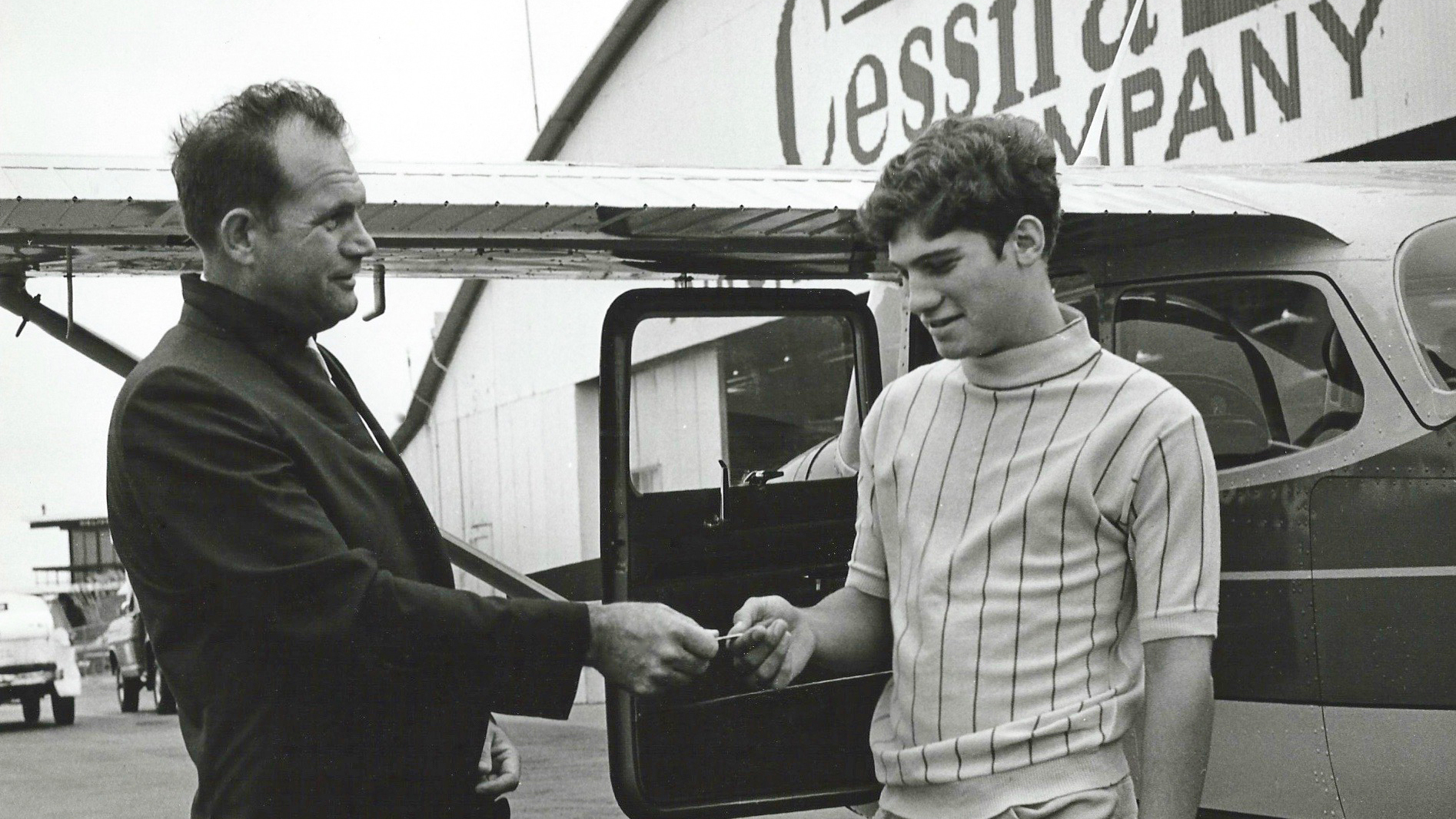
For an auto mechanic from a small Illinois farm town, Ingram’s leap into the aviation world was remarkable, and changed the trajectory of his family’s future.
“Our father loved flying; literally loved it,” said Chris Ingram, speaking for himself and his brother, Mark Ingram, three years his senior. “He wanted to fly from the time he was a teen.”
Growing up during the 1930s and ’40s in Terre Haute, an Illinois town with some 100 residents located in the middle of farmland a few miles east of the Mississippi River, the chance of becoming a pilot, let alone pursuing a career in aviation, appeared slim, but not to Gene Ingram. While laboring alongside his father in Ingram & Son Garage, where the pair serviced autos in the shop and tractors in the surrounding fields, Ingram made plans to fly away.
He enrolled in his first flight lesson as a teenager, but when he found the instructor was more interested in showmanship than in teaching, he walked away in disgust. Several years later, when the turn of a wrench in the automotive shop sent the tool hurtling backward past his head, Ingram—with a wife and two young sons at home—decided to get serious about a career change.
He enrolled in flight lessons again, this time with Remmers-Tompkins, based in Burlington, Iowa. He earned his private pilot certificate, then his commercial and instructor certificates, while accumulating flight hours in a Taylorcraft he purchased.
When a career in aviation seemed within reach, Ingram began scouting the country for an FBO to purchase. He opted for one that came with a Cessna dealership at the former Myers Memorial Airpark in Carthage. There, he obtained his instrument and multiengine ratings and became a designated pilot examiner.
For 9-year-old Chris and 12-year-old Mark, the move to southwest Missouri in 1962 opened doors into a world they could never have imagined.
Initially, they were excited about the accessibility of legal fireworks, a nearby swimming pool, and the 1952 GMC pickup at their disposal, but their lives soon revolved around the FBO, dubbed “Carthage Airways.”
“We were at the airport all the time,” Chris said.
“I mopped floors, cleaned toilets, fueled airplanes, and helped with tiedowns,” said Mark, who took ground instruction from the Jeppesen LPs he played for the flight-training students.
Although each of the boys had flown their first airplanes at age 9, aviation became real for them in Missouri. They worked alongside their mother in the FBO and flew with their father on charter flights, until they were old enough to fly on their own.
Age 16 couldn’t come soon enough for Mark and Chris. Although there’s some discrepancy between the number of airplanes they respectively soloed in (Mark says three and four, Chris says four and five), they’re in agreement that Chris flew one more, “just because there were more airplanes available,” he said. Afterward, they each went to Wichita to fly new Cessnas back for their father.

Later, with private and commercial pilot certificates in hand, the brothers made numerous charter flights for their father’s business, including transporting bodies for local morticians and making jaunts to Florida to deliver Apollo spacecraft parts manufactured by Rocketdyne in Neosho, Missouri.
“We were 17-year-old kids, but nobody cared,” said Chris. “Airplanes were all we knew.”
Mark says he was never especially ambitious, and mostly just took advantage of opportunities that presented themselves. They were numerous. After graduating from college (paid for with flight instruction), he worked as a corporate pilot and manager for local manufacturing industries, then flew for the airlines. He retired as a United 777 pilot in 2014 and now flies his Aviat Husky.
After high school and college, Chris flew for a crop-spraying business, then bought a Piper Pawnee and started his own business.
“I loved it, partly because it was seasonal work,” he said.
On the side, he purchased a Citabria and engaged in some aerobatic and spin training, “just for fun,” he said.
When dairy farming waned in southwest Missouri, so did the demand for his crop-spraying services, so Chris took a job as a corporate pilot for a large manufacturing firm. In 2006, he retired in name only, then did contract flying for jet manufacturers. He now spends time flying his Beechcraft Baron.
The brothers agree that their father’s midlife leap of faith was one of the best things that ever happened to them.
“It was a long shot that he made a success of the business in Carthage,” Chris said.
Much credit, he says, goes to their mother. Marilyn Ingram was a registered nurse, but she also worked long hours at the airport.
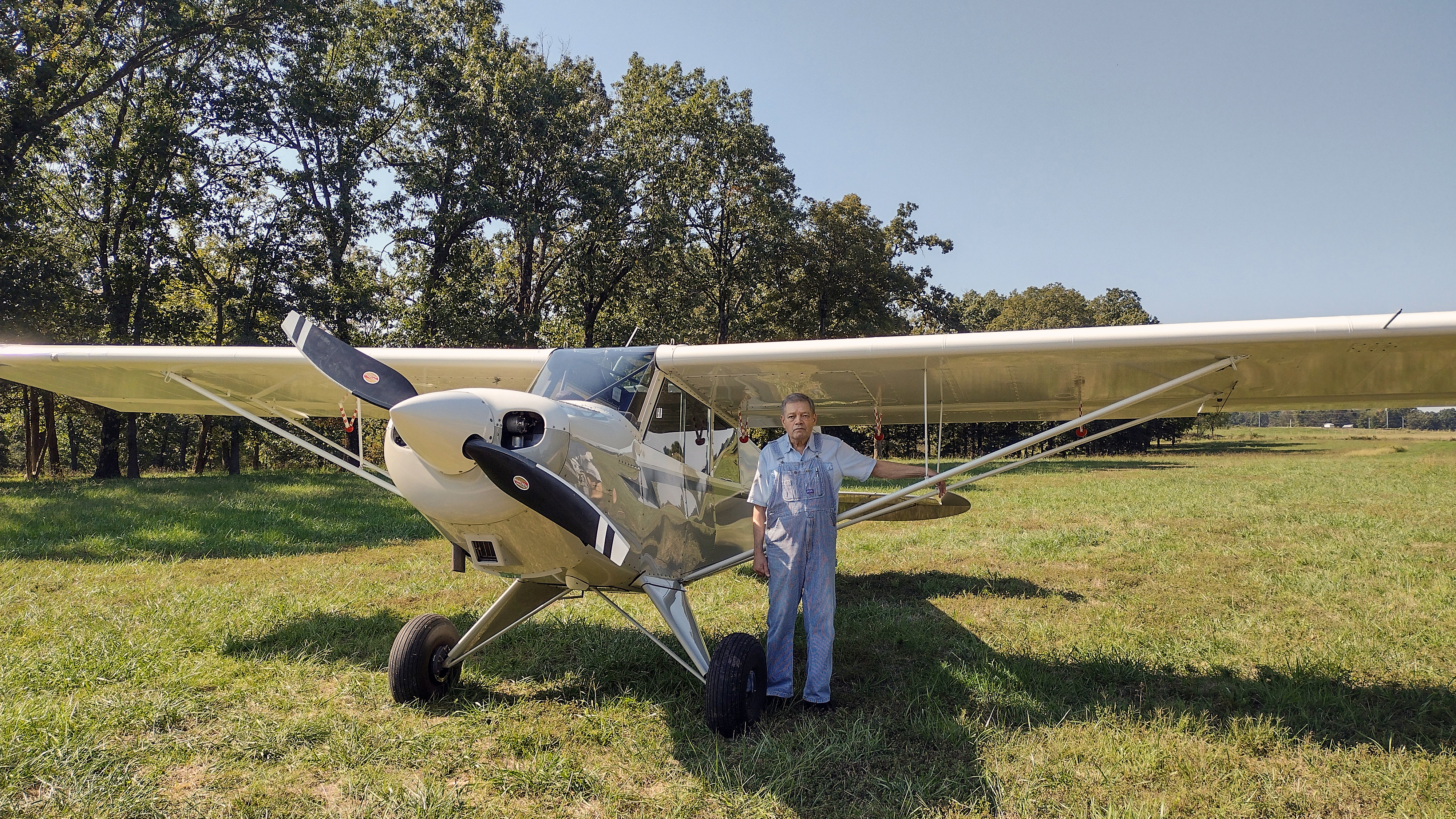
The Ingrams sold Carthage Airways in 1973, when Gene accepted the offer from Leggett & Platt. Gene Ingram retired from Leggett & Platt in 1996, and died in 2003, after a five-year struggle with ALS. His name is inscribed as an “Air and Space Leader” in the Exploration Wall of Honor at the Smithsonian National Air and Space Museum at Washington Dulles Airport.
Marilyn Ingram, who died in 2018, told her sons she suspected they were worked to death at the airport when they were young. The brothers disagreed.
Instead, they acquired an unshakeable passion for general aviation.
“If dad had stayed in Illinois, Mark and I would probably be farmers today,” Chris said. 
Sheila Harris is a writer and aviation enthusiast living in Missouri.
Related Articles


