Miyazaki's magnificent machines
Looking at flight with wonder, radiance, and weirdness
By Gordon Murray
Hayao Miyazaki’s creations don’t just fly. They breathe, wobble, groan, and delight; they embrace how lift thrums in the bones before rising up again in the soul.
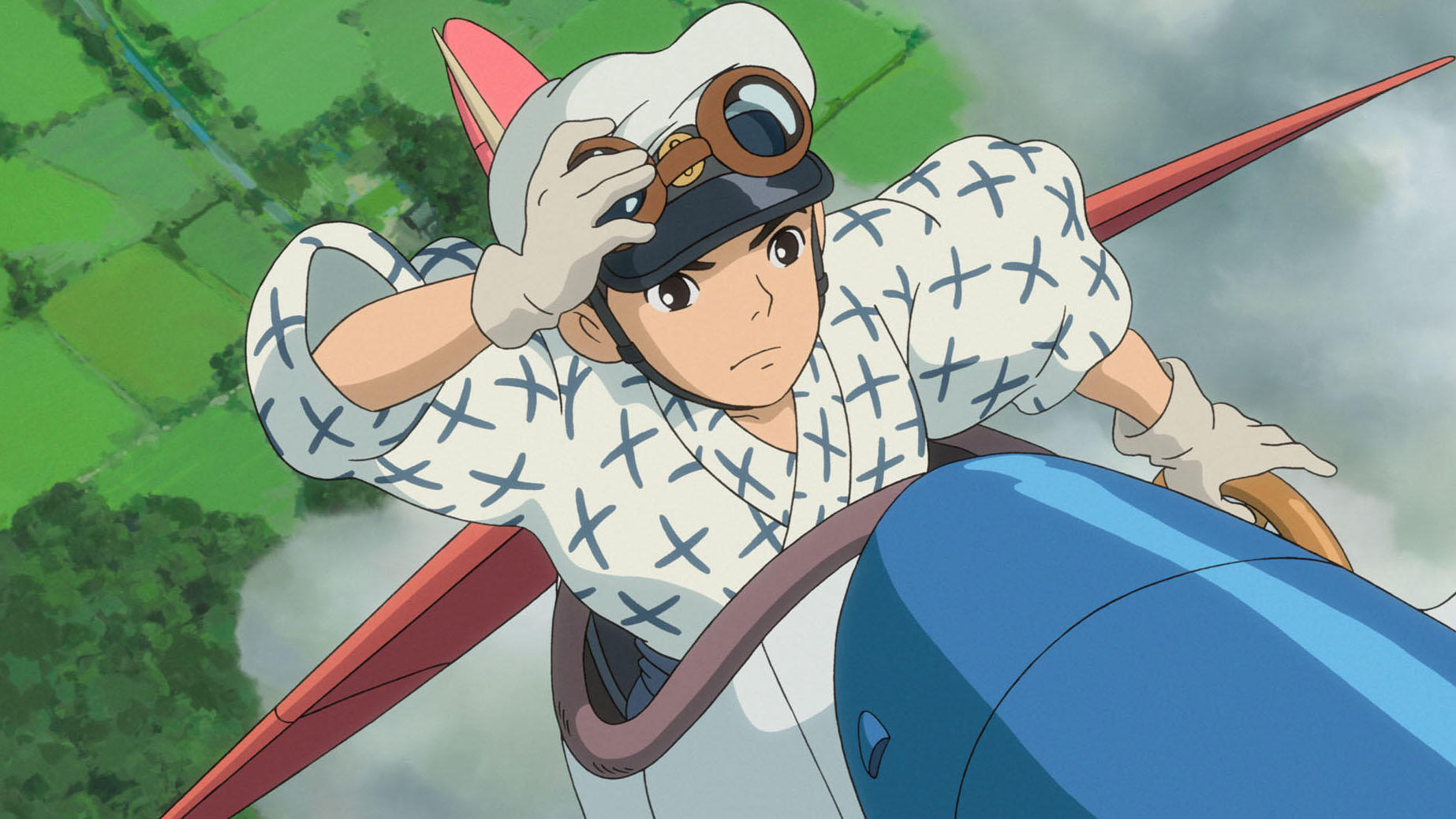
I discovered Studio Ghibli and Hayao Miyazaki’s work from watching Kiki’s Delivery Service with my kids. The film tells a story of a young witch, Kiki, who moves to a fictional city in Sweden and uses her flying ability to earn a living.
I grew up watching Looney Tunes, and I spent a good part of my adult life enjoying the high-concept narratives and technical innovations of computer animation studios like Illumination and Pixar. This one felt different: a girl actually piloting a broomstick against a backdrop of clouds rendered in a palpable watercolor sky, and country fields quietly breathing with life below. The 3D polish of pure CGI is absent. Instead, the film is suffused with traditional hand-drawn authenticity and heart.
But my interest was stirring for another reason—flight. It seemed to reveal itself everywhere. I watched as Kiki maneuvered through a surprise thunderstorm, barely holding on while executing a turbulent crosswind landing. Later, we meet Tombo, an aviation-obsessed boy in the city, struggling always to get his bicycle to fly. I was spellbound.
The tales’ long tail
For more than three decades, Studio Ghibli has presented stories filled with nostalgia, beauty, and warmth, and, unapologetically, jarring images of war and melancholy. There are also storylines where parents are turned into pigs. But almost always, there is something in the air. There’s magic and fantasy that takes flight as naturally as breathing—like the magical flying cat-bus spirit in My Neighbor Totoro.
Miyazaki knows flying is composed of art, science, discipline, and dream. He makes this visually subtle and clear, but he also never lets us forget aviation’s shadow side. He fills his skies with wonder, radiance, and weirdness, but also with the possibility of destruction and despair. For pilots, this duality feels honest. We know flight as liberation—but we also know the consequences of weather’s unforgiving edge, the possibility of mechanical failures, the effects of poor decision making, and the plain-old bad luck of getting your tail shot off. Miyazaki faithfully captures the joy along with the perils.
With the Academy Award-winning Spirited Away, Studio Ghibli proved Japanese storytelling could speak to the world. English dubs—featuring the voices of actors Kirsten Dunst, Michael Keaton, Christian Bale, and Anna Paquin—helped fling open the doors to Western audiences, but the heart of the draw was always Miyazaki’s. And once inside his theatre world, you notice: Everything floats, hovers, or flies.
Across his long career, Miyazaki has given us fleets of improbable, yet utterly believable flying machines. There are ornithopters, gyrocopters, airplanes, gliders, airships, and dirigibles, but also flying broomsticks and bicycles, castles that float, birds, paper airplanes, whirligigs, maple seeds, and wing-flapping battleships—everything seems drawn upward.
A life shaped by aviation
To understand why aviation permeates Miyazaki’s work, you only need to look at his life. Born in Tokyo in 1941, he grew up in the shadow of World War II. His father machined parts for the Mitsubishi A6M Zero. Even as a child, he saw aircraft as both beautiful and destructive—and he never forgot. Unlike filmmakers who might choose one side or the other, Miyazaki insists on showing both.
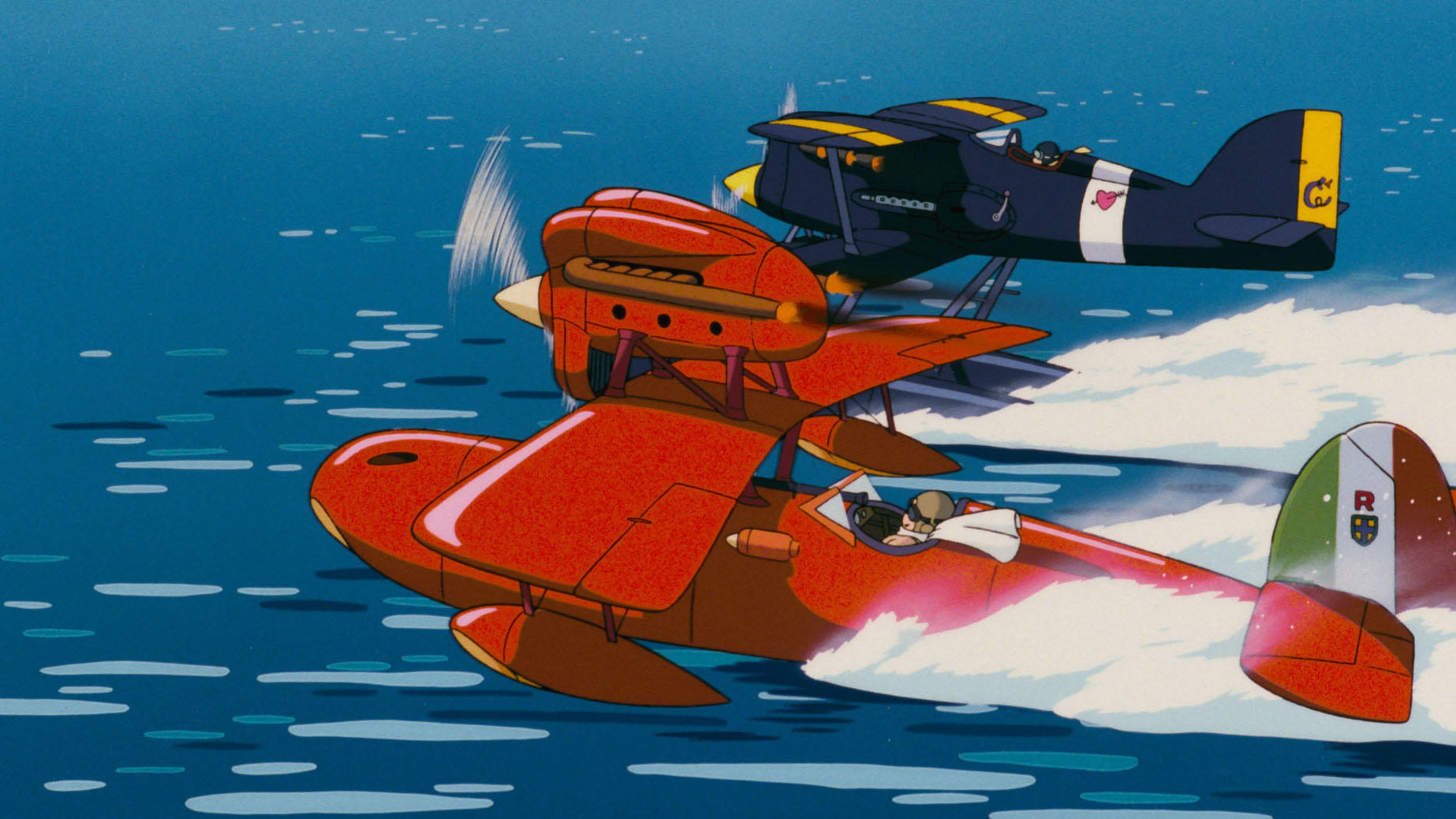
In interviews, Miyazaki has often said he dreams of flying almost every night. His notebooks overflow with the wings, engines, and feathers that appear in his films. His machines aren’t effortless fantasies. They bank with inertia, bend under stress, and float in ground effect. In Porco Rosso, the seaplane sprays and bucks as it digs into the swells. In Nausicaä, the glider, Mehve, rides thermals like a Stemme. Even the pirate ships of Castle in the Sky obey exaggerated, but believable aerodynamics.
Sharing flight across generations
Why should a modern GA pilot care about cartoons? Because Miyazaki’s work lifts beyond the art—and it can become a bridge between generations of pilots and nonpilots in our families and lives. Pilots know well the challenge of attempting to articulate why we fly. You could try selling the true value of that $100 hamburger to a 9-year-old. Or you could sit with them and watch Nausicaä silently soar through clouds. Or see how Porco Rosso’s crimson Savoia S.21 skips across the Adriatic like a Macchi M.33.
Now in his 80s, Miyazaki may have drawn his last film with The Boy and the Heron (2023). He’s retired before, but always returned, as if grounded a little too long. His aircraft live at the crossroads of science and story, dream and design—remaining vivid in our imaginations long after the engines have stopped. 
Gordon Murray is an emeritus professor and says he is the luckiest GA taildragger pilot in the world.
 Why pilots love Ghibli
Related Articles


