Recurrent headache relief
Aircraft or simulator?
By Ben Berman
“You’re going to fail this checkride,” the examiner said. He scowled at me in the simulator center’s briefing room.
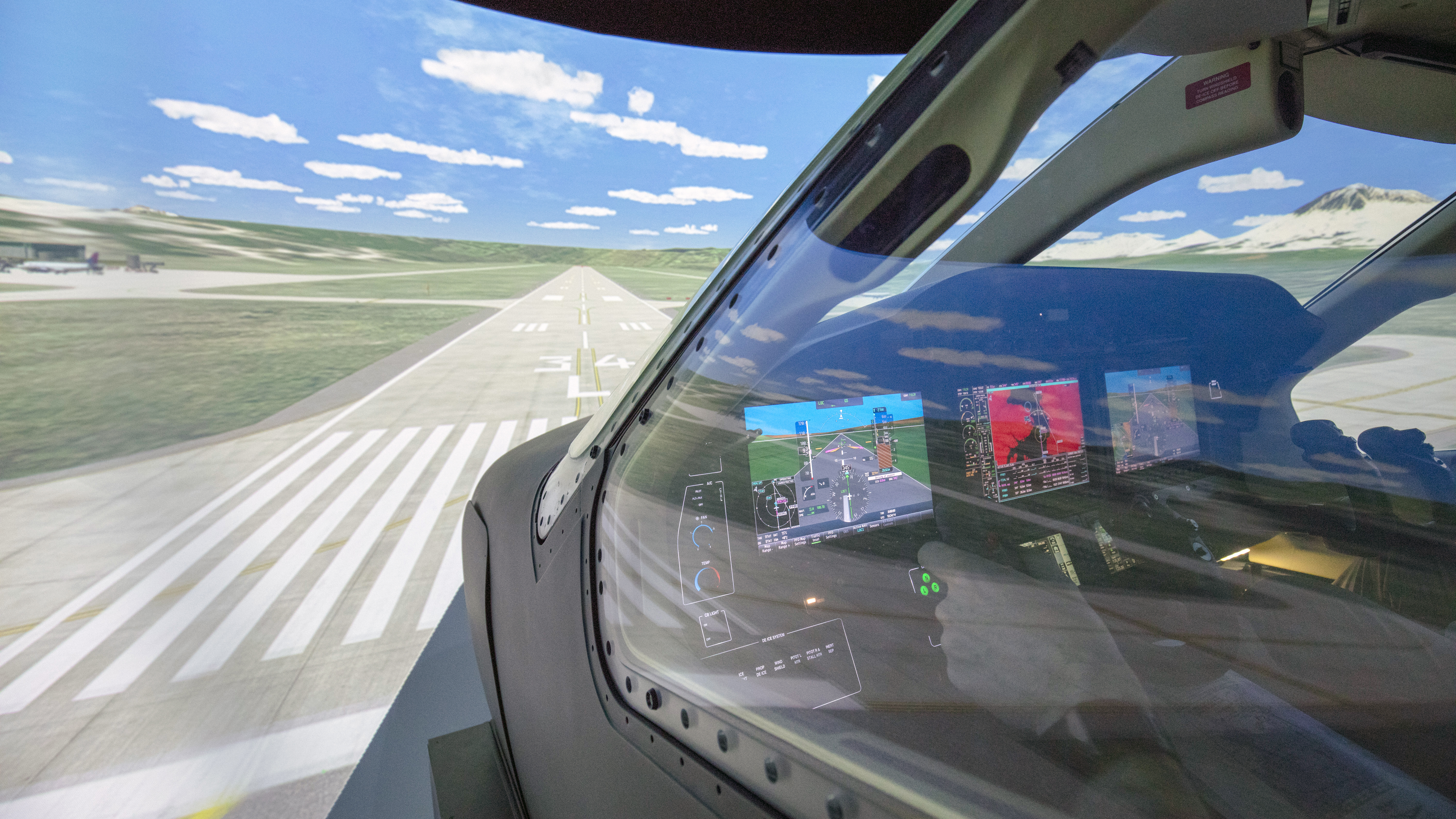
The Part 135 charter company for which I was flying a Cessna Citation had selected the most time-efficient and cheapest option for my recurrent instrument check—a company-specific approach that sent me straight into the checkride, with no ground school, simulator training, or practice leading up to it. (This was allowed in their FAA-approved training manual.) I’ve taken a lot of checkrides in my life, and they’re always stressful to some degree. Now my stress meter pegged. But I decided, “Let’s give it a try.” The examiner shook his head.
The challenge must have raised my performance to the max, too, as I did better than usual in the simulator box. In a few hours, I came out sweaty, but I passed (and the examiner was still shaking his head).
As turbine pilots, we’re required by the FAA or insurance to undergo recurrent training every year, or more frequently. Now that we’ve covered my least favorite way, let’s talk about some of the other options.
Traditional recurrent simulator
You’ve probably jumped through these hoops. Several hours of ground school or computer-based training to refresh you on the jet’s systems and procedures, one or more full simulator sessions to practice all the emergency, abnormal, and normal things you’ll see on the checkride, finishing up with an FAR 61.58 or 135.293/297 check in the simulator.
 There’s a lot to like about this process:
You’ll perform procedures that you’ve never experienced flying regular trips, many of which would be unsafe to even practice in the aircraft—like an engine fire that won’t extinguish, or trim running away to an extreme position. It’s the best way to be ready to handle one of these bad boys if it surprises you departing from Des Moines next week or nine months from now. You will have a chance to refresh and reload the systems and procedures and get your flying proficiency up in the practice sims. Then you can confidently strut your stuff in the checkride. This full simulator training recurrent program may be required by your insurance.
 After running through so many of these programs over the years, I’ve learned that a lot can be missing:
With some exceptions (mostly in the airline world), the maneuvers and procedures that you’ll do are pretty much the same every time you visit the sim center. You’ll probably do the approaches into Memphis again and, after years of practice, on the circling approach you’ll spot the FedEx parking lot ahead in the shadows and be able to turn final in your sleep. At the same time, the simulator sessions are usually so crammed with maneuvers that there’s no time to add anything else that you’d like to experience or practice. This can turn the training and checking into rote exercises that provide little realistic variety, surprise, or startle. The simulated pressure and stress come from rushing to comply with the instructor’s demands, which is actually negative training for the careful and deliberate thoughts and actions we want to respond with in an emergency.
In-the-aircraft recurrent
For many lighter jets and just about all turboprops—if your insurance company agrees to accept it—you can do recurrent training and checking in your own aircraft. Lots of training outfits cater to this market with instructors and examiners who travel to your site or welcome you to fly over to theirs. In my post-airline career flying jets and turboprops under Parts 135 and 91, I’ve experienced several in-aircraft recurrency sessions. Most recently, I’ve also qualified as Cessna CitationJet instructor in one of these schools, so I’ve seen both sides.
Training in the aircraft can be what simulator training can’t be, in several ways:
You are using the same flight deck display, GPS, and automation that you have in the aircraft—a rarity in the simulator. The aircraft handles just like the real thing, not like a simulator. This gives you greater confidence that you will be able to handle emergencies such as an engine failure just after V1.
Training programs are customized for you, and there tends to be more flexibility in adding maneuvers or procedures that you want to experience. Being in the aircraft provides more realistic demands for variety, startle response, and workload management, if you engage your instructors in providing these.
In-aircraft training also has drawbacks:
Training and practice flights are expensive, so there can be a tendency to keep them at a minimum. You or your company have to fight that tendency and let the process work.
The risk of an accident or incident during this process is hard to quantify, but it’s greater than when using a simulator (although I knew a pilot whose dad’s airline career ended when a DC–10 simulator fell off its legs…).
There are emergency and abnormal situations that you just can’t practice or experience in the aircraft. For example, for safety reasons and per FAA guidance, in a turboprop you will not experience an engine failure after takeoff just before or after you retract the gear.
The simulator and aircraft will give you very different experiences, while fulfilling the same requirements for turbine aircraft recurrent training. What this says to me is—get the best of both by alternating between them. 
Ben Berman flies Citation jets and is a former airline captain, NTSB accident investigator, and NASA human factors researcher.
Related Articles


