Three routes to Alaska
Coast, Trench, or Highway?
General aviation pilots have three choices for flying trips to Alaska—and they’re vastly different.
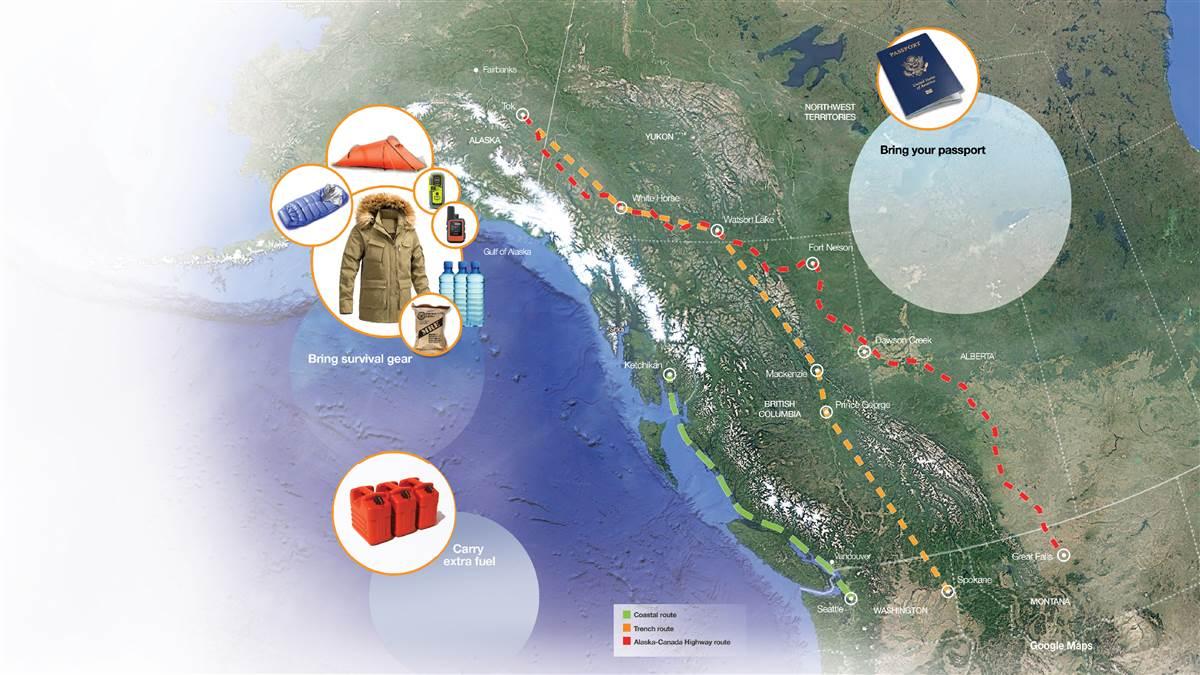
The coast is the most scenic and adventuresome with wondrous snow-capped mountains and fjords that plunge to the sea—and it’s the shortest route. It’s roughly 600 nautical miles from Seattle to Ketchikan, and going nonstop eliminates the bureaucratic hassle of border crossings. The whole thing can be treated as a domestic flight that begins and ends in the United States.
But coastal weather is notoriously rainy, icy, and foggy, and the rugged geography that provides such dramatic vistas also means a forced landing may not be survivable.
The trench is an alpine route that follows a mountain valley across British Columbia and into the Yukon before reaching Alaska. The trench is scenic, especially in autumn, and the route can be flown at relatively low altitude since there are no tall mountain passes to cross. The 350-nautical-mile leg from Mackenzie to Watson Lake is the longest, most scenic, and remote with no fuel, air traffic control, or radar coverage. Whitehorse is typically the next stop before arriving in Alaska at Tok.
The highway is the most traveled route to Alaska and the least visually compelling. The Alaska-Canada Highway is located on a vast prairie. The highway route’s most remote stretch goes from Dawson Creek through Fort Nelson to Watson Lake.
Alaska is rightly known as one of the most incredible and demanding places on the planet for GA. And just getting there involves making careful choices and facing challenges of its own.

Related Articles