Cessna 421 Golden Eagle
No-frills twin-piston workhorse
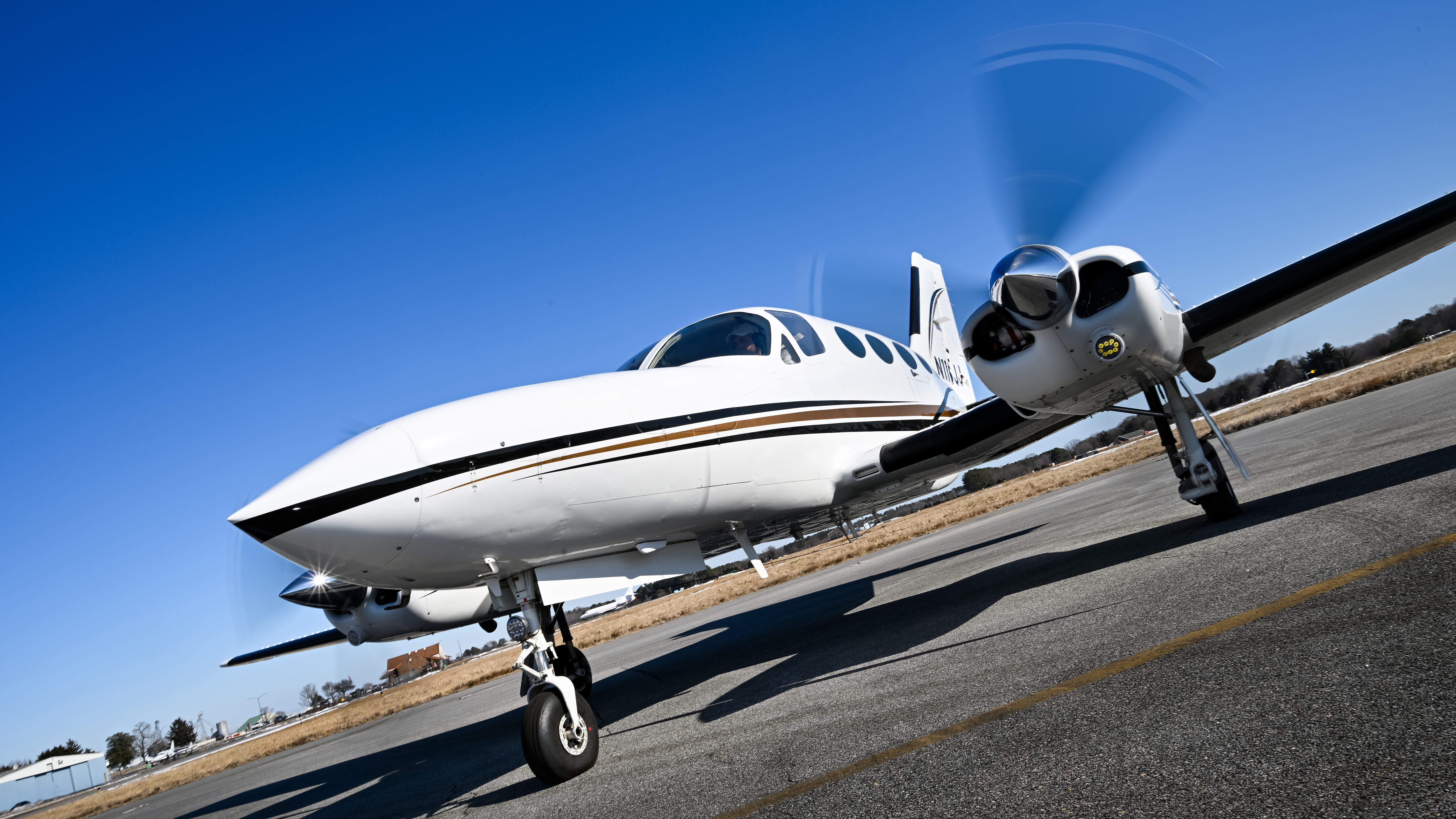
Two geared Continental GTSIO-520-L or -N (some earlier 421 models use the -D and -H 520 variants) engines provide 375 horsepower each, helping the 421 achieve an almost 2,000-foot-per-minute rate of climb (at sea level) and a 30,200-foot service ceiling. It’ll cruise up to around 240 knots and has a maximum range of just less than 1,500 nautical miles.
But that performance comes at a cost. You’re not only burning up to 50 gallons per hour in cruise, but the engines are costly to maintain, with parts becoming more difficult to source. Combined with an aging pressurization system and insurance premiums, the Golden Eagle can cost a handsome amount to operate.
That said, the aircraft has stood the test of time and outperforms many twins from its time, cruising faster—although at a gas-guzzling cost—than a Piper PA–31P Navajo, for example. Above performance, the Golden Eagle maintains a level of class and comfort on the inside that makes it a timeless twin.
With two seats in the front and room for up to seven passengers, the Golden Eagle fits four people in the back compartment comfortably, and the more than four-foot cabin height and relatively large windows provide great views and comfort.
With almost 2,000 421s manufactured, the aircraft is one of the best twin-piston Cessna aircraft you can come by today—the T303 Crusader was the final piston twin Cessna would manufacture, although only about 300 of those were ever built.
The 421 would eventually be developed into the turboprop Cessna 425 Conquest (or Corsair), bringing an end to the piston era of the Cessna 400-series.
Quick Look
A spotter's guide
Natural habitat:
Airports that contain “executive” in the name and small charter companies.
Distinguishing traits:
A large cabin with five large oval windows, each smaller as they approach the tail.
How much?:
Later run (1982) Golden Eagles with new glass cockpits range from $400,000 to more than $700,000. Some older (1974) C421B models can be found as low as $250,000.
Did you know?:
The first twin-engine Cessna was the T–50 Bobcat, which first flew in 1939.

Related Articles


