No more nausea
Pilot-recommended products may help ease airsickness
By Alyssa J. Cobb
Few things take the joy out of flying like air sickness. Passengers might stop flying; student pilots might reconsider whether they really want to learn how to fly; and pilots might struggle with advanced training that is prone to causing motion sickness, such as flying under the hood for the instrument rating, learning aerobatics, or training in full-motion simulators.
While opening air vents, looking at the horizon, flying coordinated, and being at the controls of an aircraft help calm queasiness, they might not solve the problem for everyone. Toughing it out flight after flight while trying to build up a tolerance can be miserable.
Medications that control motion sickness might be disqualifying, but non-medicated products such as acupressure and acustimulation bands and ginger products could be options to try that won’t disqualify you from flying. Some pilots and passengers have found the following products helpful, but results will vary by individual. Studies have not conclusively found whether these types of products help prevent or lessen airsickness.
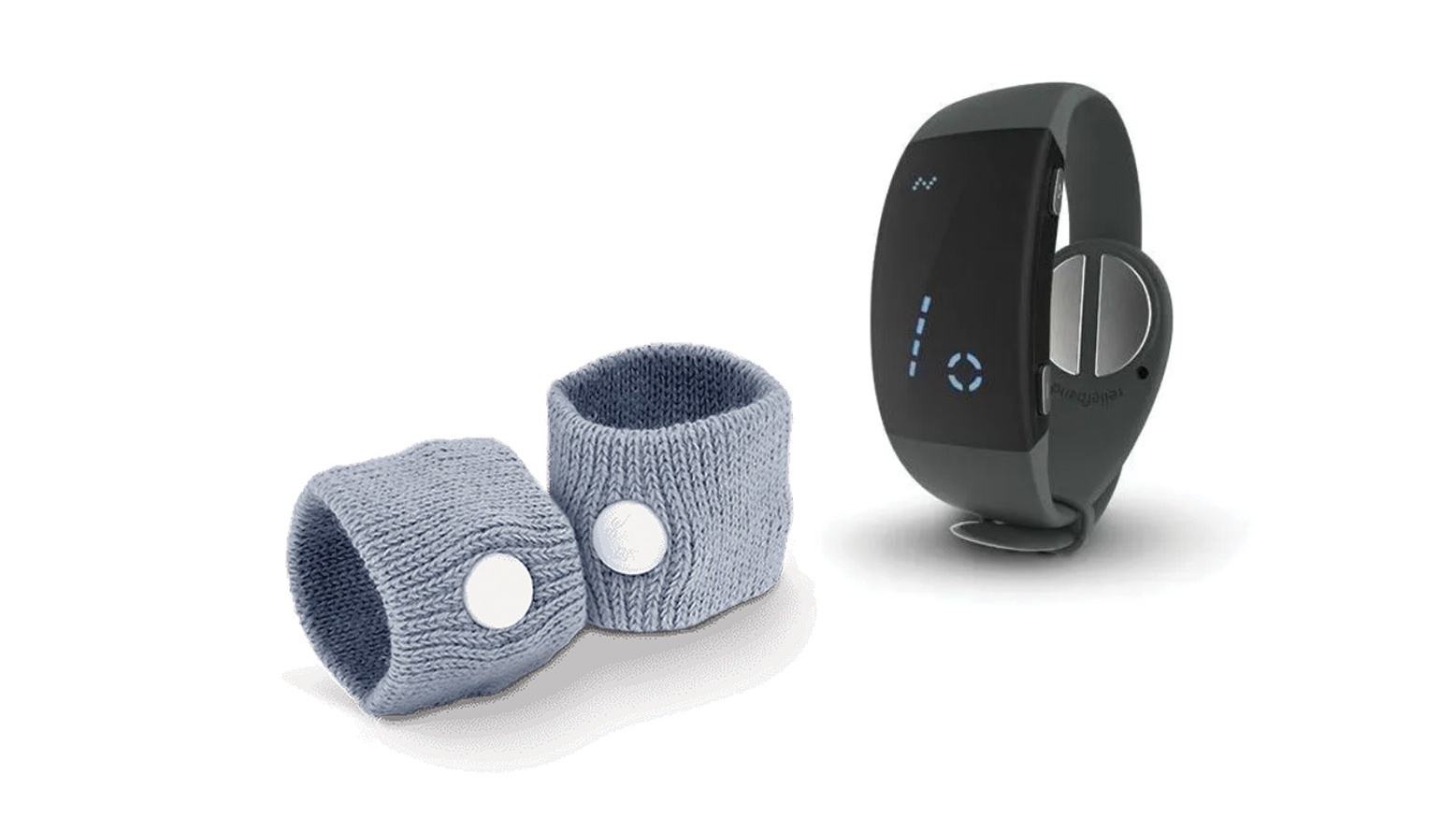
Motion sickness bands. These bands are often elastic with a smooth plastic knob that applies pressure to the Pericardium 6 pressure point, also known as the Neiguan, on the inner side of the wrist. The bands may help with nausea, motion sickness, and possibly anxiety. I tried the Hionxmga Motion Sickness Bands on my 6-year-old son who had developed a distaste for flying because he would feel ill during the climb out after takeoff. The bands fit children and adults and are easy enough to position correctly so that my son can do it himself. On bumpy days, he applies extra pressure on the knob when he starts to feel queasy. This proved pivotal for him—now he’s up for flying anytime. The bands are inexpensive. I bought a six-pack for about $5 on Amazon, and many other brands are available at drugstores and other retail chains.
Flight instructor Mary Latimer also recommends motion sickness bands, saying they “work for most people and [have] no side effects.” Latimer said she has also used her fingers to apply pressure to the P6 in a pinch to help prevent passengers from getting sick.
Rechargeable relief bands. Ranging from about $100 to $300, a rechargeable relief band might be a better option for those who struggle with motion sickness and fly a lot or also engage in other activities like boating that can cause motion sickness. They look like a smartwatch and work by electronically stimulating the nervous system to make the brain send a signal to the stomach to reduce nausea. Conductivity gel comes with the band. Place the gel on the two tendons on the bottom side of your wrist, then position the band so that the metal part is over the gel before fastening snuggly.
Pilot Bethany Fayard uses Reliefband Classic. “The chargeable relief band is a game changer,” said Fayard, who used it during her upset recovery and spin training. “As soon as I felt nausea coming on, I cranked it up and the sensation just shut off like a switch!”
Sporty’s sells Reliefband Premier for $279.99 and claims that it is more comfortable to wear for extended periods of time than a pressure relief band. “We’ve had several customers fly in to Sporty’s and report the Reliefband works great,” according to the aviation retailer’s website. While most reviewers said the band worked well for them and their passengers, two said it did not work for their spouses.
The Reliefband brand is approved by the FDA to treat nausea and vomiting from motion sickness. If purchased directly from Reliefband, the company offers a 14-day money-back guarantee. Check return policies if you purchase from other retailers.
Ginger. Another natural option for dealing with nausea is ginger—pilots use ginger gum, chews, and capsules (for those who can’t stomach the taste). Mary McEnroe recommends taking two ginger capsules one hour before flight and then another one every two hours after that for longer flights. “It helps a lot!” she said of the tip that an aerobatic pilot who experienced airsickness shared with her.
Used alone or in combination, these products may bring relief from airsickness, allowing you and your passengers to relax and enjoy the flight. 
Alyssa J. Cobb is a former senior director for AOPA media. She is a CFI and aircraft owner.
Related Articles


