Say what?
Communicate effectively at nontowered airports
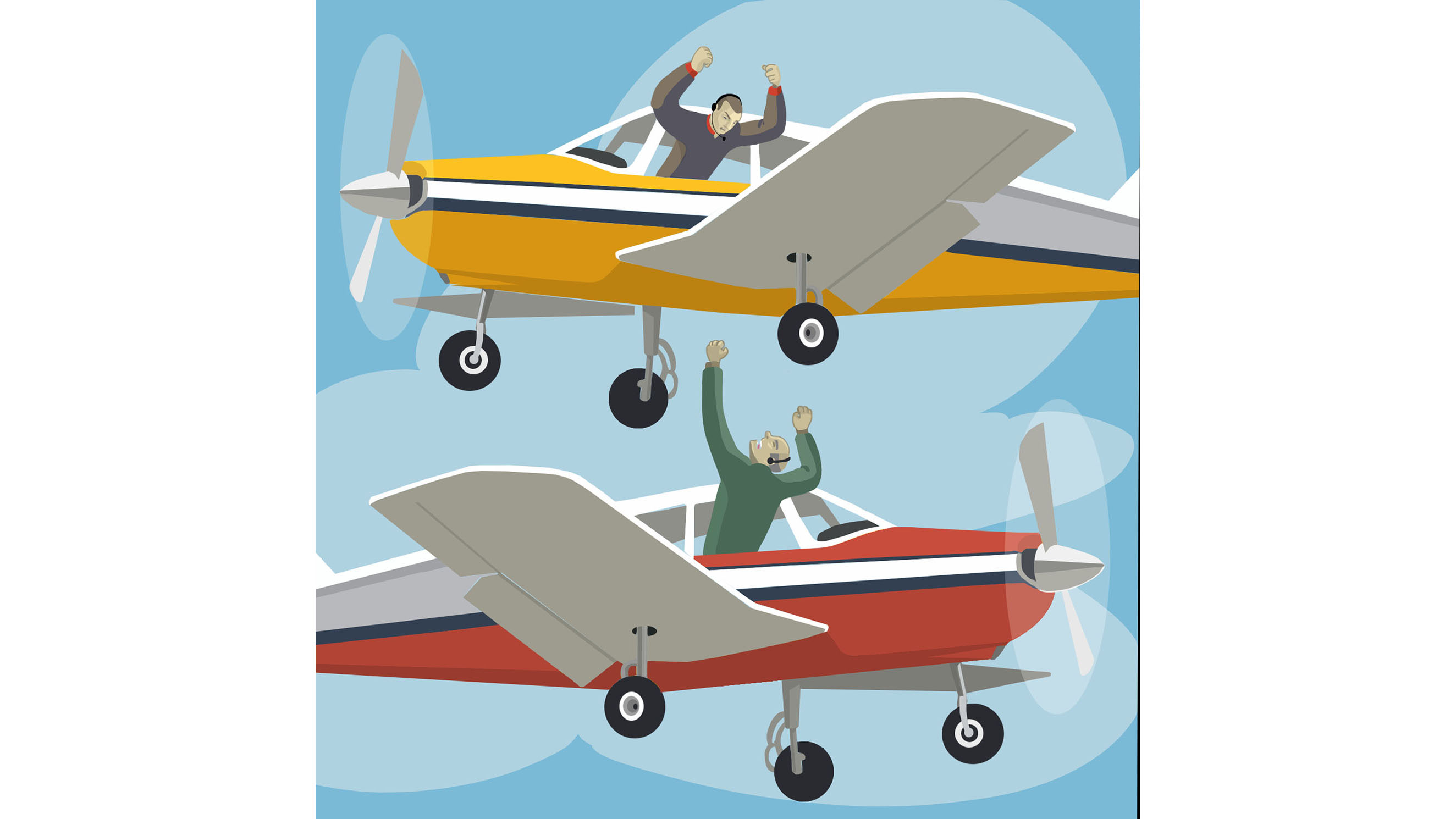
We then heard, “Winchester traffic, Skylane Niner-Eight-Seven-Zulu-Yankee, 6 miles east, planning Runway One-Eight.” Sara frantically looked around to spot the other Cessna, and I joined her in the search, but to no avail. No other aircraft appeared near us on the ADS-B display either. We both continued to search when we heard, “Winchester traffic, Niner-Eight-Seven-Zulu-Yankee, 3 miles east, crosswind, Runway One-Eight.” Puzzled, we then noticed on the traffic display that N987ZY was entering on a crosswind leg from west of the airport. I breathed a sigh of relief that the mystery was solved as the collision danger evaporated. Sara, apparently not one to suffer fools gladly, keyed her mic and yelled, “Niner-Eight-Seven-Zulu-Yankee,” followed by a colorful expletive. “You were west of the field, not east! Get it right!”
It probably goes without saying that her admonition featured nonstandard phraseology, was likely to elicit a defensive response, and wasn’t a recipe for making friends in our tiny aviation community. And, as I told Sara, it wasn’t a great look on her private pilot checkride either.
Much of my flying time is spent operating from nontowered fields where we self-report on the common traffic advisory frequency (CTAF) to share the airspace safely with aircraft of varying speeds and missions. With a busy schedule administering practical exams, instructing aerobatics, and my own personal flying, I routinely hear how others use the CTAF. I’ll share advice that I’ve gleaned from Non-Towered Airport Flight Operations (FAA-AC-90-66C), my wonderful flight instructors, as well as plain common sense and courtesy.
Give the where-who-intentions-where sequence: “Sewanee, Franklin County traffic, Bonanza One-Kilo-Yankee, left downwind, Two-Five, Sewanee,” for example. Include the aircraft type so other pilots understand what the ballpark airspeed of your aircraft is; after all, a pilot on the ground may have time to depart before a Piper Cub but may choose to wait until a Daher TBM lands before taking the active runway. One of my early flight instructors was adamant that I state my call sign near the beginning of every transmission instead of allowing it to fall to the end, which is common in subsequent reports. That makes sense, especially after we listen to a lengthy description only to find that it’s from an airplane 45 nautical miles away.
Say enough but be concise. The main goal is to share your plans with others and create the opportunity to coordinate use of the same airspace. Have a plan before keying the mic so there is time for everyone to convey necessary information. If you are flying toward an airport, the bottom of your heading indicator shows your direction from which you are approaching the airport—a helpful tip that the Skylane pilot above could have used. Finally, indicating aircraft color is rarely helpful, as most aircraft just look white from a distance anyway.
Make it meaningful. Entering an airport environment and requesting, “Any traffic, please advise,” is likely to elicit a flurry of unnecessary responses and annoy pilots, especially at a busy training airport. Instead, monitor the CTAF on your way in to create a mental picture of traffic in the pattern. It’s also unnecessary to announce “last call” when leaving an airport. Once I state, “Shelbyville traffic, Bonanza One-Kilo-Yankee, departing the pattern to the southeast,” pilots understand that I will likely be making no further calls.
Know when to keep quiet in the airplane. My home airport uses 122.8 MHz for the CTAF, as do no fewer than nine other airports within a 50-nautical-mile radius. And we hear calls from airports located much farther away than that. I often raise my hand tohush fellow pilots so we can hear the transmissions to determine if they are near us. Stop talking at the beginning of all radio transmissions until you determine that the call isn’t important to your operations.And remember we all make mistakes, so offer some grace when a pilot misstates his position or needs to discontinue her touch and go and make it a full-stop landing.
Stick to VFR language. “Tullahoma traffic, November-One-Kilo-Yankee at KOJAK inbound, RNAV Three-Six, Tullahoma,” makes no sense to pilots who aren’t instrument-rated. In fact, since KOJAK fails to appear on a low altitude enroute chart, it’s only meaningful to those who just happen to be looking at the same Tullahoma RNAV 36 approach plate. Every pilot understands the simpler, “Tullahoma traffic, November-One-Kilo-Yankee, ten-mile final, Three-Six, Tullahoma,” and it conveys the same information.
Keep it professional. Last week, two airplanes flew a series of touch and goes at a nearby airport and announced their positions far too often and always in a singsong, flirty manner as if they were communicating to each other about more than aviation. A third pilot finally called out, “Would you just get a room?!”
Another local pilot, who flies for a bustling drop zone on 122.8, habitually offers an extended announcement when he releases the jumpers from the airplane, including unnecessary additions such as, “There will be bodies falling from 15 thousand feet and below.” Such pilots hog the frequency and seem to be unaware that others need to announce to coordinate with other traffic.
If you’re tempted to say something offensive or are put off by something you hear on frequency, keep your thumb off the push-to-talk switch. Settle any issues on the ground after the airplanes are tucked away in their hangars. And, if that’s not possible, then safety concerns can be reported on the FAA’s hotline (hotline.faa.gov).
Be kind and humble. Offer to break off the instrument approach a bit early for the downwind traffic, extend the departure leg slightly so the arriving aircraft can enter the pattern, or extend downwind to ease the logjam of aircraft waiting to depart. And remember that we all make mistakes, so offer some grace when a pilot misstates his position or needs to discontinue her touch and go and make it a full-stop landing.
I’ve always been pleasantly surprised by how aircraft of widely varying speeds and operation types can coexist safely at a busy, nontowered field. It’s all about using the common frequency professionally, efficiently, and with the kindness and generosity we’d all like to experience.
Related Articles


