'I'm no longer nervous'
Volunteers turn kids into 'co-pilots'
The day couldn’t have been better: Blue skies and mild spring temperatures made for perfect conditions to take to the air. At AOPA’s National Aviation Community Center the hangar doors were wide open and the atmosphere was buzzing with excitement.

On April 11, Challenge Air for Kids and Friends took 44 children flying at the Frederick Municipal Airport in Maryland.
Challenge Air’s Fly Days are community-driven programs that help local children with special needs build confidence and self-esteem through the gift of flight. “When the kids get the opportunity to actually fly an airplane, they realize they can do anything they want to. All limits are self-imposed,” reads a statement by the late Rick Amber, the founder of the organization. And let’s just say that it’s also a lot of fun for everyone involved. Families came from all over Maryland and some from Virginia. The Frederick event had over 40 ground-crew volunteers, and nine volunteer pilots and their aircraft. Between the first takeoff at 10 a.m. and the last around 4 p.m., 44 kids were taken on a 20-minute scenic flight from Frederick over the Blue Ridge Mountains to Harpers Ferry, West Virginia, a historic town located at the confluence of the Potomac and Shenandoah rivers, and along the Potomac back to Frederick.
Fly Day at FDK


But before anyone was allowed to board an aircraft, a well-executed and organized protocol ensured that safety for everyone came first and that children and parents felt comfortable. After the sign-in, all passengers—at least one family member had to accompany each child—were weighed, so they could be assigned an appropriate aircraft based on number of passengers and load. After that, Maddie Allen, an 18-year-old pilot from Virginia, briefed each family on what to expect as well as how to use seatbelts and motion sickness bags. She also confirmed that each child was able to obey commands to determine their seating position in the front or in the back. Each child was taught some hand signals, and advised to sit on their hands or with their hands on their lap during takeoff and landing.
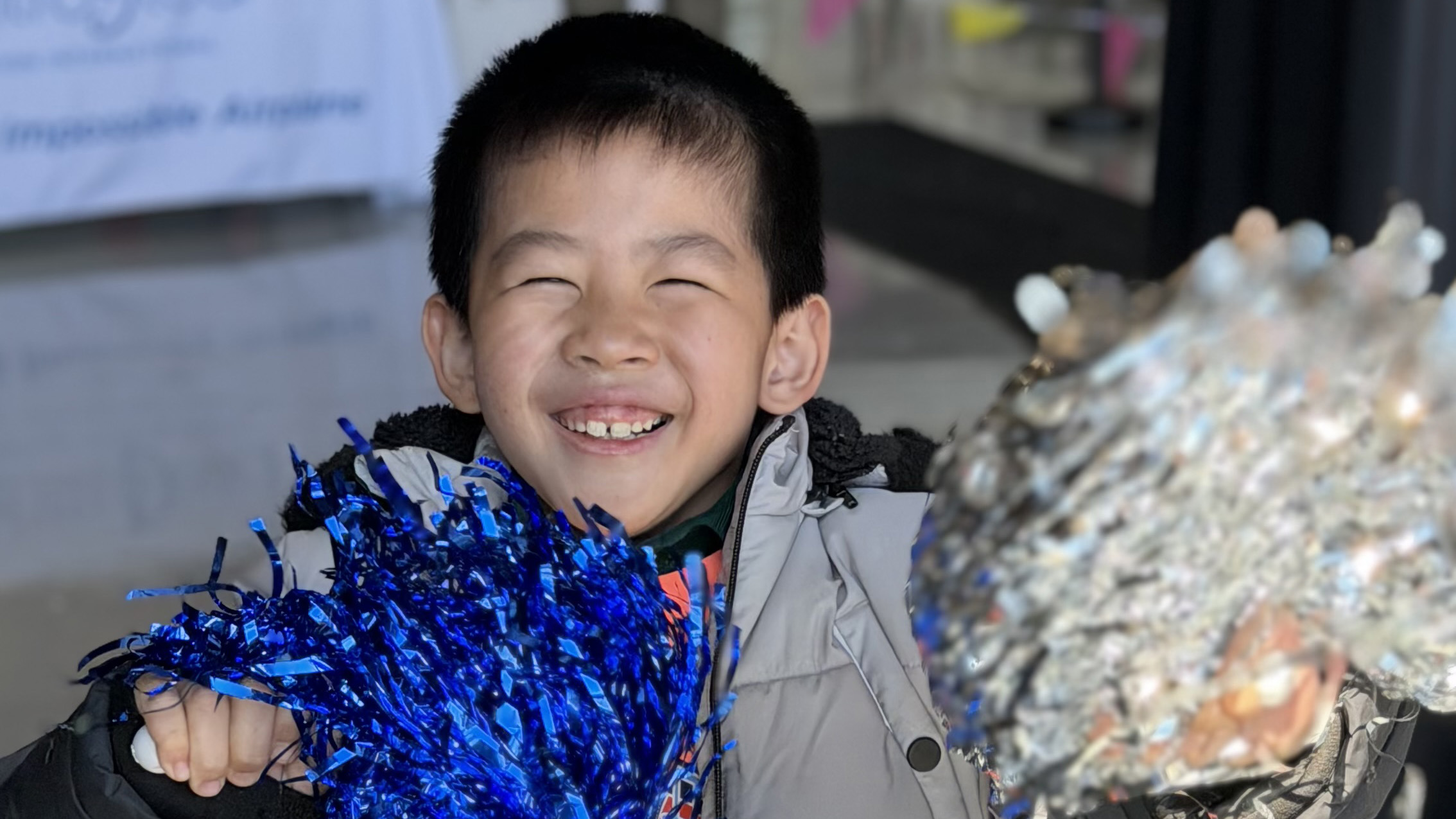
As each flight was called, a bit of pomp and circumstance ensued. The kids and their parent(s) walked a red carpet to enthusiastic applause, pompom shaking, and hooting from other participants and volunteers, the crowd fired up by the relentlessly upbeat and engaged NBC4 Washington anchor Joseph Olmo. They were then accompanied to the aircraft on the ramp by two volunteers from the Civil Air Patrol. On the ramp, Larry Robicheaux from Lewisville, Texas, a pilot and member of Challenge Air’s board of trustees, kept a tight ship and made sure no unauthorized person accessed the area and no one got too close to propellers or taxiing aircraft. “Today, this is my ramp,” he said. Nine aircraft, including AOPA’s Cessna 172 and 182 piloted by AOPA Chief Flight Instructor Thomas Coldwell and Flying Clubs Initiative Manager Jason Levine kept a well-choreographed conga line going.
Eight-year old Diego Longenecker, accompanied by two family members, boarded the front seat of a Piper Saratoga. He confessed before the flight that he was a bit nervous. His first words after landing and opening the door? “I’m no longer nervous,” he said with a huge smile. Asked what his favorite part of the trip was, he said, “Everything!” He received his Challenge Air wings and a certificate and then got to walk the red carpet under more applause and Olmo’s pronouncement that he was now “a co-pilot.”
For a spectator, the most fun was to see the “co-pilots” walk the red carpet after their flight. Reactions ranged from playing it cool to unbridled joy. “I just want everyone to know that this was so much fun. Best day of my life,” shouted a deliriously happy Jimmy Chen.


No one embodies Challenge Air’s mission of empowerment better than Jessica Cox, the world’s first certificated armless pilot. She was happy to join the event, talk to participants, and give an inspiring speech about her life and career, as well as a demonstration on how to tie your shoes with your toes. She mentioned that her organization The Impossible Airplane is building an aircraft designed to work with her specific needs. “If you think about the word ‘impossible,’ and you break it down, ‘impossible’ actually is ‘I am possible,’” she said.
None of this would have been possible without the nine pilots who volunteered their time and their aircraft. Seven were local, one was from Alabama, and one from Missouri. Asked if he let the kids fly, Erwin Miller from Martinsburg, Maryland, said, “I’m pretending. They put their hands on the yoke, but I leave the autopilot on.” Levine said, “There was one girl who talked about aviation the entire flight. She held the controls the entire time and said how she would one day be a pilot.” Her name was Amelia.
Perfect.
Related Articles


